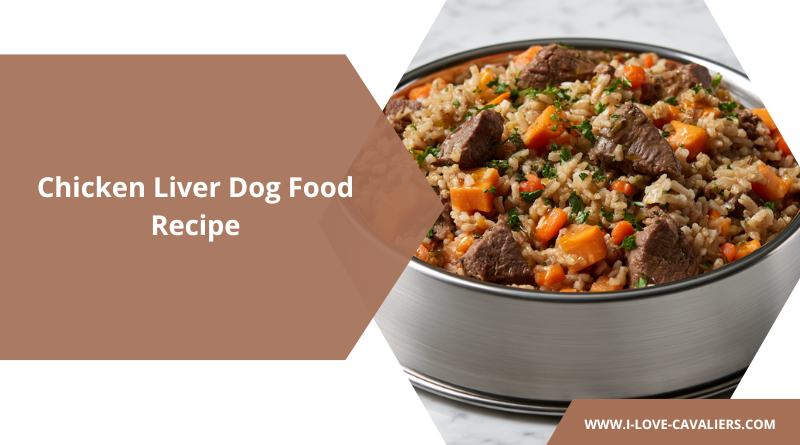
The first time I cooked chicken liver for Snickers, my Cavalier, I ruined a wooden spoon and almost lost a kitchen towel to the dog. He’d been napping in the hallway like a tiny loaf of bread. The second I peeled back the butcher paper, he teleported. Paws on the cabinet, eyes locked on the pan, full body trembling.
I’d never seen him this focused on anything that wasn’t cheese.
The liver hit the pot and the smell took over the house. It’s not a pleasant smell, not gonna lie. But the way he watched that stove, you’d think I was rendering gold. I had to crack a window, push him out of the kitchen, and remind myself this was supposed to be a calm Sunday afternoon project.
By the time the meal was portioned, my floors smelled like a butcher shop and Snickers was inhaling his bowl in under a minute. That was three years ago. Chicken liver has been on rotation in his kitchen ever since, and it’s one of the cheapest, most nutrient-packed homemade meals I make.
But there’s one safety rule that took me longer than it should have to learn, and I’ll get to it before you cook a single thing.
Why Chicken Liver Belongs in Your Dog’s Bowl
- Loaded with what dogs actually need. Per 100g, chicken liver delivers roughly 11,000 IU of vitamin A, 11 mg of bioavailable iron, and almost 17 mcg of vitamin B12. That’s around 700% of a dog’s daily B12 reference value in a single ounce.
- Cheaper than premium kibble. A pound of chicken liver runs about $3-5 at most grocery stores. That’s two to three full-meal batches for a medium dog.
- Easier on the system than beef liver. Beef liver carries roughly 2.5 times the vitamin A of chicken liver, which makes chicken the safer starter organ for dogs new to home-cooked food.
- Dogs love it. I have never met a healthy dog who turned this down. Picky eaters included.
Liver gets a bad rap because of vitamin A, but the nutrient density is exactly why a small portion goes so far. You’re not feeding it as a daily kibble replacement. You’re feeding it as a rotating fresh meal, one to two times a week.
What You’ll Need
This recipe makes roughly 6 medium-dog servings (around 6 cups total). Scale up or down freely.
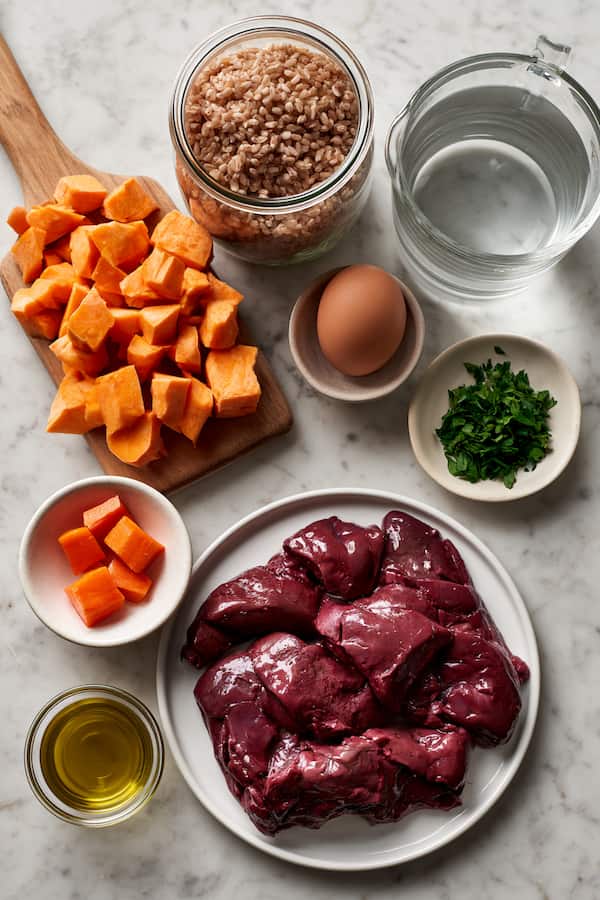
| Ingredient | Amount | Notes |
|---|---|---|
| Fresh chicken liver | 1 lb (450g) | Trim any visible white connective tissue |
| Brown rice, uncooked | 1 cup | Cooks down to about 3 cups |
| Sweet potato | 1 medium (about 200g) | Peeled and cubed |
| Carrots | 2 medium | Diced small |
| Pasture-raised egg | 1 | Whole, including shell if you grind it |
| Extra virgin olive oil | 1 tablespoon | For omega-3s and skin health |
| Fresh parsley | 2 tablespoons, chopped | Optional, helps with breath |
| Water | 4 cups | For boiling the rice and liver |
Skip the salt. Skip the garlic, onion, and any spice blend. None of it belongs in your dog’s bowl. Dogs taste this stuff differently than we do, and plain is exactly what they want.
Cooking the Liver Meal Step by Step
Total time: about 35-40 minutes start to finish.
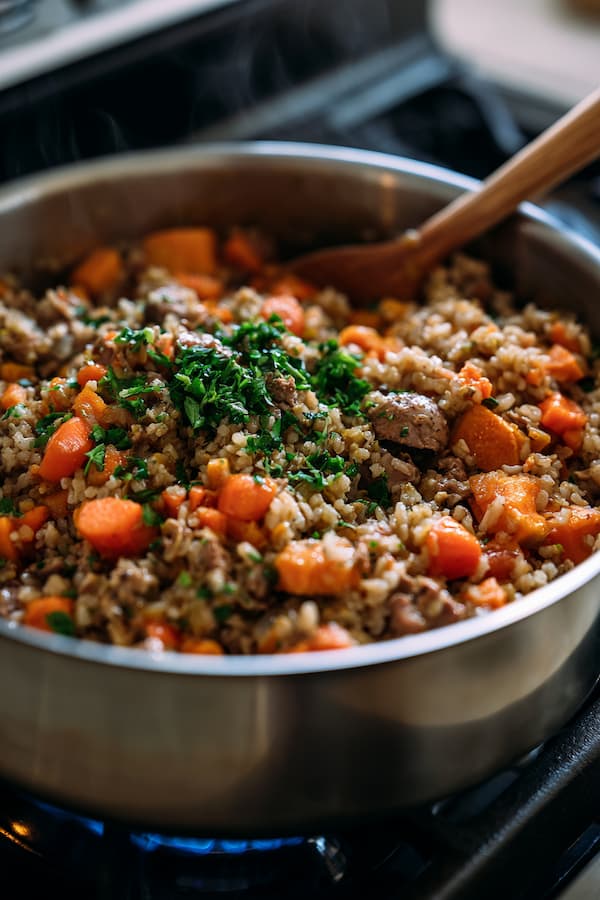
Prep the Liver
Rinse the liver under cold water and pat it dry. Trim off any white stringy bits with kitchen shears, not a knife. Reddit raw-feeders taught me this one and they’re right. The shears grip the slippery liver instead of letting it slide all over your cutting board.
Cut the lobes into rough 1-inch pieces. If your raw liver is sliding around too much, freeze it for 15 minutes first. Cold liver behaves. Room-temp liver runs away from you.
Start the Rice
Bring 2.5 cups of water to a boil in a small pot. Add the brown rice, reduce to a simmer, cover, and let it cook for about 30 minutes. You can use leftover plain rice if you already have some in the fridge, which saves real time.
If you’ve ever made our dog food with rice recipe, the rice technique is identical here.
Steam the Vegetables
While the rice does its thing, drop the cubed sweet potato and diced carrots into a steamer basket over an inch of water. Cover and steam for 10-12 minutes, or until you can pierce a sweet potato cube easily with a fork.
Overcooked is fine for dogs. Crunchy is not. They digest soft veggies far better.
Cook the Liver
In a separate pot, bring 1.5 cups of fresh water to a low boil. Add the chopped liver and reduce the heat to a gentle simmer. Cook for 8-10 minutes until no pink remains in the center of the largest piece.
Do not pan-fry in oil or butter. The grease coats the liver, lowers digestibility, and gives some dogs a sloppy stool the next morning. Boiling is cleaner and the cooking water can be saved.
Skim the foam off the top as it rises. That dark stuff is harmless protein scum, but it looks unappetizing in a finished bowl. Reserve a quarter cup of the boiling liquid as a topper. Dogs go nuts for it poured over kibble later in the week.
Combine and Cool
Drain the cooked liver. In a large bowl, combine the rice, steamed vegetables, cooked liver, the whole raw egg, and the tablespoon of olive oil. Stir until everything is evenly coated.
Sprinkle the chopped parsley on top and give it a final mix.
Let the whole batch cool to room temperature before portioning. Hot food in plastic containers warps the lid and traps condensation, which speeds up spoilage.
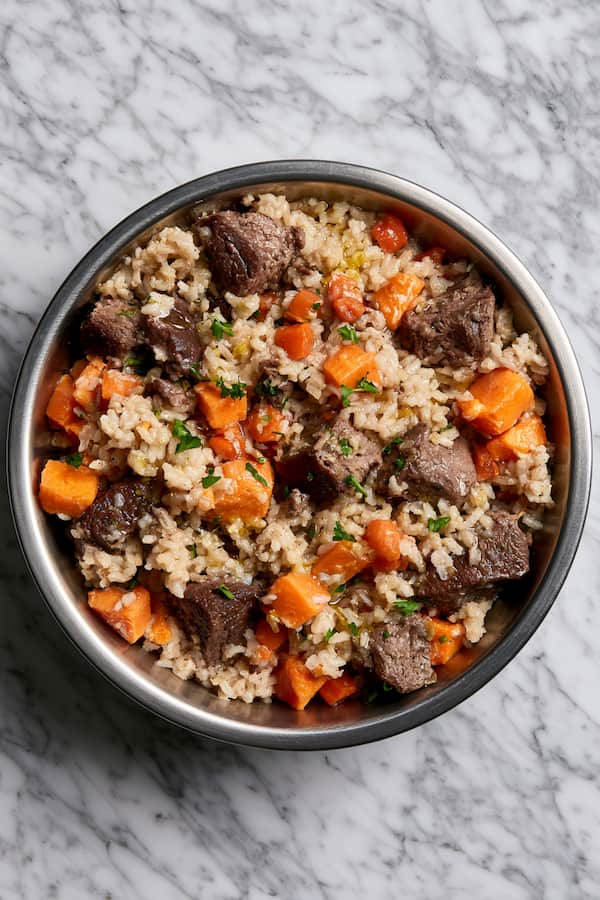
Portion and Store
Spoon individual servings into glass containers based on your dog’s weight from the table above. Refrigerate what you’ll use in the next three days. Freeze the rest in single-serving portions.
I learned this the hard way after thawing a whole week’s batch and watching it go off by day five. Portion small, thaw what you need.
The Vitamin A Rule You Can’t Skip
This is the part most recipe blogs gloss over in one throwaway sentence. It deserves a full read.
Chicken liver is the single most vitamin-A-dense food you can put in a dog’s bowl. Vitamin A is fat-soluble, which means it doesn’t flush out of the body the way water-soluble vitamins do. It accumulates in liver and fatty tissue, slowly, over weeks and months of overfeeding.
This is not an acute danger you’ll see in one meal. It’s a chronic one that creeps up.
The earliest sign of vitamin A toxicity in dogs is joint stiffness. Sometimes it’s neck pain, sometimes bony bridging around the vertebrae that mimics arthritis. Owners feeding liver daily for months often misread it as their dog getting old. By the time it shows on an X-ray, the damage to the joints and growth plates can be permanent.
Other symptoms include skin peeling, lethargy, loss of appetite, and muscle weakness. These show up later and are easier to spot, but the joint stuff is the sneaky one.
The fix is simple. Keep chicken liver to 5% of total weekly food intake, max. Feed it one to two times per week, not daily. If you’re already using liver as a training treat between meals, count those grams too. They stack faster than you’d think.
A few specific breeds need to be even more careful. Bedlington Terriers, West Highland White Terriers, Labrador Retrievers, Dalmatians, and Doberman Pinschers carry a genetic variant for copper storage disease. Liver is rich in copper. If you own one of these breeds, talk to your vet before adding any liver to the diet.
For everyone else, the weekly limit is the only rule that matters. Stick to it and chicken liver becomes one of the most useful foods in your dog’s kitchen.
Storing and Serving the Right Amount
Cooked liver meal keeps in the fridge for 3-4 days in a sealed glass container. Any longer and the texture goes grainy, the smell turns sharp, and you’re better off tossing it.
The freezer extends that to 2-3 months without losing meaningful nutrition. Cooked frozen liver does soften when thawed, so I usually pull a portion out the night before and refrigerate it overnight. Microwave thawing works in a pinch but uneven heat spots can be too hot for sensitive dogs.
Serve at room temperature or slightly warmed. Cold-from-the-fridge meals turn off some dogs, especially small breeds. A 20-second sit on the counter usually does the trick.
For dogs new to home-cooked food, introduce this slowly. Mix a small spoonful into their regular kibble for the first three days, then increase the ratio over a week. Sudden changes in protein source are the number one cause of soft stools and “why is my dog skipping meals” panic. This is the method I’d go with.
If you’re cooking for the whole week, you might find the meal prep guide useful for batching multiple recipes at once.
Back to Snickers Camped at My Feet
Three years in, and the kitchen routine hasn’t changed much. The liver still smells. He still parks himself at my feet the moment the pan hits the stove. The only thing different is that I now portion the meal into the freezer instead of letting it stink up the fridge for a week.
He gets his liver bowl once on Wednesday and once on Sunday, around 1.5 ounces per serving since he’s a 22-pound Cavalier. The rest of the week, kibble and the occasional topper from the leftover broth. No joint issues, no skin problems, glossy coat, and a dog who still loses his mind every time the butcher paper crinkles.
That’s the whole point of feeding this way. Real food, in the right amount, on a schedule your dog can count on. And a wagging tail loud enough to bruise the cabinet.
I’m a passionate dog lover and kitchen enthusiast, but I’m not a certified veterinarian or animal nutritionist. Long-term homemade diets should always be discussed with your vet to make sure your pup is getting everything they need.
Bon appétit to your furry friend!