Last Sunday I had a stockpot on the stove with beef knuckle bones, an onion, and a few carrots. Snickers planted himself under the kitchen table around hour two, eyes locked on me, doing that polite-but-extremely-loud whining thing only a Cavalier can pull off when food smells get involved.
I scooped him a little of the broth thinking I was a hero. Then I read the label of the store stock I’d been using as a base.
Onion powder. Garlic powder. 870 mg of sodium per cup.
I pulled the bowl back so fast I nearly tripped over him. That was the moment I decided to figure this out properly.
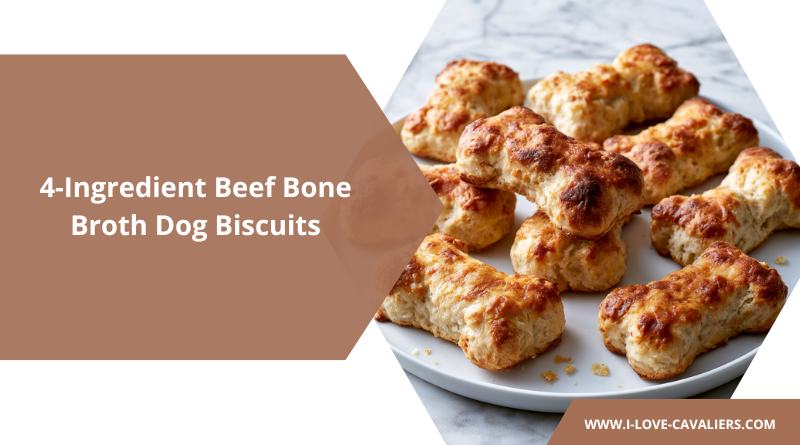
The result is the recipe below. Four ingredients, one bowl, baked in under half an hour. Your dog will lose his mind (mine still does, and I’ve made these maybe twenty times by now).
At a Glance
| Thing | Detail |
|---|---|
| Total time | 45 minutes |
| Active time | 10 minutes |
| Yield | ~24 small biscuits |
| Texture | Crunchy, like a classic dog biscuit |
| Shelf life | 2 weeks pantry / 3 months freezer |
| Cost per batch | ~$3 to $4 |
Honestly, the hardest thing about this recipe is keeping the dog out of the kitchen while they bake.
Why These Beat Store-Bought Treats
- Real ingredients, no surprises. You know exactly what’s going into your dog. No mystery “natural flavors,” no preservatives with five vowels in them.
- Cheaper by a mile. A batch costs about $3 to $4. The equivalent at the pet store runs $12 to $15 for half the quantity.
- Smells like a Sunday roast. Your kitchen will smell amazing. Your dog will sit in front of the oven the entire bake time.
- Long shelf life. Properly stored, they last weeks in the pantry and months in the freezer. One batch covers a lot of training sessions.
The first two are the real reasons I keep making them. The smell is just a bonus.
For more easy starter recipes that go alongside this one, check out my homemade dog treats for total beginners collection.
Beef Broth vs Bone Broth: The Difference Actually Matters
Quick distinction that almost every recipe site skips.
Plain beef broth is just meat simmered in water, sometimes with vegetables. It’s thin and light. Beyond flavor and a few minerals, there’s not much going on.
Bone broth is bones (knuckle, marrow, oxtail, whatever you can get) simmered low and slow for 12 to 24 hours. That long extraction releases collagen, gelatin, glucosamine, and chondroitin. Those compounds are what people actually mean when they talk about broth supporting joint health.
There’s a simple test to check if your homemade broth is real bone broth or just flavored water. Pop it in the fridge overnight. If it sets into a jiggly jelly, you’ve got collagen-rich bone broth. If it stays liquid, you’ve got plain broth.
For this recipe, either works. But if you’ve gone through the trouble of simmering bones for 18 hours, the bone broth version is what makes these treats actually feel restorative.
The Recipe: Baked Beef Bone Broth Dog Biscuits
Ingredients
| Ingredient | Amount | Notes |
|---|---|---|
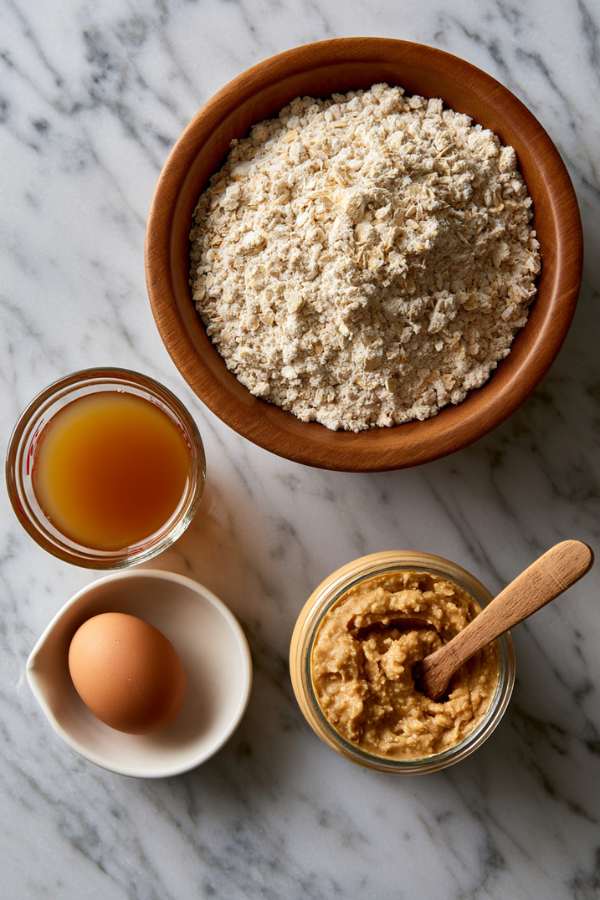
| Oat flour | 2 cups | Or whole wheat. Oat flour is gentler on sensitive stomachs. |
| Beef bone broth | ½ cup | Homemade or dog-safe brand. Cold. |
| Egg | 1 large | Beaten lightly. Acts as the binder. |
| Natural peanut butter | ¼ cup | Must be xylitol-free. Read the label. |
That’s it. Four ingredients. You probably have three of them already.
A quick word on the peanut butter. Xylitol is lethal to dogs even in tiny amounts. Some “natural” peanut butters now use it as a sweetener. Flip the jar. If you see xylitol, birch sugar, or “natural sweetener” listed, put it back.
Step-by-Step
#1 Preheat and prep the pan
Set your oven to 350°F (175°C). Line a baking sheet with parchment paper. The biscuits won’t stick badly without it, but parchment makes cleanup a non-event.
#2 Mix the wet ingredients
In a large bowl, combine the cold beef bone broth, the beaten egg, and the peanut butter. Whisk until smooth.
The peanut butter will resist for a second. Keep going. You want no streaks.
If your peanut butter is rock-hard, microwave it for 15 seconds first. It stirs in like a dream after that.
#3 Add the flour
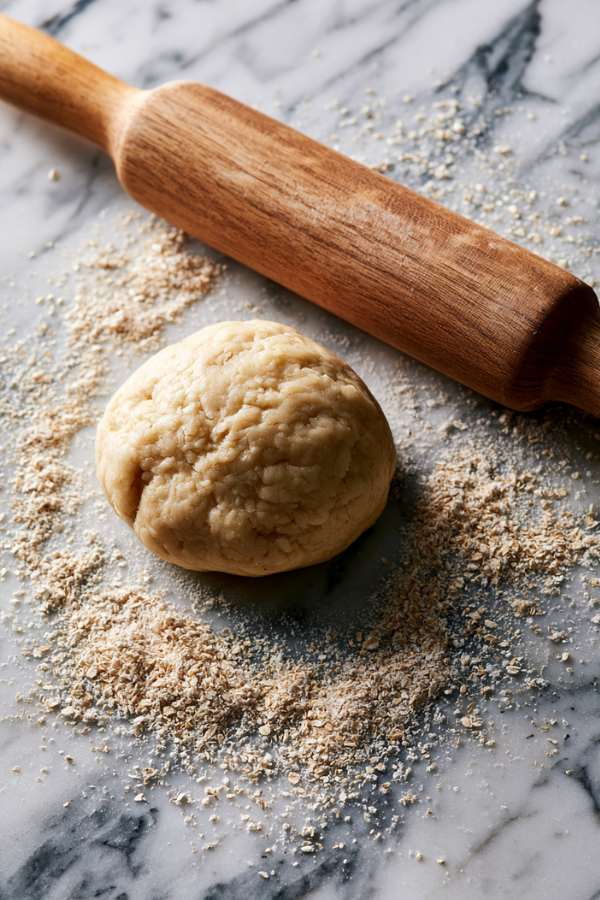
Sprinkle the oat flour in slowly, mixing as you go. The dough should pull away from the bowl and feel like soft cookie dough. Slightly tacky, but not sticky.
If it’s too wet, add another tablespoon of oat flour at a time. If it’s too dry and crumbly, add a teaspoon of broth at a time. Don’t overcorrect.
#4 Roll and cut
Dust a clean surface with a little extra oat flour. Roll the dough out to about ¼ inch thick. Thicker biscuits stay chewier. Thinner ones bake up crisp.
Use a cookie cutter (bone-shaped, paw-shaped, or just a round one) to cut your shapes. A pizza wheel works fine if you don’t have cutters. Cut squares and call it a day.
Re-roll the scraps until you’ve used all the dough. You should end up with around 24 biscuits, depending on cutter size.
#5 Bake
Place the biscuits on the parchment-lined sheet with a little space between them. They don’t spread much, but air flow helps them crisp.
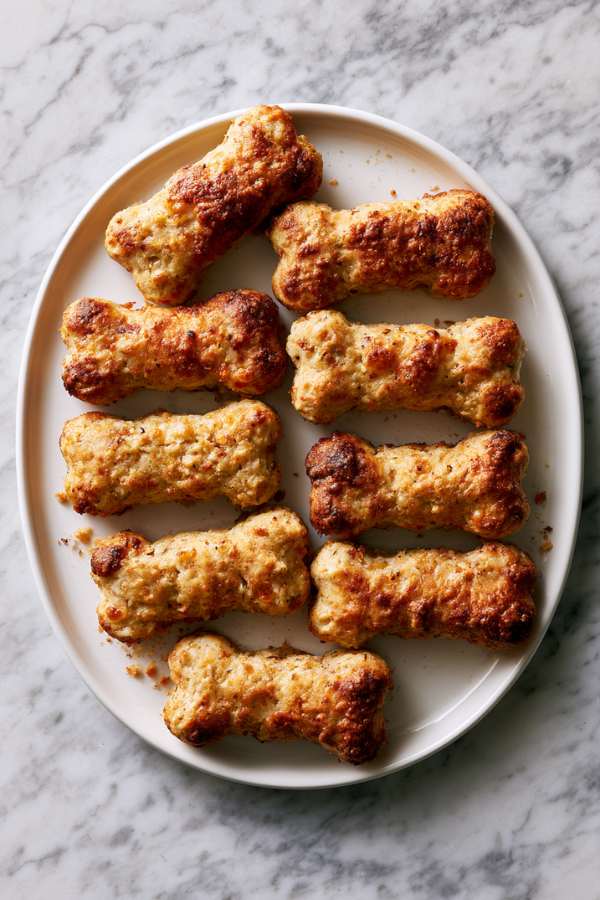
Bake for 25 to 30 minutes until the tops are golden brown and the edges look firm. Tap one with a finger. It should sound hollow.
#6 Cool completely before serving
This is the part dogs hate and you have to enforce. Let the biscuits cool on the pan for 10 minutes, then move them to a wire rack until they’re at room temperature.
A warm biscuit is soft in the middle. A fully cooled biscuit is properly crunchy and lasts way longer in storage. (Snickers has burned his tongue twice on impatient samples. He still doesn’t learn.)
Storage
| Method | Container | How long |
|---|---|---|
| Pantry | Airtight jar | 2 weeks |
| Fridge | Airtight container | 3 weeks |
| Freezer | Freezer bag with date label | 3 months |
For freezer storage, freeze the biscuits in a single layer on a baking sheet first, then transfer to a bag. They won’t clump that way.
How Many Can Your Dog Have?
A common rule from veterinary nutritionists is 1 fluid ounce of broth per 10 pounds of body weight per day. Each biscuit uses roughly a teaspoon of broth, so here’s a practical guide.
| Dog weight | Max biscuits per day |
|---|---|
| Under 10 lbs | 1 to 2 |
| 10 to 25 lbs | 2 to 3 |
| 25 to 50 lbs | 3 to 4 |
| 50 to 75 lbs | 4 to 5 |
| Over 75 lbs | 5 to 6 |
These are upper limits, not goals. Treats should make up no more than 10% of your dog’s daily calorie intake, and that includes everything (training rewards, table scraps, pill pockets).
Start lower than the table suggests. Watch for any GI upset (loose stool, gas, weird appetite). Adjust from there.
If you’re looking for more recipes in this price range, the under-$5 homemade treats roundup pairs well with this one.
Dogs Who Should Skip These Treats
Not every dog should have broth-based treats, even homemade ones.
- Dogs with chronic kidney disease. Bone broth is high in phosphorus, which is hard on kidneys. Sodium also has to be tightly controlled.
- Dogs with heart disease. Most cardiac patients are on sodium-restricted diets. Even homemade broth carries some natural sodium from the bones.
- Dogs with pancreatitis history. Fat from marrow bones can trigger a flare. Lean broth is okay; rich, oily broth is not.
- Dogs with beef allergies. Sounds obvious, but worth saying. Swap to chicken or turkey bone broth and the recipe still works exactly the same.
When in doubt, ask your vet. A one-line “is this okay for him?” text is free.
A Jar by the Coffee Maker
I keep a glass jar of these on the counter, right next to the coffee maker. Snickers figured out within about three days that the coffee maker beeping meant a biscuit was probably coming. Now every morning he plants himself under the jar before I’ve even hit grind on the espresso.
He’s not subtle about it. Cavaliers never are.
The Sunday stockpot has become a standing ritual at this point. Bones go in around lunchtime, broth comes out around dinner, biscuits go in the oven the next morning. The whole house smells incredible for two days, he gets a jar that lasts him a couple of weeks, and I get to skip the pet-store treat aisle for one more thing.
I’m a passionate dog lover and kitchen enthusiast, but I’m not a certified veterinarian or animal nutritionist. Long-term homemade diets and broth-based treats should always be discussed with your vet to make sure your pup is getting everything they need.
Bon appétit to your furry friend!
Affiliate Disclosure: This page contains affiliate links. We earn a small commission when you purchase through these links at no extra cost to you. Thank you for supporting our work!