
It’s 2 AM, and you hear that all-too-familiar sound. Your dog is pacing, whining, and their stomach is making noises that could wake the neighbors. You want to help, but you’re not sure what’s safe to give them at home.
The good news? Most cases of upset stomach in dogs can be treated with simple home remedies you probably already have in your kitchen.
You don’t always need an emergency vet visit or expensive medications. In this guide, you’ll learn proven natural remedies that soothe your dog’s digestive system and help them feel better fast.
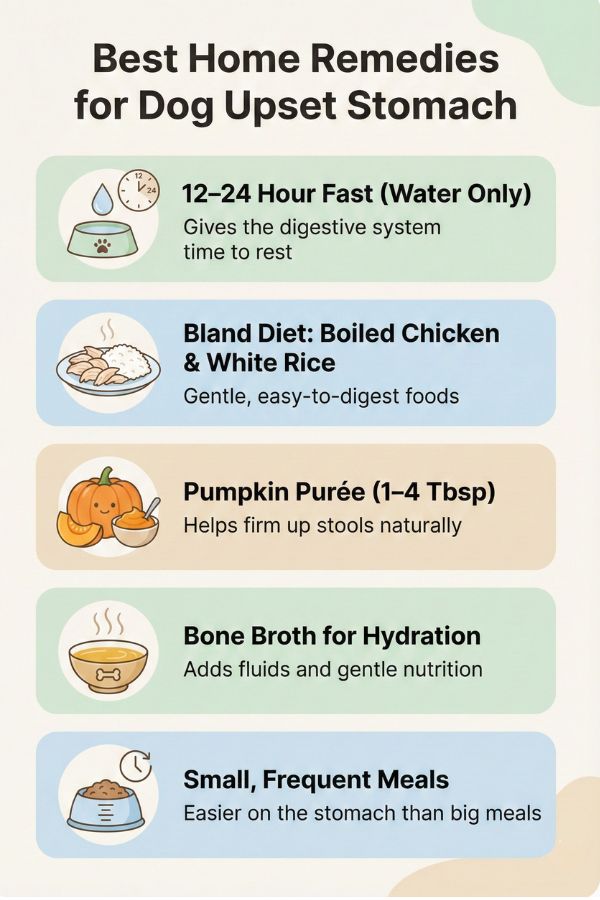
Quick Answer: Best Home Remedies for Dog Upset Stomach
If your dog has a mild upset stomach without severe symptoms, these remedies work best:
- 12-24 hour fast (water only) to let the digestive system rest
- Bland diet of boiled chicken and white rice
- Pumpkin puree (1-4 tablespoons) to firm up stools
- Bone broth for hydration and gentle nutrition
- Small, frequent meals instead of large portions
Keep reading to learn exactly how to use each remedy and when to call your vet instead.
Understanding Your Dog’s Upset Stomach
Dogs get upset stomachs for dozens of reasons. Maybe they raided the trash, ate something funky on their walk, or they’re stressed about changes at home. Sometimes it’s as simple as eating too fast or switching foods too quickly.
The most common symptoms include vomiting, diarrhea, loss of appetite, excessive drooling, and gurgling stomach sounds. Your dog might also seem lethargic, refuse to play, or keep looking at their belly.
Most upset stomachs resolve within 24-48 hours with proper home care. But here’s the thing—you need to know the difference between a simple tummy ache and something more serious.
When to skip home remedies and call the vet immediately:
- Blood in vomit or stool
- Vomiting or diarrhea lasting more than 24 hours
- Signs of pain (whimpering, hunched posture, won’t let you touch their belly)
- Lethargy or weakness
- Dry gums or loss of skin elasticity (dehydration)
- Known ingestion of toxic substances
- Puppies or senior dogs with severe symptoms
For everything else, these home remedies can provide safe, effective relief.

Fasting: Give the Digestive System a Break
The first and often most effective remedy is simply letting your dog’s stomach rest. When Charlotte has an upset tummy, I withhold food for 12-24 hours while keeping fresh water available at all times.
How to do it right:
Start the fast as soon as you notice symptoms. Remove all food, including treats and table scraps. Make sure your dog has constant access to fresh water—dehydration is more dangerous than hunger.
For adult dogs, a 12-24 hour fast is safe and beneficial. Puppies under six months should only fast for 6-12 hours maximum because they have less energy reserves. Senior dogs can usually handle a full 24-hour fast, but watch them closely.
During the fast, your dog’s digestive system gets a chance to heal and reset. The inflammation calms down, and whatever was irritating their stomach has time to pass through.
Pro Tip: If your dog seems desperately hungry during the fast, offer ice cubes to chew. This keeps them occupied and provides hydration without overwhelming their stomach.
The Bland Diet: Chicken and Rice
After the fasting period, you can’t just go back to regular food. Your dog needs something gentle that won’t trigger another upset. That’s where the classic bland diet comes in.
What You’ll Need:
- Boneless, skinless chicken breast
- White rice (not brown—it’s too high in fiber)
- Water for cooking
How to Prepare:
Boil chicken breast in plain water until fully cooked (about 15-20 minutes). No seasonings, no oil, nothing fancy. Shred or dice the chicken into small, bite-sized pieces.
Cook white rice according to package directions, but make it a bit mushier than normal by adding extra water. You want it easy to digest.
Mix chicken and rice in a 1:3 ratio—one part chicken to three parts rice. For a 50-pound dog, start with about half a cup of this mixture.
Feeding Schedule:
Don’t give a full meal right away. Start with small portions (2-3 tablespoons for small dogs, 1/4 to 1/2 cup for larger dogs) every 3-4 hours. If they keep it down, gradually increase portion sizes over the next meal or two.
Continue the bland diet for 2-3 days, then slowly transition back to regular food by mixing in increasing amounts of their normal kibble over 3-5 days.
Why This Works: White rice is easily digestible and helps bind loose stools. Chicken provides protein without excess fat that could irritate the stomach further. Together, they give your dog nutrition while their digestive system recovers.
Pumpkin Puree: Nature’s Stomach Soother
Plain pumpkin puree is like magic for dog digestive issues. It works for both diarrhea and constipation because of its unique fiber content.
What to Use: Get 100% pure pumpkin puree—not pumpkin pie filling, which contains sugar and spices that can make things worse. Check the ingredient label. It should say just one thing: pumpkin.
Dosage Guide:
- Small dogs (under 15 lbs): 1-2 teaspoons
- Medium dogs (15-35 lbs): 1-2 tablespoons
- Large dogs (35-85 lbs): 2-4 tablespoons
- Giant breeds (85+ lbs): 4-5 tablespoons
Mix the pumpkin into their bland diet or offer it plain. Most dogs actually like the taste. You can give pumpkin 2-3 times daily until symptoms improve.
The Science: Pumpkin contains soluble fiber that absorbs excess water in the digestive tract, firming up loose stools. It also adds moisture and bulk for dogs dealing with constipation. Plus, it’s loaded with vitamins A, C, and E that support overall digestive health.
Storage Tip: Freeze leftover pumpkin puree in ice cube trays. Pop out a cube or two as needed. Each cube is roughly 1-2 tablespoons.
Bone Broth: Liquid Gold for Upset Tummies
Bone broth is gentle, hydrating, and packed with nutrients that support gut healing. It’s especially helpful if your dog won’t eat solid food but needs nutrition.
How to Make Dog-Safe Bone Broth:
Use bones from chicken, turkey, or beef. Place them in a large pot and cover with water. Add a splash of apple cider vinegar to help extract nutrients from the bones.
Bring to a boil, then reduce heat and simmer for 12-24 hours. The longer it simmers, the more nutrients you extract. Skim off any foam that rises to the top.
Strain out all bones and solids. Let cool completely, then refrigerate. A layer of fat will solidify on top—skim this off before serving.
Important: Never use store-bought broth from the grocery store. Commercial broths contain onions, garlic, and high sodium levels that are harmful to dogs. Make your own or buy broth specifically formulated for pets.
Serving Size: Offer 1-2 tablespoons for small dogs, up to 1/2 cup for large breeds. You can give it several times throughout the day. Serve it plain or pour over bland diet meals.
Probiotics: Restore Healthy Gut Bacteria
When your dog’s stomach is upset, the balance of good bacteria in their digestive system gets thrown off. Probiotics help restore that balance.
Plain Yogurt Method: Give your dog a spoonful of plain, unsweetened yogurt with live active cultures. Check the label for “contains live and active cultures” and make sure it doesn’t contain xylitol, which is toxic to dogs.
Dosage: 1 teaspoon for small dogs, up to 3 tablespoons for large dogs, once or twice daily.
Probiotic Supplements: Dog-specific probiotic supplements often work better than yogurt because they contain strains specifically beneficial for canine digestion. Look for products containing Lactobacillus and Bifidobacterium strains.
Follow package directions for dosage based on your dog’s weight.
Pro Tip: Keep probiotics on hand even when your dog is healthy. Starting them at the first sign of digestive upset can prevent symptoms from getting worse.
Ginger: Natural Anti-Nausea Aid
Ginger has been used for centuries to calm upset stomachs, and it works for dogs too. It reduces nausea and can help with motion sickness or general stomach discomfort.
How to Give Ginger:
Fresh ginger is best. Peel a small piece (about the size of your thumbnail for a medium dog) and grate it finely. Mix it into food or blend it into a paste.
Alternatively, make ginger tea by steeping fresh grated ginger in hot water for 10 minutes, then letting it cool completely. Offer 1-2 teaspoons to small dogs, up to 2 tablespoons for larger breeds.
Dosage Warning: Less is more with ginger. Too much can actually cause stomach irritation. Start with tiny amounts and don’t use it for more than a few days at a time.
Never use ginger if your dog is on blood-thinning medications, as it can interfere with clotting.
Slippery Elm: Coat and Protect the Digestive Tract
Slippery elm bark powder creates a soothing coating along your dog’s digestive tract, reducing inflammation and irritation. It’s particularly helpful for dogs with acid reflux or inflammatory bowel issues.
How to Prepare:
Mix 1/4 to 1/2 teaspoon of slippery elm powder (for a 30-pound dog) with enough cool water to create a gel-like consistency. Let it sit for a few minutes to thicken.
Give the mixture 30 minutes before meals to coat the digestive tract. You can also mix it into food, but it works better on an empty stomach.
Where to Find It: Slippery elm powder is available at health food stores and online. Make sure you’re buying food-grade slippery elm bark powder.
Safety Note: Slippery elm can slow the absorption of medications. If your dog takes regular medications, separate slippery elm administration by at least 2-3 hours.
Sweet Potato: Gentle Fiber Source
Cooked sweet potato is another excellent remedy for digestive upset. Like pumpkin, it provides soluble fiber that helps regulate digestion.
Preparation:
Peel and cube one medium sweet potato. Boil or steam until very soft (about 15-20 minutes). Mash thoroughly—no chunks that could be hard to digest.
Let cool completely before serving. Don’t add butter, salt, or any seasonings.
Serving Size:
- Small dogs: 1-2 tablespoons
- Medium dogs: 2-4 tablespoons
- Large dogs: 1/4 to 1/2 cup
Mix into the bland diet or offer plain. Sweet potato can be given 2-3 times daily.
Hydration: The Most Important Remedy
Dehydration is the biggest danger with vomiting and diarrhea. Your dog loses fluids faster than you think, and dehydration can turn a mild stomach upset into an emergency.
How to Keep Your Dog Hydrated:
Offer fresh water constantly. Change it frequently to keep it appealing. Some dogs prefer ice cubes when they’re nauseous.
If your dog won’t drink plain water, try:
- Ice cubes made from low-sodium chicken or beef broth
- A splash of bone broth in their water bowl
- Offering water from your hand or a different bowl
Check for Dehydration: Gently pull up the skin on the back of your dog’s neck. It should spring back immediately. If it stays tented or returns slowly, your dog is dehydrated and needs veterinary care.
Also check their gums—they should be moist and pink, not dry or tacky to the touch.
What NOT to Give Your Dog
Some popular human remedies are dangerous for dogs. Never give:
Pepto Bismol or Kaopectate: Contains salicylates related to aspirin, which can be toxic to dogs.
Imodium: Can be fatal to certain breeds (collies, shepherds, and related breeds) due to genetic sensitivity. Always consult a vet first.
Human antacids: Dosing is tricky, and some contain ingredients harmful to dogs.
Milk: Most adult dogs are lactose intolerant, which will make diarrhea worse, not better.
Fatty foods: No matter how much your dog begs, fatty meats and rich foods will aggravate their upset stomach.
Creating a Recovery Schedule
Here’s a sample 3-day recovery plan for a dog with mild stomach upset:
Day 1:
- Fast for 12-24 hours (water only)
- Offer ice cubes or small amounts of bone broth
- Monitor symptoms closely
Day 2:
- Start bland diet (chicken and rice) in small portions every 3-4 hours
- Add 1-2 tablespoons pumpkin puree
- Continue monitoring hydration
Day 3:
- Continue bland diet with slightly larger portions
- Maintain 3-4 small meals
- Add probiotic if available
- Start transitioning back to regular food if symptoms have resolved
Days 4-7:
- Gradually mix regular food into bland diet (25% regular food, 75% bland)
- Increase regular food by 25% each day
- By day 7, should be back to 100% regular diet
Preventing Future Upset Stomachs
Once your dog recovers, you’ll want to prevent it from happening again. Here’s how:
Slow food transitions: When changing dog food brands, mix old and new food over 7-10 days, gradually increasing the new food ratio.
Control access: Keep trash cans secured, don’t leave food on counters, and supervise your dog during walks to prevent them from eating things they shouldn’t.
Feed smaller, more frequent meals: Instead of one or two large meals, try 3-4 smaller portions throughout the day. This is easier on the digestive system.
Manage stress: Changes in routine, new pets, or household stress can trigger stomach issues. Maintain consistent schedules when possible.
Regular exercise: Daily activity helps maintain healthy digestion and regular bowel movements.
Frequently Asked Questions
How long should a dog’s upset stomach last? Mild upset stomachs typically resolve within 24-48 hours with home treatment. If vomiting, diarrhea, or lack of appetite continues beyond 24 hours, or if symptoms worsen, contact your veterinarian. Puppies and senior dogs should be seen sooner if symptoms don’t improve within 12 hours.
Should I take my dog to the vet for upset stomach? See a vet immediately if your dog shows blood in vomit or stool, severe lethargy, signs of pain, symptoms lasting more than 24 hours, or if they’re a puppy or senior dog with severe symptoms. Mild cases with no concerning signs can be treated at home with fasting and bland diet.
What foods should I avoid when my dog has an upset stomach? Avoid fatty meats, dairy products (except small amounts of plain yogurt), bones, rawhides, new treats, table scraps, and rich foods. Stick to bland, easily digestible options like boiled chicken, white rice, pumpkin, and sweet potato until symptoms fully resolve.
How do I know if my dog’s stomach issue is serious? Warning signs include persistent vomiting (more than 2-3 times in 24 hours), bloody or black tarry stool, severe abdominal pain, bloated or distended abdomen, pale gums, collapse, or known ingestion of toxic substances. These require immediate veterinary attention.
Conclusion
Most cases of upset stomach in dogs respond well to simple home remedies. A short fast, followed by a bland diet and supportive care like pumpkin or bone broth, will have your pup feeling better within a day or two.
Trust your instincts as a dog owner. You know your dog best. If something feels off or symptoms don’t improve quickly, don’t hesitate to call your vet. These home remedies work great for mild digestive upset, but they’re not a replacement for professional veterinary care when it’s truly needed.
Keep these remedies on hand, and you’ll be ready the next time your dog’s stomach acts up. Your dog will thank you for the quick relief.