
The first time I cooked chicken thighs for Snickers, my Cavalier, it was almost an accident. I’d grabbed a family pack at the grocery store thinking I’d batch a few weeknight dinners for myself. Then I started reading about pancreatitis in dogs and how a fatty meal can trigger it, and I started looking sideways at the kibble bag.
The bag on the counter listed “chicken meal” as the fourth ingredient. Whatever that meant. The chicken in my fridge was just chicken. Boneless, skinless, with a number on the side telling me exactly how many grams of fat it had.
That was the moment. I trimmed two thighs, simmered them with rice and a handful of carrots, and let it cool while Snickers watched from his bed like he already knew what was happening. He inhaled it. Then he stared at the empty bowl, then at me, like I’d been keeping a secret from him for years.
Since then, chicken thighs have become the protein I cook with most often, and I’ve learned a lot about why thighs actually work better than chicken breast for most dogs (it’s not just the price). This is the recipe I run every week, plus the calcium math, the portion sizes by weight, and the safety stuff most recipes hand-wave through.
The Chicken Thigh Recipe at a Glance
| Element | Detail |
|---|---|
| Yield | About 6 cups cooked |
| Cook time | 35 minutes |
| Storage | 4 days fridge, 3 months freezer |
| Best for | Adult dogs in good health |
| Skip if | Pancreatitis history, kidney disease, chicken allergy |
Bottom of the table: boneless, skinless thighs cooked plain, balanced with rice or sweet potato, soft veg, fish oil, and ground eggshell for calcium. Five ingredients, one bowl.
Safety First: What to Know Before You Cook
A few rules that aren’t negotiable. I’ll keep this short because I know you came for the recipe.
Always use boneless, skinless thighs. Cooked chicken bones splinter and can puncture the gut. Even slow-cooked ones aren’t worth the risk for most home cooks. The skin holds most of the fat, and removing it makes the recipe far easier to portion accurately.
No seasoning. Ever. No salt, no pepper, no butter, no oil. Onion and garlic are toxic to dogs in any form, including powder. The chicken cooks plain in water or unsalted broth.
Cook fully. I’m not getting into the raw vs cooked debate today. Cornell ran a study in 2025 that found 42% of raw pet food samples carried live Salmonella or E. coli, against 0% of cooked samples. That’s enough for me.
Cool completely before serving. Hot food can burn a dog’s mouth faster than you’d think, especially small dogs who tend to gulp.
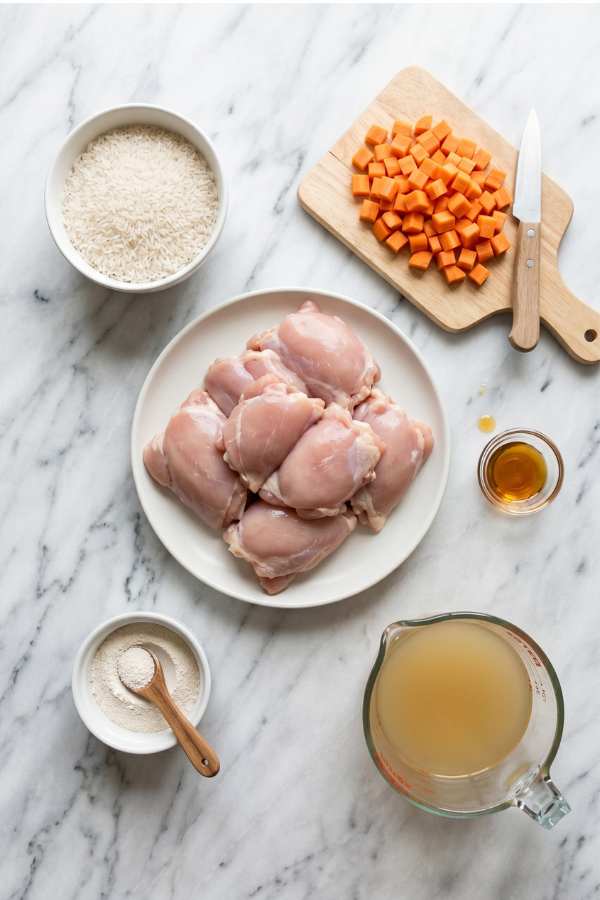
Ingredients
| Ingredient | Amount | Notes |
|---|---|---|
| Boneless, skinless chicken thighs | 2 lbs (about 900g) | Trim visible fat for sensitive stomachs |
| White rice (or cooked sweet potato) | 1.5 cups dry | Brown rice works but takes longer |
| Carrots, diced | 1 cup | Green beans, peas, or spinach also work |
| Fish oil | 1 tsp | Adds omega-3s for skin and joints |
| Ground eggshell powder | 1.5 tsp | Calcium fix, don’t skip it |
| Water or unsalted low-sodium broth | About 4 cups | Just enough to cover |
Three of those you probably already have. The eggshell powder you can make yourself in 10 minutes with stuff in your recycling bin. I’ll walk through it in the calcium section below.
How to Make It
Trim and Cut the Thighs
Lay the thighs out and trim off the obvious chunks of fat (the white ribbons along the edges). You don’t need to be surgical about it. Cut each thigh into 1-inch chunks so they cook evenly and portion easily once cool.
Start the Rice
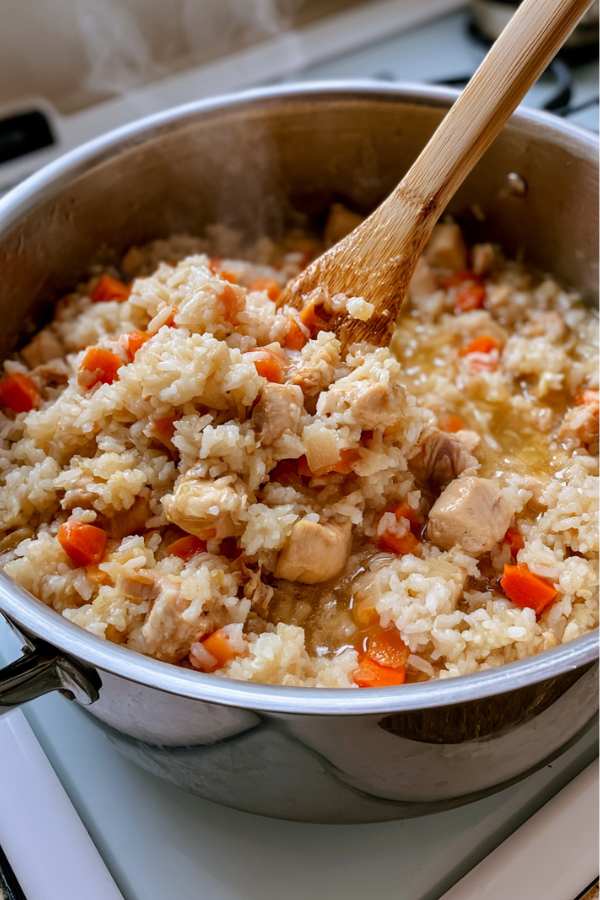
Rinse the rice in a strainer until the water runs mostly clear. This removes the surface starch and keeps the final mix from getting gluey. Add it to a pot with 3 cups of water, bring to a boil, cover, and simmer 18 minutes.
Going with sweet potato instead? Cube it into 1/2-inch pieces and boil for about 15 minutes until fork-tender.
Simmer the Chicken
Add the chicken chunks to a separate pot with just enough water to cover. Simmer gently for about 15 minutes until the meat is cooked through and no pink remains in the center. A gentle simmer keeps the meat tender. A rolling boil makes it rubbery.
Save 1 cup of the cooking liquid before you drain. You’ll mix it back in for moisture and flavor.
Add the Soft Veg
Drop the diced carrots into the chicken pot for the last 5 minutes of cooking. Or steam them separately if you prefer them firmer. They should be soft enough to mash with a fork. Hard veg is a choking risk for small dogs and harder to digest for any dog.
Cool, Mix, and Add the Supplements
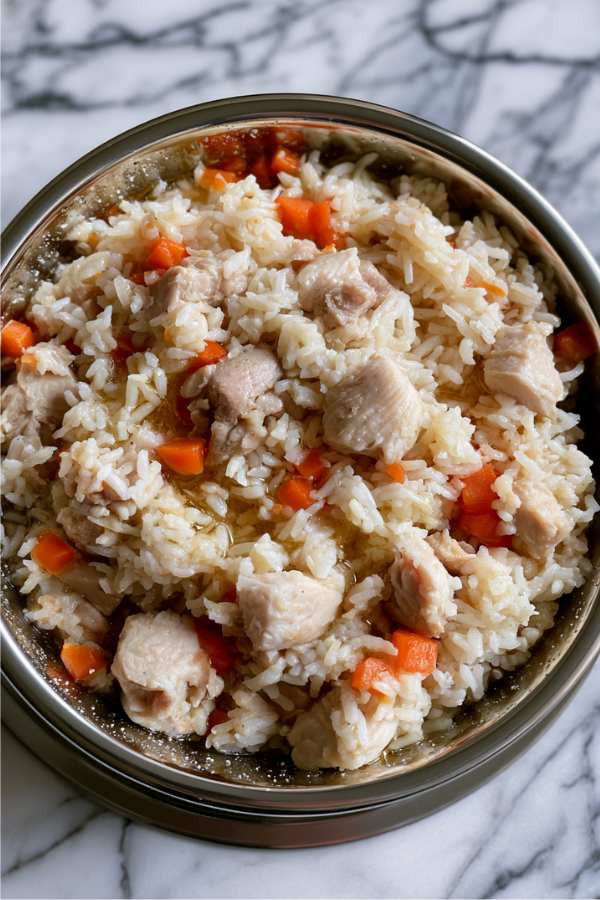
Combine the chicken, rice (or sweet potato), and carrots in a large bowl. Pour the reserved cooking liquid back in. Let everything cool to room temperature before adding the fish oil and eggshell powder, since heat degrades both. Stir until evenly mixed.
Portion and Store Right Away
This is where most people get lazy. Don’t. Portion the food into single-meal containers immediately so you’re not scooping out daily portions from a 6-cup container and accidentally overfeeding. Storage details are in the section further down.
How Much to Feed Your Dog (Weight-Based Portion Table)
Most articles dodge this with “ask your vet.” Here’s the actual math.
Adult dogs need roughly 25 to 30 calories per pound of body weight per day. Cooked chicken thigh runs about 209 calories per 100g. If this recipe is the full meal (chicken + rice + veg), here’s how the daily totals break down by dog weight.
| Dog Weight | Daily Calories | Recipe Per Day | Meals |
|---|---|---|---|
| 10 lbs | 275 cal | ~1 cup (140g) | Split into 2 |
| 20 lbs | 500 cal | ~1.75 cups (250g) | Split into 2 |
| 30 lbs | 700 cal | ~2.5 cups (350g) | Split into 2 |
| 50 lbs | 1,100 cal | ~4 cups (560g) | Split into 2 |
| 70 lbs | 1,500 cal | ~5.5 cups (770g) | Split into 2-3 |
| 90 lbs | 1,800 cal | ~6.5 cups (920g) | Split into 2-3 |
These are starting points, not commandments. Active dogs need more. Couch-potato dogs need less. Watch your dog’s weight and body condition over 2 weeks and adjust by 10% in either direction if needed.
Important: if you’re mixing this recipe with kibble during a transition, halve both portions so you don’t end up double-feeding. That’s the most common reason dogs gain weight on a homemade switch.
Storage and Make-Ahead
A 2 lb batch of thighs makes roughly 6 cups of finished food, which feeds a medium dog about 3 days.
- Fridge: up to 4 days in an airtight container
- Freezer: up to 3 months in single-meal portions
- Thaw: overnight in the fridge, never in the microwave (uneven heating)
I freeze in silicone muffin trays so each “cup” pops out as a single portion. Pull two out the night before and they’re ready by morning. This is the method I’d go with for anyone batch cooking for the first time.
When NOT to Feed This Recipe
Chicken thighs are great for most healthy adult dogs. They’re a bad fit for a few specific cases.
- Dogs with pancreatitis history. Even lean thighs sit too high on fat for some dogs. Schnauzers, Cocker Spaniels, Yorkies, Dachshunds, and yes, some Cavaliers, are on the pancreatitis-watch list. Talk to your vet before switching.
- Chicken-allergic dogs. Chicken is a top-10 dog allergen. If your dog gets itchy paws, ear infections, or chronic loose stools on chicken-based kibble, this recipe will do the same thing.
- Dogs with kidney disease. Renal-friendly diets need protein levels and phosphorus levels dialed in by a vet, not a recipe blog.
- Puppies under 12 weeks. Growth diets need different calcium and protein targets than adult recipes. Our vet-approved homemade dog food recipes for puppies is the right starting point for the under-1-year crowd.
If your dog falls into one of those buckets, the answer isn’t “give up on homemade.” It’s “use the right recipe for the situation.”
I’m a passionate dog lover and kitchen enthusiast, but I’m not a certified veterinarian or animal nutritionist. Long-term homemade diets should always be discussed with your vet to make sure your pup is getting everything they need.
Bon appétit to your furry friend!