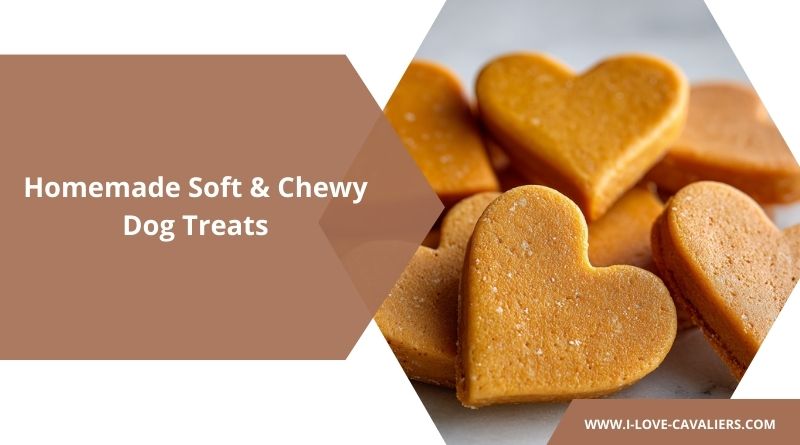
The first time I watched my first dog (Bentley) struggle with a hard, crunchy treat, it broke my heart a little.
He wanted it so badly (tail wagging, eyes bright) but every time he tried to bite down, the treat would slip out, or he’d give up entirely.
That moment stuck with me. And it’s why I developed this recipe.
These soft and chewy dog treats are specifically designed for dogs who need a gentler option—whether that’s a teething puppy, a senior with worn-down teeth, or a rescue who’s had dental work done.
They have that satisfying chewy textur making them perfect for dogs with allergies or ss pup can gum them down with pure joy. Also, they’re completely peanut-free, which makes them perfect for dogs with allergies or for households where peanut butter isn’t an option.
Let’s make some treats your dog will actually be able to enjoy.
Why Soft & Chewy Treats?
Not every dog can handle crunchy biscuits. Soft treats are ideal for:
- Senior dogs with worn, loose, or missing teeth
- Puppies who are still teething and have sensitive mouths
- Dogs with dental issues or those recovering from tooth extractions
- Picky eaters who prefer softer textures
- Training sessions where you need quick, easy-to-eat rewards
- Hiding medication — these work beautifully as homemade pill pockets
Plus, when you make them yourself, you know exactly what’s going into your dog’s body. No mystery ingredients, no preservatives, no fillers.
Soft and Chewy Sweet Potato Dog Treats Recipe
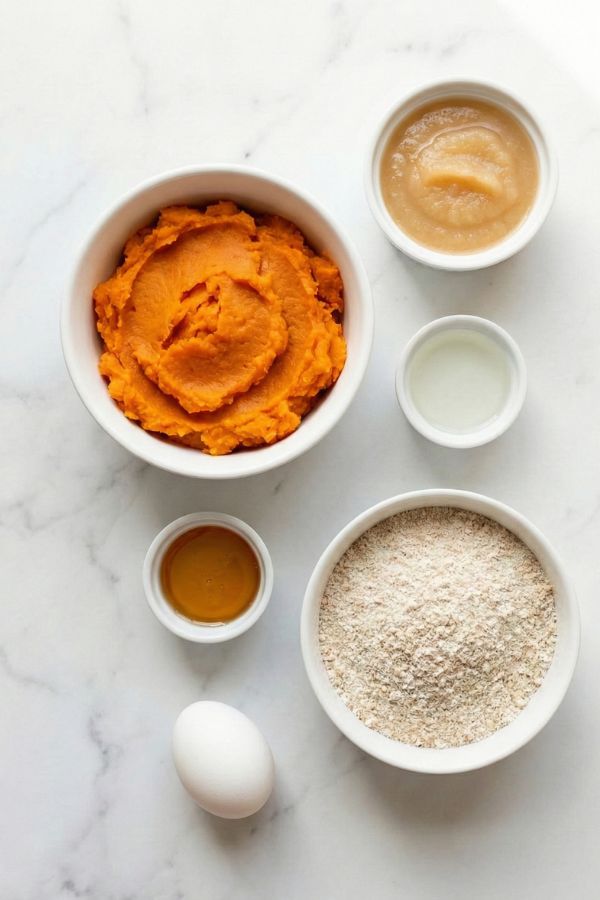
Ingredients
| Ingredient | Amount |
|---|---|
| Sweet potato (cooked, mashed) | 1 cup |
| Unsweetened applesauce | ¼ cup |
| Coconut oil | 2 tbsp |
| Honey | 1 tbsp |
| Oat flour | 1¼ cups |
| Egg | 1 large |
Step-by-Step Instructions
Step 1: Prep the Sweet Potato
If using fresh sweet potato, peel and cube one medium sweet potato. Boil in water for 15-20 minutes until fork-tender, then drain and mash until completely smooth. Let it cool to room temperature.
Alternatively, you can use canned sweet potato (not candied yams)—just make sure there’s no added sugar or spices.
Step 2: Preheat Your Oven
Set your oven to 325°F (165°C). This lower temperature is key—it bakes the treats gently without drying them out or making them crunchy.
Line a baking sheet with parchment paper or a silicone baking mat.
Step 3: Mix the Wet Ingredients
In a large mixing bowl, combine:
- 1 cup mashed sweet potato
- ¼ cup unsweetened applesauce
- 2 tbsp coconut oil (melted)
- 1 tbsp honey
- 1 egg
Stir until everything is well combined and smooth.
Step 4: Add the Oat Flour
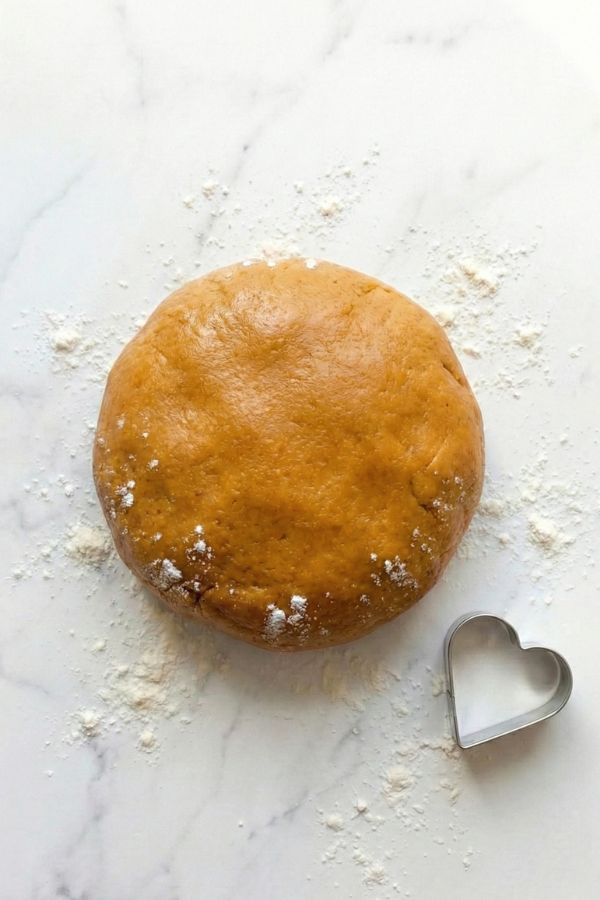
Gradually add 1¼ cups oat flour to the wet mixture. Stir until a soft, slightly sticky dough forms.
Texture Check: The dough should be soft and pliable, not crumbly. If it’s too dry, add a teaspoon of water. If it’s too sticky to handle, add a small sprinkle of oat flour.
Don’t have oat flour? Make your own by blending rolled oats in a food processor or blender until they reach a fine powder consistency.
Step 5: Roll and Cut
Lightly dust your countertop with oat flour. Roll the dough out to about ¼ inch thickness—this is the sweet spot for chewy treats that hold their shape.
Use a heart-shaped cookie cutter to cut out your treats. Gather the scraps, re-roll, and repeat until all the dough is used.
Step 6: Bake
Place the heart-shaped treats on your prepared baking sheet, leaving a little space between each one.
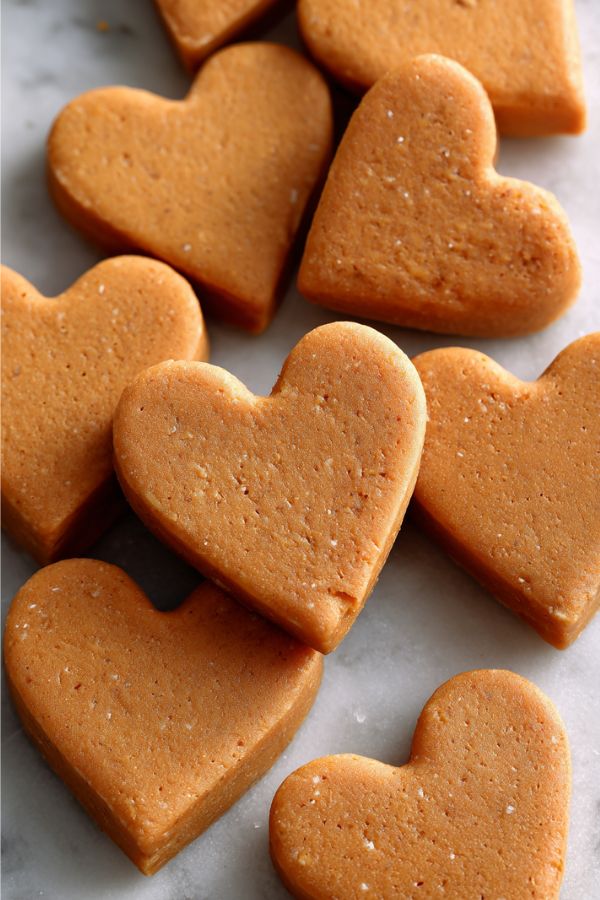
Bake for 12-15 minutes. The treats are done when they’re set on top but still feel slightly soft when pressed. They should NOT be golden brown or crispy—that means they’ve overbaked.
Step 7: Cool Completely
This is important: let the treats cool completely on the baking sheet before moving them. They’ll firm up slightly as they cool but remain soft and chewy inside.
Storage Instructions
Because these treats are soft and contain fresh ingredients, they need proper storage to stay fresh and avoid mold.
- Refrigerator (recommended): Store in an airtight container in the fridge for up to 1 week.
- Freezer: For longer storage, freeze treats in a single layer first, then transfer to a freezer bag. They’ll keep for up to 3 months. Thaw in the fridge overnight or let sit at room temperature for 10-15 minutes before serving.
Important: Do not store these at room temperature for more than a day or two—the moisture content that makes them soft also makes them prone to spoiling.
Feeding Suggestions
The 10% Rule
Even healthy homemade treats should be given in moderation. Treats should never exceed 10% of your dog’s daily caloric intake.
- Small dogs (under 20 lbs): 1-2 treats per day
- Medium dogs (20-50 lbs): 2-3 treats per day
- Large dogs (50+ lbs): 3-4 treats per day
Perfect for Training
These treats are soft enough to break into smaller pieces, making them ideal for training sessions where you need to give lots of quick rewards without overfeeding.
Medication Hack
Need to give your dog a pill? Press a treat around the medication—the soft, pliable texture makes these perfect homemade pill pockets.
Frequently Asked Questions
Can I use canned pumpkin instead of sweet potato?
Yes! Canned pumpkin puree (plain, not pie filling) is a perfect 1:1 substitute. It creates the same soft texture and dogs love it just as much.
My dog is allergic to eggs. What can I substitute?
You can replace the egg with an additional ¼ cup of applesauce or mashed banana. The treats may be slightly more delicate, but they’ll still hold together.
Can I use regular flour instead of oat flour?
You can, but oat flour creates a softer, chewier texture and is easier on sensitive stomachs. If you use whole wheat flour, the treats may turn out slightly denser.
How do I know when they’re done baking?
The treats should look set on top and feel soft when gently pressed—not wet or sticky, but definitely not firm or crispy. Remember: they firm up as they cool, so err on the side of underbaking.
Can puppies eat these treats?
Yes! These are gentle enough for puppies over 12 weeks old. Just break them into smaller pieces appropriate for your puppy’s size.
Are these treats safe for diabetic dogs?
These contain natural sugars from sweet potato, applesauce, and honey. For diabetic dogs, consult your vet before introducing any new treats. You may need to reduce or eliminate the honey.
A Little Disclaimer
I’ve spent two decades helping dog owners make better nutritional choices for their pets, but I’m not your dog’s veterinarian.
Every dog is different—some have allergies, health conditions, or dietary restrictions that require professional guidance. Before introducing any new treats to your dog’s diet, especially if they have health issues, please consult with your vet.
Now go make some heart-shaped goodies and watch your pup’s tail wag with pure happiness. Even the toothless ones.