I was sitting on the couch last Tuesday, half-watching some cooking show, when I looked down and saw Snickers flat on his back with all four legs sticking straight up in the air. Mouth slightly open. Completely gone.
I’ve seen this dog sleep in some truly ridiculous positions over the years. Sprawled across the entire bed like he pays rent. Wedged between couch cushions like he’s hiding from something. Curled into a ball so tight you’d think he was trying to disappear.
But that belly-up pose got me thinking. Does the way a dog sleeps actually mean something? Turns out, it does. Every position tells you something about how your dog is feeling, whether they’re comfortable, anxious, too warm, or just deeply trusting you with their most vulnerable self.
So I looked into it. Talked to our vet, read through some animal behavior studies, and honestly just spent way too long watching Snickers nap.
Here’s what I found out about the ten most common dog sleeping positions and what’s really going on in your pup’s head.
Why Your Dog’s Sleeping Position Actually Matters
You might think a sleeping dog is just… sleeping. But there’s more going on than you’d expect.
- It reveals their emotional state. A dog curled into a tight ball is processing the world differently than one sprawled on their back. Their body is telling you what their brain is feeling.
- It can signal health issues. Certain positions, like sleeping with their head elevated, can point to breathing difficulties or heart problems. Catching these early matters.
- It shows how safe they feel. Dogs that sleep in vulnerable positions around you are giving you the ultimate compliment. They trust you completely.
- It helps you improve their comfort. Once you understand why your dog picks a certain pose, you can make their sleeping setup better.
Now that you know why it matters, let’s break down each position.
10 Dog Sleeping Positions Explained
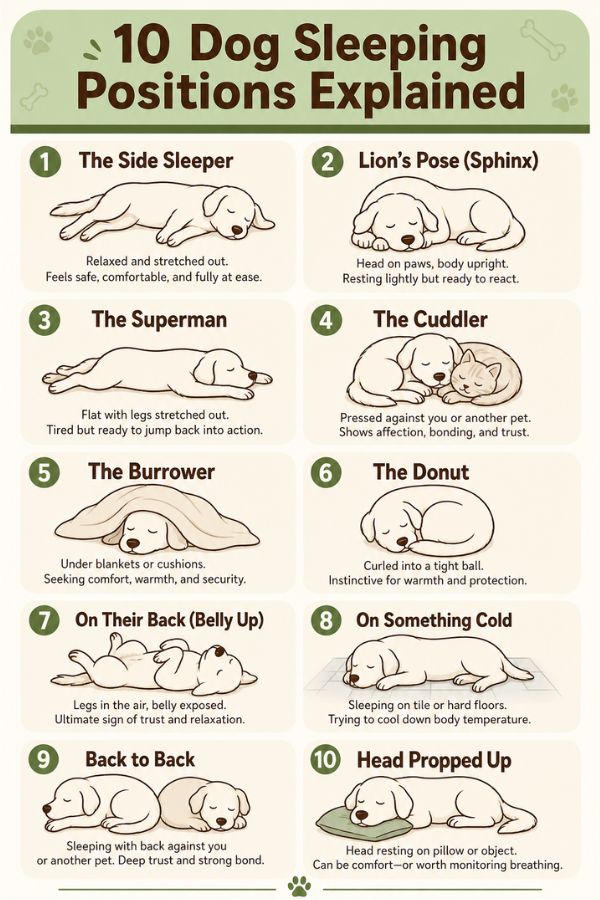
1. The Side Sleeper
This is the classic relaxed pose. Your dog lies on their side with legs extended, completely at ease. It’s one of the most common positions you’ll see, and it means exactly what it looks like. Your dog feels safe, comfortable, and content in their environment. Side sleepers tend to be easygoing dogs who’ve settled into their routine and trust the people around them. You’ll often see deeper sleep here, with twitching paws and those little dream-running movements.
2. The Lion’s Pose (Sphinx)
Picture a sphinx statue and you’ve got it. Your dog lies with their head resting on top of their front paws, body upright, back legs tucked underneath. This isn’t deep sleep, it’s more of a “resting but ready” position. Dogs in this pose are relaxed enough to doze off but alert enough to jump up if something happens. If your pup parks themselves like this near the front door, they’re basically playing security guard while catching a quick nap.
3. The Superman
Flat on their belly, all four legs stretched out in front and behind them. It looks hilarious. This is the go-to position for dogs who’ve completely worn themselves out from playing but don’t want to fully commit to a nap. They want to be ready to spring back into action the second something interesting happens. You’ll see this one a lot in puppies and high-energy breeds. Snickers used to do this constantly as a puppy, usually right in the middle of the kitchen floor where everyone had to step around him.
4. The Cuddler
Your dog sleeps pressed right up against you, another dog, or even the cat. They’re seeking physical closeness because it makes them feel bonded and secure. It goes back to how puppies sleep in a pile with their littermates for warmth and safety. Cuddling during sleep is one of the strongest signs of affection your dog can show. If your dog insists on sleeping touching you, take it as a serious compliment.
5. The Burrower
Blankets, pillows, laundry piles, couch cushions. If your dog tunnels under anything soft before falling asleep, you’ve got a burrower. This position is all about seeking extra comfort and security. Some dogs just feel safer when they’re surrounded on all sides, like being in a cozy den. It can also mean they’re a bit cold or anxious and the weight of the blanket helps them settle. I can’t leave a folded blanket anywhere for more than five minutes before Snickers has disappeared underneath it.
6. The Donut
Your dog curls into a tight ball with their nose tucked near their tail, belly and vital organs fully protected. This is one of the most instinctive sleeping positions, passed down from wild ancestors who needed to stay warm and shield themselves. It doesn’t necessarily mean your dog is scared. Most of the time, they’re just conserving body heat or settling into a cozy spot. But if your dog only sleeps in the donut and never relaxes into a more open position, it’s worth considering whether something in their environment is making them feel uneasy.
7. On Their Back (Belly Up)
All four legs in the air, belly completely exposed, zero dignity. This is the ultimate trust position. Your dog’s belly is their most vulnerable area, and showing it to the world means they feel completely safe in their surroundings. Dogs don’t sweat like we do, and the belly has less fur, so sleeping on their back also helps them cool down faster. If you see this one on a warm day, your dog is probably just regulating their temperature. Either way, belly-up sleeping means your dog isn’t worried about a single thing.
8. On Something Cold
Tile floor. The kitchen linoleum. If your dog abandons their comfy bed to sleep on a hard, cold surface, they’re hot. Dogs cool down through their paw pads and belly, so pressing these areas against a cool surface is their version of cranking up the AC. This is especially common in summer, after exercise, or in homes that run a little warm. Make sure your dog always has access to fresh water and a cool spot, particularly during warmer months.
9. Back to Back
Your dog sleeps with their back pressed against yours, another person’s, or another pet’s. This is intimate. In the dog world, turning your back to someone means you trust them completely, since you can’t see what they’re doing behind you. It’s the canine equivalent of saying “I’ve got your back and I know you’ve got mine.” Snickers does this one with me almost every night, wedging his back right up against my legs like a warm little brick.
10. Head Propped Up
This is the one that needs your attention. If your dog consistently sleeps with their head elevated on a pillow, armrest, or stuffed toy, keep an eye on them. While sometimes it’s just a comfort preference, regularly propping their head up can be a way of keeping their airway open. This could signal breathing issues, chronic congestion, or in some cases, early signs of heart problems. Occasional head-propping is no big deal. But if it becomes their only sleeping position and they seem to avoid lying flat, mention it to your vet.
How to Help Your Dog Fall Asleep Faster
Some dogs conk out the second they lie down. Others circle, fidget, get up, move spots, and generally act like they’ve forgotten how sleep works. If your dog struggles to settle at night, here are a few things that actually help.
Stick to a routine. Dogs thrive on predictability. Same walk time, same dinner time, same bedtime. Their internal clock adjusts fast and they’ll start winding down on their own.
A tired dog sleeps better. That sounds obvious, but a lot of restless nighttime behavior comes from not enough physical or mental exercise during the day. A good walk or play session about two hours before bed burns off that extra energy without winding them up right before sleep.
Give them their own spot. Whether it’s a crate, a dog bed, or a specific corner of your bed, having a consistent place they associate with sleep makes a real difference. Some dogs sleep better in a darker, quieter room. Others want to be near you. Figure out what works for yours.
Skip the late-night treats. Feeding your dog a snack right before bed can make them restless (trust me on this one). Their digestive system kicks in and suddenly they’re up pacing instead of snoring.
Pro tip: If your dog seems anxious at night, a blanket or shirt that smells like you can help them settle. The familiar scent is calming.
How Much Sleep Does Your Dog Actually Need?
Dogs sleep a lot more than most people realize. And “a lot” isn’t an exaggeration.
| Age | Average Sleep Per Day |
|---|---|
| Puppies (under 1 year) | 18-20 hours |
| Adult dogs (1-7 years) | 12-14 hours |
| Senior dogs (7+ years) | 14-18 hours |
Puppies are basically sleep machines. They play hard, crash hard, and cycle through that pattern all day long. If your puppy seems like they’re sleeping constantly, that’s normal. They’re growing and their brain is processing everything they’ve learned.
Adult dogs settle into a more predictable pattern. They’ll sleep through most of the night and then take naps during the day, especially when the house is quiet and nothing interesting is happening.
Senior dogs start sleeping more again as they age. If your older dog’s sleep patterns change suddenly, like sleeping way more than usual or having trouble settling, that’s worth a vet conversation.
Breed matters too. Larger breeds tend to sleep more than smaller, high-energy ones. The key is knowing what’s normal for your dog and noticing when it shifts.
When Your Dog’s Sleeping Position Is a Red Flag
Most sleeping positions are totally harmless. But a few patterns should make you pay closer attention.
Sudden changes are the big one. If your dog always slept sprawled out on their side and now they’re curled into a tight ball every night, something may have shifted. It could be pain, anxiety, or a change in their environment they’re reacting to.
A dog that can’t seem to get comfortable, constantly shifting, getting up, lying back down, might be dealing with joint pain or digestive discomfort. This is especially common in older dogs. I’ve been through this with Snickers once after he jumped off the bed wrong, and the restless sleeping was the first clue something was off.
Watch for head-propping combined with heavy breathing. As I mentioned earlier, this could point to respiratory or cardiac issues. Dogs with shorter snouts are more prone to this, but it can happen with any breed.
Excessive burrowing or hiding to sleep, especially if it’s new behavior, can signal anxiety. Think about what might have changed recently. New people, new pets, loud construction nearby, a different schedule.
And if your dog yelps or flinches when moving into or out of a sleeping position, that’s a vet visit, not a wait-and-see situation. Pain during position changes often points to back, neck, or joint problems that need professional attention.
The One Who Sleeps Belly-Up Trusts You Most
I still catch Snickers in that ridiculous back-sleeping pose at least a few times a week. Legs up, mouth open, completely dead to the world. It used to just make me laugh. Now I know it means he feels safe enough in our home to be completely defenseless. That’s not a small thing.
Pay attention to how your dog sleeps tonight. You might learn something about them you didn’t know. And if they’re sprawled across your pillow, hogging the entire bed while you’re curled up on the edge, well. At least now you know they trust you.
I’m a passionate dog lover, but I’m not a certified veterinarian or animal behaviorist. If you notice concerning changes in your dog’s sleeping patterns, always consult your vet to make sure everything’s okay.
Sweet dreams to your furry friend!