Snickers was nine months into eating the same premium kibble when I noticed the itching. Not constant. Just enough that I’d hear him scratching at 3 a.m. and roll over thinking he’d stop in a minute.
He never did.
I cleaned every blanket in the house. Switched detergents. Wiped his paws every time he came in from outside.
The itching kept going. So one Sunday I sat down with a notebook and started reading actual veterinary nutrition papers instead of dog blogs. That was the rabbit hole.
What I came out the other side with was a real recipe. Not a “throw chicken and rice in a pot” recipe. A recipe built around what a board-certified veterinary nutritionist would call balanced, with every ingredient chosen for what it actually does inside his body.
Snickers has been eating it for six months. The 3 a.m. scratching stopped after week three.
What “Holistic” Actually Means (Most Articles Skip This Part)
Here’s something worth knowing upfront. The word “holistic” has zero legal meaning under FDA, AAFCO, or USDA rules. Any pet food brand can stamp “holistic” on a bag and meet exactly zero standards.
So what am I using it to mean here? The original definition. Thinking about your dog as one whole system. Not just calories in and calories out. Coat. Joints. Gut bacteria. Immune response. Dental wear from chewing texture.
A holistic meal isn’t a meal with one magic ingredient. It’s a meal where every ingredient is doing a job for some part of the body.
That’s the framework I built this recipe on.
Why Most Homemade Dog Food Recipes Fail
This one isn’t comfortable. A 2023 Tufts review and a 2025 Texas A&M analysis of 1,726 home-prepared diets found something brutal. Only 6% were nutritionally complete. Forty-four percent were outright deficient. Another 31% were partially deficient.
The biggest gap is almost always calcium. Boneless meat plus rice is naturally high in phosphorus and almost zero calcium. The calcium-to-phosphorus ratio in an all-meat meal is around 1:10 to 1:20.
The ratio your dog actually needs is 1.2:1 to 1.4:1, with calcium higher than phosphorus.
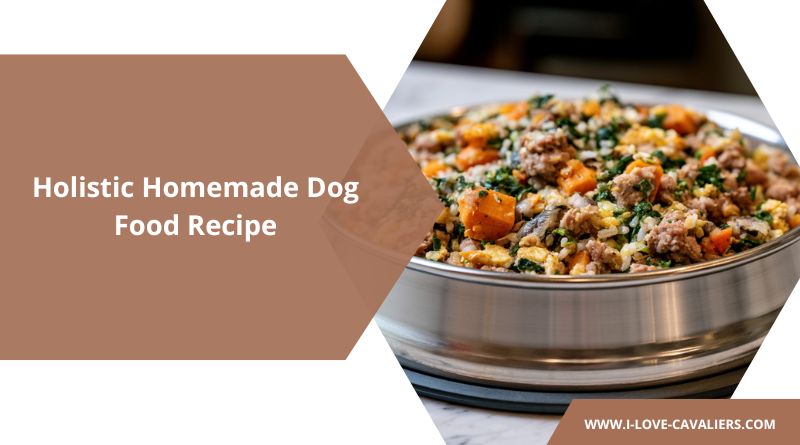
Holistic Homemade Dog Food Recipe
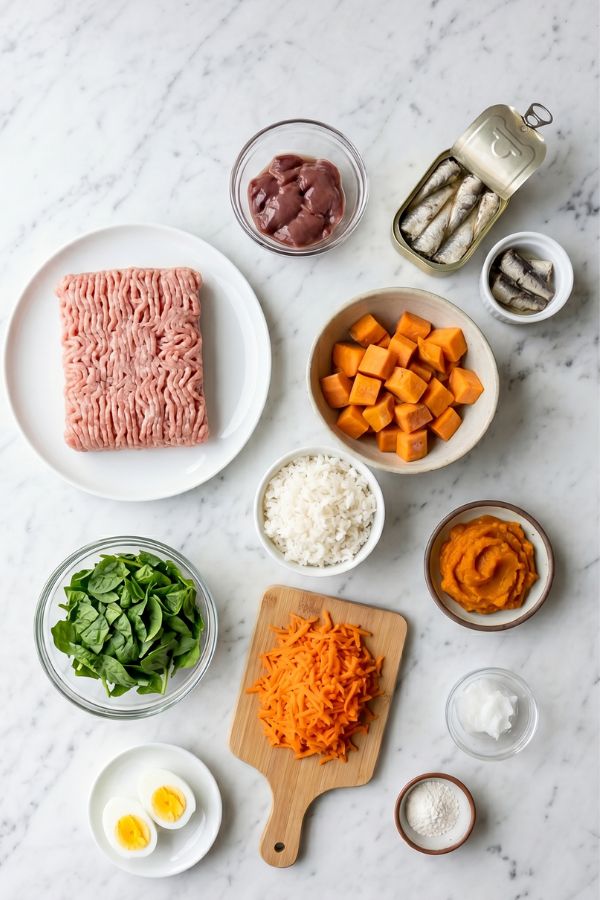
| Ingredient | Amount | Role |
|---|---|---|
| Ground turkey (93% lean) | 1.5 lb | Primary protein, gentle on digestion |
| Chicken liver | 3 oz (about 1/2 cup) | Vitamin A, B12, iron, copper |
| Sardines in water (drained) | 1 can (4.4 oz) | Omega-3 (EPA/DHA), bone-friendly fats |
| Cooked sweet potato | 1.5 cups, cubed | Slow carb, potassium, beta-carotene |
| Cooked white rice | 1 cup | Gentle carb, gut-soothing |
| Cooked pumpkin (plain) | 1/2 cup | Fiber, eases digestion |
| Spinach (chopped) | 1 cup | Iron, magnesium, vitamin K |
| Carrots (grated) | 1 cup | Beta-carotene, dental texture |
| Whole egg (boiled) | 1 large | Complete protein, biotin |
| Coconut oil | 1 tablespoon | Coat health, MCT fats |
| Eggshell powder | 1 1/2 teaspoons | Calcium source |
If you’d rather make your own eggshell powder than buy a supplement, our homemade eggshell calcium guide walks through the exact method I use (and it costs literally nothing).
Step-by-Step Instructions
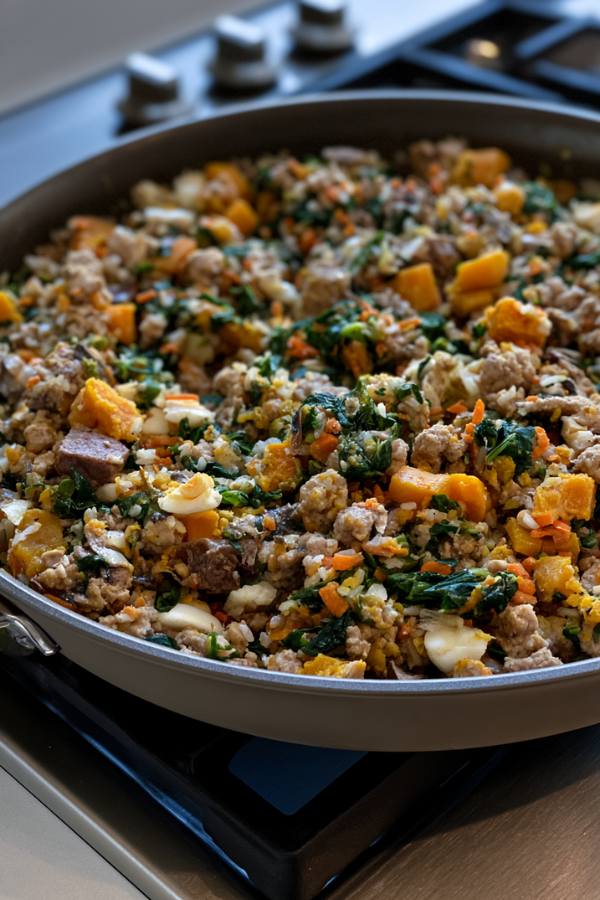
- Prep the vegetables. Steam the sweet potato cubes for about 12 minutes, until soft but not mushy. Steam the pumpkin too (or use canned plain pumpkin, just not pumpkin pie filling). Set both aside.
- Cook the rice. Plain white rice, no salt, no oil. One cup dry yields about three cups cooked. Use what you need, freeze the rest.
- Brown the turkey. In a large pan over medium heat, cook the ground turkey until no pink remains, breaking it up with a spoon. Cook to an internal temperature of 165°F. Drain off any excess fat.
- Add the liver and sardines. Chop the chicken liver into pea-sized pieces and add to the pan. Cook 4 to 5 minutes until no pink shows. Flake in the sardines, water already drained.
- Wilt the spinach. Stir the chopped spinach into the hot meat and cook for 1 to 2 minutes until just wilted. Don’t overcook it. The longer it cooks, the more iron you lose.
- Cool, then combine. Let everything cool to room temperature. In a large mixing bowl, combine the meat mixture, sweet potato, rice, pumpkin, grated carrots, chopped boiled egg, and coconut oil. Mix until evenly distributed.
- Add the eggshell powder last. Sprinkle 1 1/2 teaspoons over the mixture and stir thoroughly. This is the step most beginners forget, and without it the recipe is nutritionally incomplete long-term.
- Portion and store. Divide into daily containers based on your dog’s weight (see the table below). Refrigerate up to 4 days. Freeze the rest.
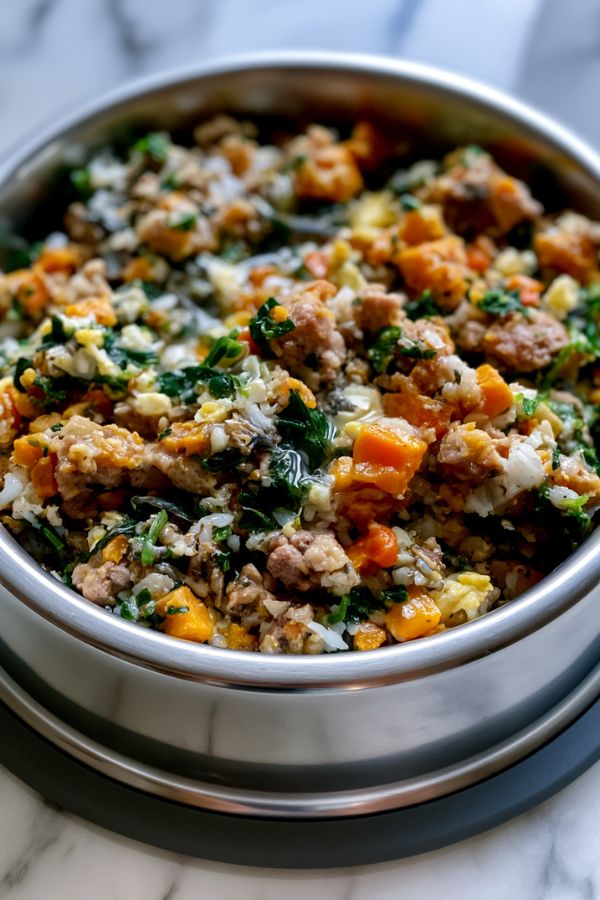
The first batch takes about an hour because you’re reading every step. After that it drops to 30 or 40 minutes. Snickers learned to sit by the stove around step three. He has the patience of a saint, only when food is involved.
Why Each Ingredient Is in There
Turkey + Liver: Protein for Every Cell
Turkey gives you complete protein with all 12 essential amino acids dogs can’t make on their own. Liver covers what muscle meat misses: vitamin A, B12, copper, folate. Liver must stay capped at 5 to 10% by weight. Above that, vitamin A builds up in the body and damages bone and joints over months.
Sardines: The Omega-3 Source That Actually Works
Plant-based omega-3s (flaxseed, chia) don’t help dogs. Their bodies convert ALA to EPA/DHA at a rate so low it’s basically zero. You need marine-source omega-3. Sardines give you EPA, DHA, and a small calcium boost from the soft bones (sounds weird, but it works).
Sweet Potato + Rice + Pumpkin: Carbs With a Purpose
This recipe doesn’t fear carbs. Dogs digest them fine. Sweet potato brings potassium and beta-carotene. White rice is the gentlest option for sensitive stomachs. Pumpkin adds fiber that smooths out digestion, which matters more during the transition off kibble.
Spinach + Carrots: The Micronutrient Layer
Spinach gives you iron, magnesium, and vitamin K. Carrots deliver beta-carotene and a bit of dental work from the texture. Grate the carrots. Whole chunks mostly pass through undigested.
Coconut Oil + Egg: Coat, Skin, and Glue
Coconut oil’s medium-chain fats support skin and coat. One tablespoon per 1.5 lb of meat is the right ratio. The whole boiled egg adds biotin, which is what most “shiny coat” supplements are quietly just selling you.
Eggshell Powder: The Step Nobody Skips
This is the one. About 1/2 teaspoon of eggshell powder gives you roughly 1,000 mg of calcium with no extra phosphorus. That flips your calcium-to-phosphorus ratio into the safe zone. Without it, this meal is incomplete for daily feeding.
Storage and Meal Prep
Store in glass containers for up to 4 days in the fridge. Freeze for up to 3 months. I portion into daily glass containers because plastic holds the fish smell forever (and yes, I learned that the expensive way).
Pull tomorrow’s portion from the freezer to the fridge the night before. Serve at room temperature or warm slightly. Cold food straight out of the fridge can upset some dogs’ stomachs.
If you’re already doing weekly meal prep, this recipe slots right into that Sunday routine.
How Much to Feed (By Weight)
| Dog Weight | Daily Amount |
|---|---|
| 10 lb | 3/4 to 1 cup |
| 15 lb | 1 to 1 1/4 cups |
| 20 lb | 1 1/4 to 1 1/2 cups |
| 30 lb | 1 3/4 to 2 1/4 cups |
| 50 lb | 2 3/4 to 3 1/2 cups |
These are starting points, not gospel. Homemade food runs about 200 calories per cup versus 300 to 400 for kibble.
That means your dog needs roughly double the volume to hit the same calorie target.
Watch your dog’s body condition for two weeks and adjust.
Transitioning From Kibble (10-Day Plan)
Don’t switch all at once. Gut bacteria need time to shift.
- Days 1-2: 75% old food, 25% new
- Days 3-4: 50% old, 50% new
- Days 5-6: 25% old, 75% new
- Days 7-10: 100% new
A little loose stool in the first three days is normal. If it lasts past day five, slow the transition by adding two or three extra days at each step.
Common Mistakes to Avoid
Even with a clean recipe, the same mistakes show up over and over. I made some of these myself.
- Skipping the calcium supplement. This is the one that tanks the whole meal. Eggshell powder takes 30 seconds and costs nothing. Add it every batch, no exceptions.
- Using flaxseed oil instead of fish oil. Dogs don’t convert plant omegas. Save the money and use sardines or a real fish oil.
- Sticking to one protein forever. Rotating proteins every few weeks (turkey, beef, salmon, lamb) covers gaps no single protein fills. This is the method I’d go with.
- Loading up on liver because “more is better.” Liver above 10% causes vitamin A toxicity, which damages bones over months. Stick to the ratio.
- Switching too fast. Three-day transitions almost always cause loose stools. Owners misread it as a food intolerance and quit. Give it the full 10 days.
Foods to Never Include
Some of these you already know. Some you might not.
- Onion and garlic, any form. Causes Heinz body anemia. Includes powdered, dried, raw, and cooked.
- Grapes and raisins. Acute kidney failure even in small amounts.
- Xylitol. Hides in some peanut butters. Triggers hypoglycemia inside 30 minutes.
- Cooked bones of any kind. Splinter and puncture the gut.
- Bonemeal supplements. Often contaminated with lead. Eggshell powder is the safer calcium source (don’t skip this point).
- Raw chicken from grocery stores. About 25% of raw poultry samples test positive for Salmonella or Listeria. If you want raw, source from human-grade raw suppliers, not the meat aisle.
Six Months Later, His Coat Speaks For Itself
Snickers’ coat used to feel a little dry under my hand. About two months into this recipe, the difference was obvious. Soft, glossy, no flaking near the base of his tail. The 3 a.m. itch sessions stopped completely.
I’m not going to tell you this recipe is a miracle. It’s just real food with the math done right. Most homemade dog food problems come from skipped math. The calcium, the omegas, the right protein ratio.
He’s curled up on the rug next to me right now, snoring through what’s supposed to be his afternoon guard duty. The bag of premium kibble has been sitting unopened in the pantry since November.
I’m a passionate dog parent and home cook, not a certified veterinarian or animal nutritionist. Long-term homemade diets should always be reviewed by your vet, or ideally a board-certified veterinary nutritionist, to make sure your dog is getting everything they need.
Bon appétit to your furry friend!