
Your dog can’t tell you “I love you.”
But they show you. Every single day. In ways you might not even notice.
That thing where they follow you to the bathroom? That’s love. The way they go ballistic when you come home—even if you were only gone for five minutes? Love. The fact that they steal your dirty socks and hoard them like treasure? Weird, yes. But also love.
Here’s what most people don’t realize: dogs don’t experience love the same way we do. They don’t write poetry or buy flowers or plan romantic dinners. But they do bond. Deeply. And when a dog loves you, they show it through behavior—specific, consistent actions that mean something in dog language.
Some are obvious. Some are subtle. But all of them mean the same thing: you are their person.
Let’s break down exactly what your dog is telling you—and why these behaviors matter more than you think.
1. They Follow You Everywhere (Yes, Even to the Bathroom)

You get up to grab a glass of water. Your dog gets up. You walk to the bedroom. Your dog follows. You go to the bathroom. Your dog sits outside the door and waits.
This isn’t clinginess. It’s loyalty.
What it means: In a dog’s mind, you are the leader of their pack. Their instinct is to stay close to the pack leader for safety, direction, and companionship. Being a “Velcro dog” means they trust you completely and feel safest when they can see you.
Why it happens: Dogs are pack animals. In the wild, separating from the pack meant danger. Even though your golden retriever isn’t fighting off predators in your suburban kitchen, that instinct remains. You’re their pack. They don’t want to lose sight of you.
That’s love. Obsessive, slightly annoying love—but love nonetheless.
2. They Sleep With You (Or As Close to You as Possible)

Sleep is the most vulnerable state for any animal. Predators attack at night. Danger comes when you’re unaware.
So when your dog chooses to sleep next to you—in your bed, at the foot of your bed, or even just in the same room—they’re saying something important: “I trust you to keep me safe.”
What it means: Dogs don’t sleep near people they don’t trust. If your dog curls up against you, rests their head on your leg, or sprawls across your feet, they feel protected in your presence. You are their safe place.
Why it happens: Sleeping together strengthens the bond between you. It also regulates their body temperature and heartbeat—being near you literally makes them feel calmer.
My current dog, Snickers, refuses to sleep anywhere but at the foot of my bed. If I try to make him sleep in his own bed, he stares at me with betrayal in his eyes until I cave. Every night, without fail, he waits until I’m settled, then climbs up and collapses with a dramatic sigh.
3. They Bring You Their Favorite Toy
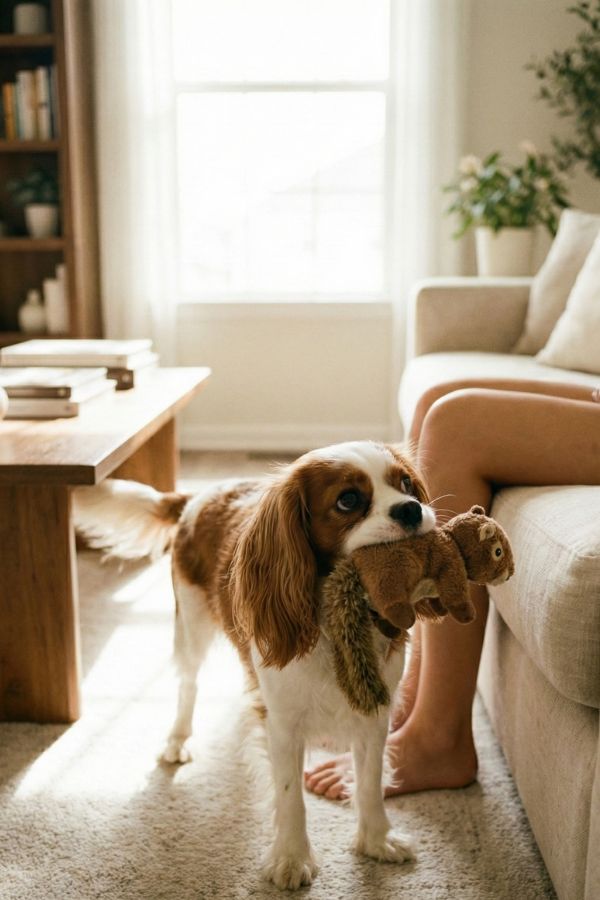
You’re sitting on the couch. Your dog trots over with a slobbery, half-destroyed stuffed animal and drops it in your lap.
Most people think this means, “Let’s play.” Sometimes it does.
But often, it means something deeper: “This is my most valuable thing, and I’m giving it to you.”
What it means: Dogs have prized possessions—usually toys they love most. Offering it to you is a gesture of trust and affection. In dog logic, they’re sharing their treasure with someone they consider worthy.
Why it happens: This behavior mimics how wolves bring food back to their pack. Your dog isn’t bringing you a fresh kill (thank God), but they are bringing you something they value highly. It’s a gift.
4. They Protect You (Even From Imaginary Threats)

The mailman approaches the front door. Your dog loses their mind. A stranger walks too close on a sidewalk. Your dog positions themselves between you and the threat, alert and tense.
What it means: Your dog has decided you are worth defending. Whether the “threat” is real or not (spoiler: it’s usually not), their instinct is to keep you safe.
Why it happens: Dogs are naturally protective of their pack. If they view you as part of their family, they’ll guard you. Some breeds—German shepherds, rottweilers, livestock guardians—are more protective than others, but even a 10-pound Chihuahua will act like a fierce warrior if they love you enough.
5. They Get “Zoomies” When You Come Home
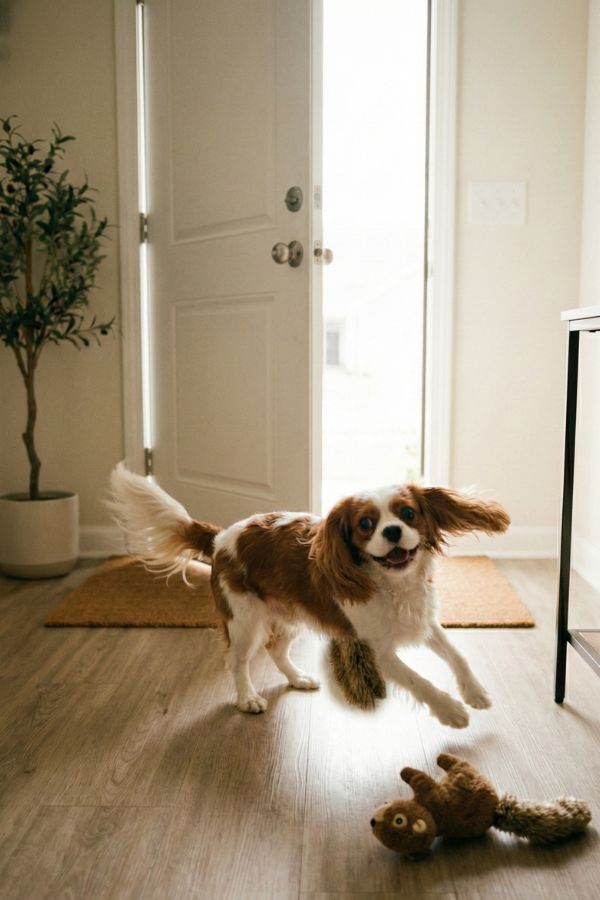
You’ve been gone for 20 minutes. You walk through the door. Your dog explodes with joy.
They sprint in circles. They jump. They grab a toy and shake it violently. They run back and forth like they’ve been injected with pure caffeine.
This is called the “zoomies,” and it’s one of the purest expressions of happiness a dog can show.
What it means: Your return is the best thing that has happened to them all day. That burst of frantic energy is a physical release of the joy they feel at seeing you again.
Why it happens: Dogs live in the moment. When you leave, they don’t understand you’re coming back. When you return, it’s like a miracle every single time. Their excitement isn’t an act—it’s genuine, unfiltered emotion.
No matter how bad my day has been, walking through the door to a dog who acts like I’ve returned from war never gets old. It’s impossible to feel unloved when a ball of fur is slamming into your legs with joy.
6. They Nudge You With Their Nose
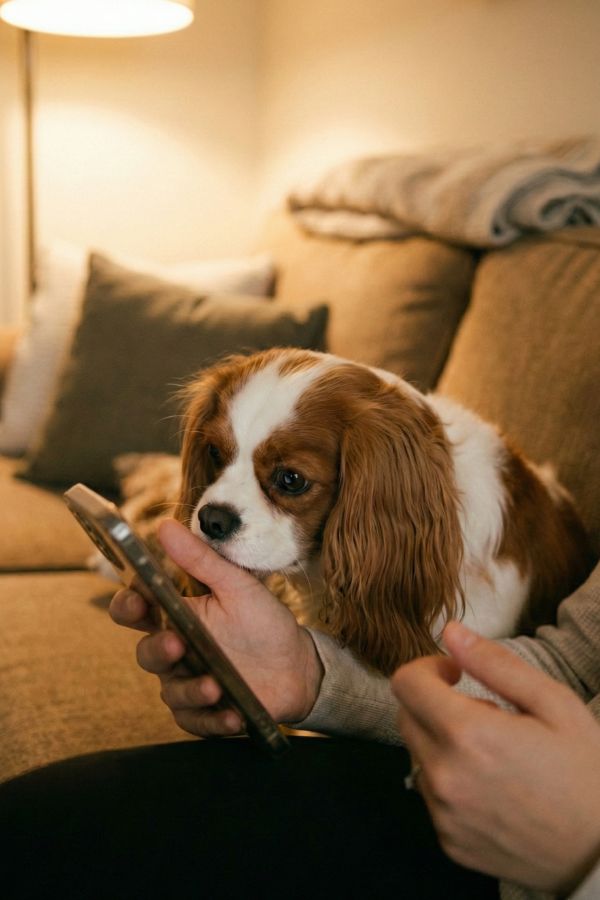
You’re scrolling on your phone. Your dog walks over and gently boops your hand with their nose.
This isn’t accidental. It’s a deliberate bid for attention.
What it means: “Hey. I’m here. Don’t forget about me.”
Why it happens: Puppies nudge their mothers to get attention and food. Adult dogs use the same behavior with their humans. It’s polite, non-aggressive, and effective. They’re not demanding—they’re asking.
My friend’s dog does this every time she’s on her laptop too long. He’ll sit next to her, wait patiently for about 30 seconds, and then—boop—nose to elbow. If she ignores him, he does it again. And again. Until she acknowledge his existence.
It’s her way of saying, “I love you, but also, you’ve been staring at that screen for an hour. Pet me.”
7. They Lick Your Face (AKA “Puppy Kisses”)

Some people think dog licks are gross. Fair. Dog mouths go places we’d rather not think about.
But licking is one of the most affectionate behaviors a dog can display.
What it means: In dog language, licking is a social grooming behavior. Puppies lick their mothers. Dogs lick each other to show submission, affection, and bonding. When they lick your face, they’re treating you like family.
Why it happens: Licking releases endorphins in dogs—it makes them feel good. It’s also a way of gathering information (dogs “taste” your skin to learn about where you’ve been and what you’ve eaten). But mostly, it’s affection.
My first dog, Bentley, would lick my face every single morning when I woke up. Not a quick lick—a full facial cleaning session. It was objectively disgusting. But it was also her way of saying, “Good morning. I missed you while you were asleep.”
8. They Cuddle and Lean on You

You’re standing in the kitchen. Your dog walks over and leans their full body weight against your legs.
This is called “the lean,” and it’s one of my favorite dog behaviors.
What it means: They’re seeking comfort and security. Leaning on you is their way of saying, “You make me feel safe.”
Why it happens: Physical contact releases oxytocin—the “bonding hormone”—in both dogs and humans. When your dog leans on you, they’re not just being needy. They’re strengthening your emotional connection.
Big dogs are notorious for this. Great Danes, mastiffs, golden retrievers—they’ll lean on you until you’re supporting 80 pounds of dog and wondering if you can sit down without offending them.
9. They Maintain Soft Eye Contact

Hard, direct eye contact in the dog world is a challenge. It’s aggressive. It’s a stare-down.
But soft eye contact—relaxed eyes, slow blinks, gentle gaze—is the opposite.
What it means: When your dog looks into your eyes with a soft, relaxed expression, they’re expressing love and trust.
Why it happens: Studies show that mutual eye contact between dogs and humans releases oxytocin in both species. It’s the same hormone released between mothers and babies. Staring into your dog’s eyes literally strengthens your bond.
My dog does this when we’re sitting together quietly. She’ll just… look at me. Not in a “I want something” way. Just a calm, content gaze. And every time, I feel it—that unspoken connection.
10. They “Check In” on Walks
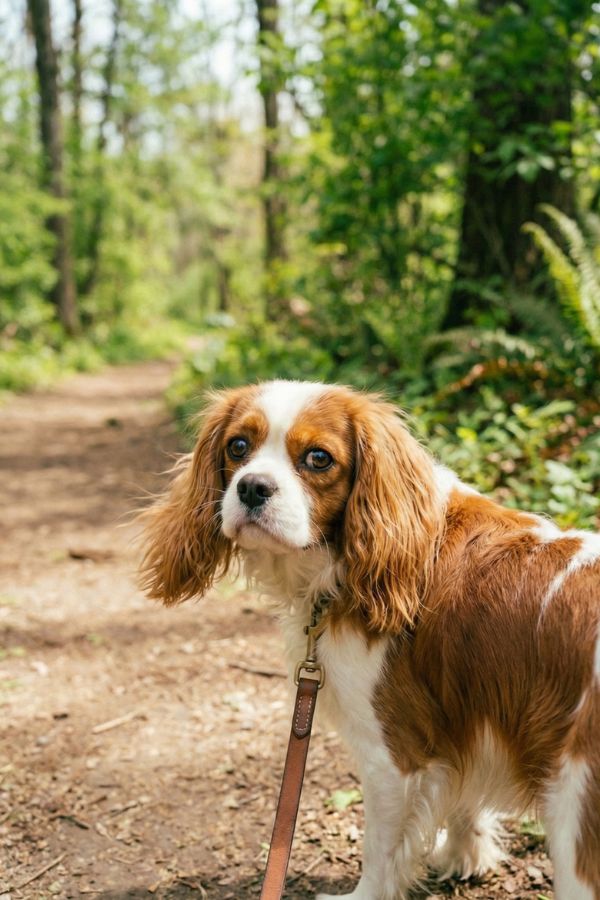
You’re on a walk. Your dog is 20 feet ahead, sniffing every tree and fire hydrant. Then they stop, turn around, and look back at you.
What it means: They’re making sure you’re still there. Despite all the distractions—squirrels, smells, other dogs—you are still their priority.
Why it happens: Dogs check in with their pack leader to ensure everyone is safe and accounted for. If your dog looks back at you on walks, it means they consider you important enough to monitor.
Some dogs do this constantly. Others only check in occasionally. But the fact that they do it at all—even when there’s a squirrel RIGHT THERE—is significant.
11. They Sigh Contentedly Near You

You’re reading. Your dog is lying at your feet. Suddenly, they let out a deep, long sigh.
What it means: They’re completely relaxed. That sigh is a sign of contentment and satisfaction.
Why it happens: Dogs sigh when they feel safe and comfortable. It’s a physiological release of tension. If your dog sighs while lying near you, it means they feel at peace in your presence.
This is one of the quieter signs of love, but it’s one of the most genuine. A contented sigh means, “I’m exactly where I want to be.”
The Bottom Line: Your Dog Really Does Love You
Dogs can’t say the words.
But they don’t need to.
Every follow to the bathroom, every toy offering, every contented sigh—those are the words. That’s how they say “I love you.”
And honestly? It’s better than words. Because it’s consistent. It’s honest. It’s unconditional.
Your dog doesn’t love you because you’re successful or funny or attractive. They love you because you’re you. And in their eyes, that’s enough.
So the next time your dog leans against you, or looks back at you on a walk, or brings you a slobbery toy—remember what they’re really saying.
“You’re my person. And I’m never letting you go.”