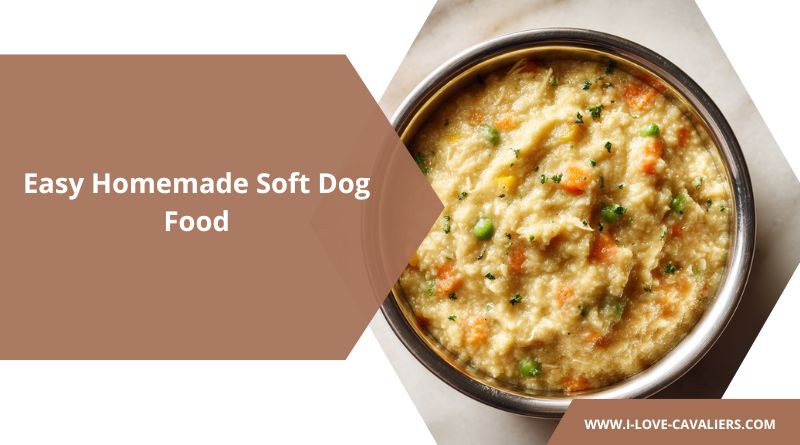
This recipe actually comes with a little backstory. Years ago, one of my closest friends had a sweet old Pomeranian who had lost nearly all his teeth. She swore by this soft homemade mix: it kept him happy, nourished, and able to actually enjoy mealtime again.
Later on, when Bentley was getting older and struggling with harder foods, I remembered her recipe and gave it a try. He loved it. It was easy on his mouth, gentle on his stomach, and it gave me peace of mind knowing he was still eating well in his senior years.
Fast forward to today and I haven’t made it in years. But now it’s Snickers’ turn to give it a try. Knowing what that boy prefers, I’m almost certain he’ll clean the bowl. And honestly, I hope your pup loves it just as much.
Because sometimes the simplest meals (the ones made with love and intention) make the biggest difference.
Why Homemade Soft Dog Food Makes Sense
While this recipe is perfectly healthy for any dog, it’s especially valuable for pups who need a little extra care, such as:
- Toothless dogs – easy to lap up without chewing.
- Dogs with chewing problems or dental issues – gentle on sensitive mouths.
- Seniors or pups recovering from illness/surgery – soft texture makes eating less stressful.
- Hydration support – the moisture-rich consistency helps dogs who don’t drink much water.
Homemade Soft Dog Food Recipe
Makes approximately 5-6 cups (enough for several meals, depending on dog size)
Ingredients
| Ingredient | Amount |
|---|---|
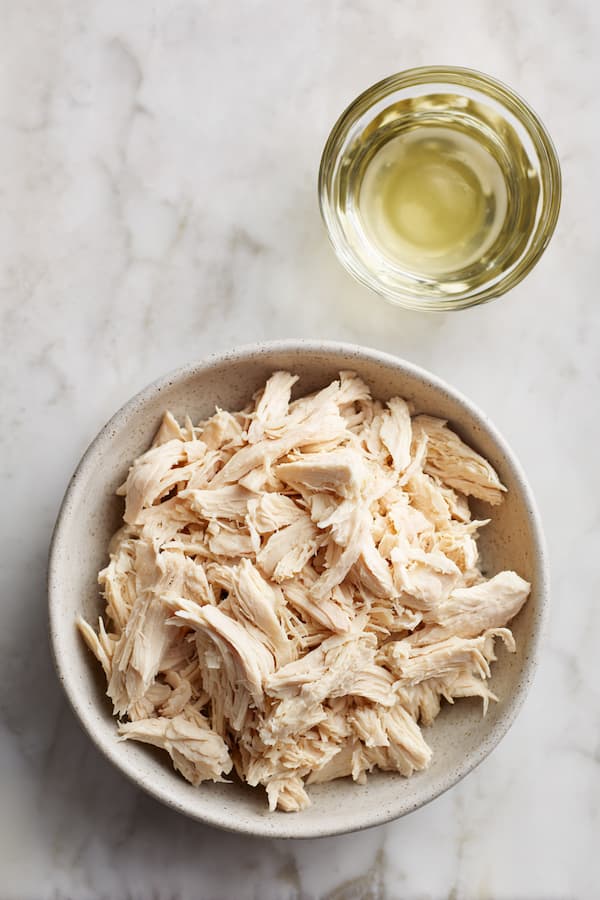
| Boneless, skinless chicken breasts or thighs | 2 cups (cooked and shredded) |
| Warm water | ½–1 cup (adjust for consistency) |
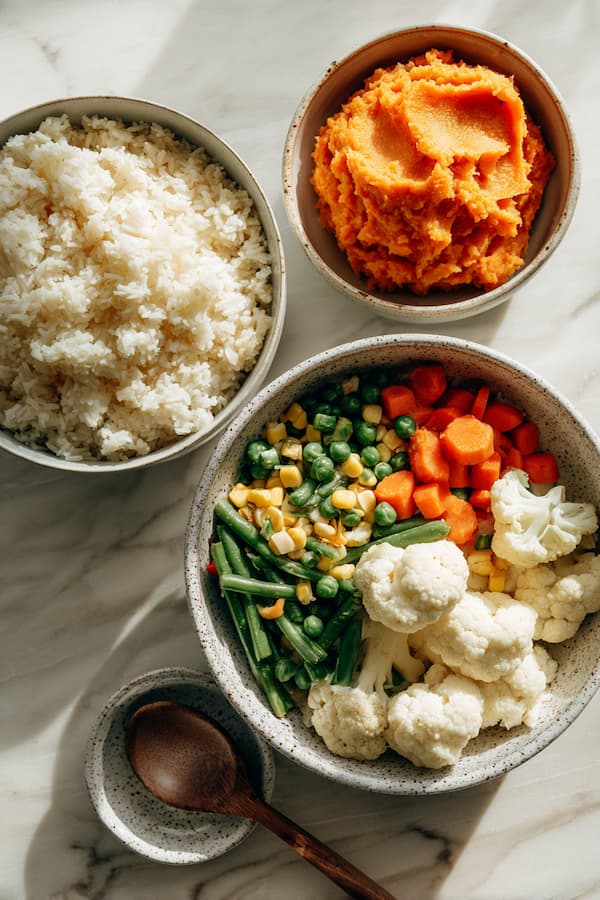
| Brown or white rice | ⅓ cup (yields 1 cup cooked) |
| Sweet potatoes | 1 medium (yields 1 cup mashed) |
| Mixed vegetables | 1 cup total |
Ingredient Notes
Chicken – Both breast and thigh meat work beautifully. Thighs have slightly more fat, making them more flavorful, while breasts are leaner. Always remove skin and bones completely.
Vegetables – Use a mix for variety and nutrition. In this recipe I used peas, green beans, carrots, cauliflower, corn. Avoid onions, garlic, grapes, raisins, and mushrooms, which are toxic to dogs. Stick to dog-safe vegetables only.
Step-by-Step Instructions
Step 1: Prepare Your Workspace
Clear a large area in your kitchen and gather all your ingredients and equipment: a large pot for boiling, a steamer basket or colander, mixing bowls, a potato masher, and storage containers. Having everything ready makes the process smooth and efficient.
Step 2: Cook the Chicken
Fill a large pot with water and bring to a boil. Add the chicken breasts or thighs and reduce heat to a gentle simmer. Cook for 20-25 minutes until the chicken is fully cooked through (internal temperature should reach 165°F). Remove from water and let cool for 10 minutes, then shred finely using two forks. Set aside.
Tip: Save the chicken cooking water! It’s rich in flavor and nutrients (you can use it to adjust the consistency of your final mixture).
Step 3: Cook the Brown Rice
While the chicken cooks, prepare your brown rice according to package directions. For softer food, use slightly more water than usual and cook a bit longer until the rice is very tender and almost mushy. This makes it easier for dogs to digest and creates a better texture in the final dish.
Step 4: Prepare the Sweet Potatoes
Peel and cube one medium sweet potato into 1-inch chunks. Place in a pot of water, bring to a boil, then reduce heat and simmer for 15-20 minutes until fork-tender. Drain well and mash thoroughly until smooth and creamy. A few small lumps are fine, but aim for a generally smooth consistency.
Step 5: Steam the Vegetables
If using fresh vegetables, wash and chop them into small, bite-sized pieces. Steam for 8-10 minutes until tender but not mushy. If using frozen vegetables, simply steam for 5-6 minutes until heated through and soft. You want vegetables that are cooked enough to be easily digestible but still retain some texture.
Step 6: Combine All Ingredients
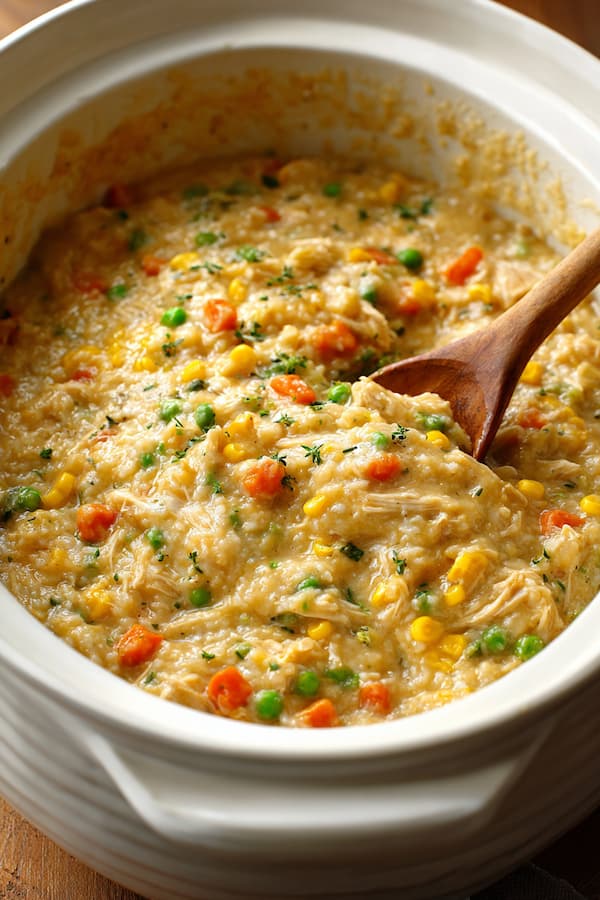
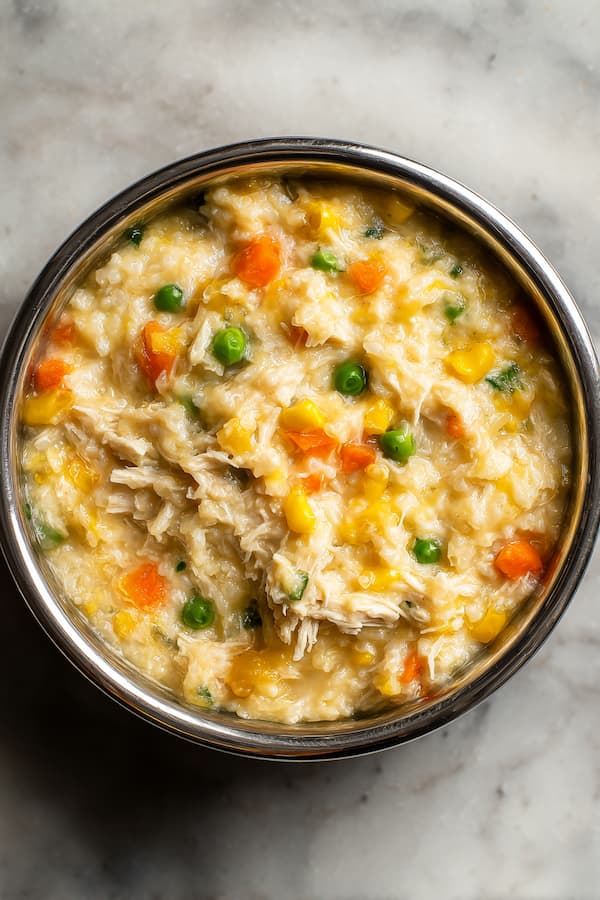
In a large mixing bowl, add your shredded chicken, cooked brown rice, mashed sweet potatoes, and steamed vegetables. Using a large spoon or your hands (make sure they’re clean!), mix everything together until well combined. The mixture should look colorful and appetizing.
Step 7: Adjust the Consistency
This is where you create that perfect soft, stew-like texture. Start by adding ½ cup of warm water (or reserved chicken cooking water for extra flavor). Mix thoroughly, then assess the consistency. The food should be moist and easy to scoop, but not soupy or watery. Add more liquid gradually, a few tablespoons at a time, until you reach the consistency your dog prefers.
Step 8: Final Texture Adjustment (Optional)
For senior dogs with dental issues or dogs recovering from mouth injuries, you may want to blend or process the mixture slightly. Use a food processor and pulse 3-4 times for a chunkier texture, or process longer for a smoother pâté-like consistency. Don’t over-process: you want to maintain some texture for interest and dental stimulation.
Step 9: Cool and Portion
Let the food cool to room temperature before serving. Once cooled, portion into individual serving sizes based on your dog’s needs (see serving guidelines below). This makes mealtime easier and helps with portion control.
Storage Guidelines
Refrigeration (Up to 3 Days): Store in airtight containers in the refrigerator. Always check for any off smells or discoloration before serving. When in doubt, throw it out.
Freezing (Up to 3 Months): Portion into individual servings in freezer-safe containers or silicone molds. Label each container with the date. To serve, thaw overnight in the refrigerator or use the defrost setting on your microwave (stir well and check temperature before serving).
Freshness Tips: This food contains no preservatives, so freshness is key. Only make as much as your dog will eat in a week, and freeze the rest immediately after cooling.
Serving Guidelines and Portions
The amount you serve depends on your dog’s size, age, activity level, and individual metabolism. These are general guidelines:
| Dog Weight | Daily Amount | Meals Per Day |
|---|---|---|
| 5-15 lbs | ¾–1½ cups | 2-3 meals |
| 16-30 lbs | 1½–2½ cups | 2 meals |
| 31-50 lbs | 2½–3½ cups | 2 meals |
| 51-70 lbs | 3½–4½ cups | 2 meals |
| 71+ lbs | 4½–6 cups | 2 meals |
These are starting points only. Monitor your dog’s weight, energy level, and overall condition. Adjust portions as needed to maintain a healthy body weight.
I’m not a dog nutritionist. If you’re ever unsure about feeding guidelines, the safest choice is to check with your veterinarian
Nutritional Considerations and Supplements
While this recipe provides excellent nutrition, homemade dog food may benefit from certain supplements to ensure complete nutritional balance, especially if you’re feeding it long-term as the primary diet.
Consider discussing these with your veterinarian:
Calcium: Essential for bone health, especially if you’re not feeding bones. Your vet may recommend a calcium supplement or eggshell powder.
Omega-3 Fatty Acids: Support coat health, joint function, and reduce inflammation. Fish oil is an excellent source.
Multivitamin: A quality canine multivitamin can fill any nutritional gaps.
Again, I’m not a veterinary nutritionist, and this recipe is intended as a wholesome meal option.
For dogs with specific health conditions, or if feeding homemade food exclusively long-term, please consult with your veterinarian.
FAQs
Can I substitute turkey or beef for chicken?
Absolutely! Ground turkey, ground beef (lean, drained), or even fish work well. Just ensure the protein is fully cooked and any bones are completely removed.
What if my dog has food sensitivities?
This recipe is highly customizable! If your dog is sensitive to chicken, try turkey or fish. If certain vegetables cause issues, swap them out for others on the safe list. The beauty of homemade food is complete control over ingredients.
Should I add salt or seasonings?
No. Dogs don’t need added salt, and many seasonings (like garlic and onion powder) are toxic to them. The natural flavors from the chicken and vegetables are more than enough.
Final Words
So there you have it. An old favorite, passed down from a toothless Pom, tried and tested with Bentley, and now ready for Snickers (and maybe your dog, too).
These kinds of recipes are more than food; they’re little acts of care that carry stories, memories, and love in every spoonful. Make a batch, serve it up, and see if it earns a spot in your own kitchen traditions. I have a feeling it just might.