
Snickers was doing his slow circle around the kitchen on a Tuesday night while I was making myself dinner. Just walking the perimeter, nose up, tail low, like a tiny health inspector. I wasn’t even cooking anything interesting. Pasta with jarred sauce. But he was committed to the patrol.
I’d ordered a sample box of The Honest Kitchen a few days earlier after reading about it on a Cavalier forum. The whole idea sounded odd to me at first. Dehydrated dog food that you rehydrate with water before serving. Like instant oatmeal, but for dogs.
Made with human-grade ingredients and processed at low temperatures instead of the extreme heat they use for regular kibble. I figured I’d try it and see if Snickers noticed a difference.
He noticed. I scooped the dry flakes into his bowl, added warm water, let it sit for five minutes, and put it down.
He ate the entire thing in maybe two minutes and then stood next to the empty bowl staring at me like I’d been holding out on him his entire life.
So naturally, I kept buying it. For about six weeks. Then I pulled up my order history and realized I’d spent almost $90 on what was essentially dehydrated chicken, oats, and vegetables. The food was good. Genuinely good.
But $90 every few weeks for a small Cavalier? I started wondering if I could make something similar in my own kitchen. Turns out, you can. It takes a food dehydrator and a free afternoon, but you absolutely can.
What Makes The Honest Kitchen Different (And What We’re Copying)
Most premium dog food brands cook their food at high temperatures or use extrusion, which is basically forcing ingredients through a machine under extreme heat and pressure. The Honest Kitchen skips all of that. They gently dehydrate whole ingredients at low heat, which removes the moisture but keeps more of the natural nutrients intact. You add warm water before serving and it turns back into a soft, thick meal.
Here’s what separates their food from the average bag of kibble.
- Every single ingredient is human-grade. Not “made with human-grade ingredients,” which is a meaningless marketing phrase. The Honest Kitchen was the first pet food company to get FDA approval to actually use the term on their label. That means every ingredient, every facility, every step of the process meets the same safety standards as the food at your grocery store.
- Named whole proteins, not mystery meals. Their labels say “chicken” or “turkey” or “beef.” Not chicken meal, not poultry by-product, not animal digest. Just the actual meat.
- Real vegetables and fruits mixed in. Carrots, spinach, pumpkin, apples, cranberries, blueberries. If you’ve ever made your own human-grade dog food at home, you’ll recognize most of the ingredient list.
- Dehydration instead of extrusion. Low heat preserves vitamins, enzymes, and nutrients that get destroyed in standard kibble manufacturing. It also means the food is shelf-stable without artificial preservatives.
What You Need Before Starting
You don’t need a commercial kitchen. But you do need a food dehydrator. A regular oven set to its lowest temperature can work in a pinch, but a dehydrator gives you even airflow and consistent results. I use a basic Nesco model that cost about $70.
Here’s your equipment list.
- Food dehydrator with adjustable temperature (needs to reach at least 155F for meat)
- Food processor or blender for grinding dried ingredients into flakes
- Large pot for cooking
- Baking sheets for spreading food before dehydrating
- Airtight containers or vacuum seal bags for storage
- Kitchen scale for portioning
One more thing before we get to the recipes. Dehydrated food, whether you buy it or make it, isn’t automatically nutritionally complete without a few supplements. The Honest Kitchen adds a specific vitamin and mineral blend to every formula.
I use a combination of eggshell powder for calcium and a general-purpose dog multivitamin. My vet reviewed both recipes and gave them the thumbs up for regular rotation feeding.
Recipe 1: Chicken & Oat Dehydrated Mix (The Honest Kitchen’s Signature Style)
This one is modeled after The Honest Kitchen’s Whole Grain Chicken recipe, which is their most popular formula. The original contains chicken, organic barley, potatoes, flaxseed, oats, peas, carrots, bananas, parsley, and kelp. I simplified a few things and swapped barley for rolled oats since they’re easier to find and dehydrate well.
Ingredients
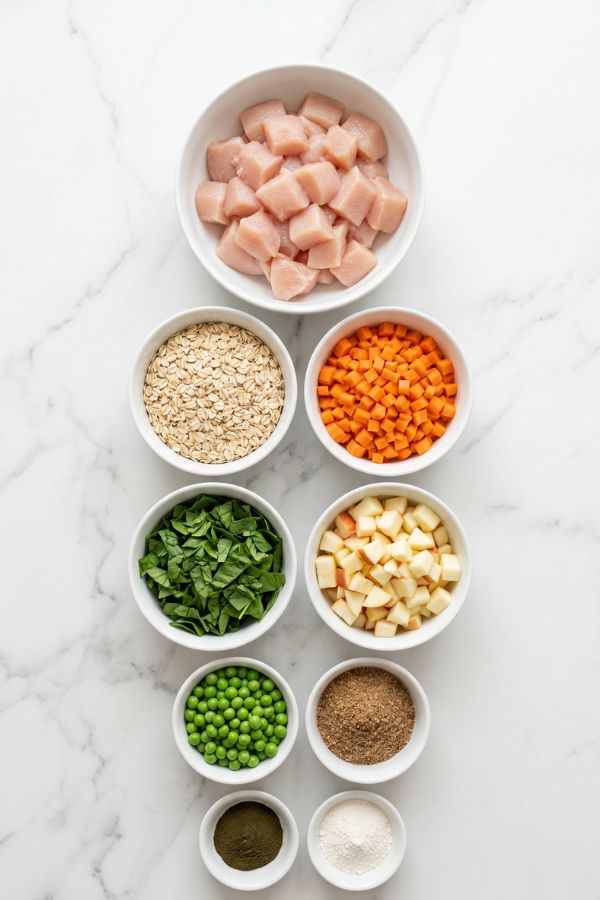
| Ingredient | Amount |
|---|---|
| Boneless, skinless chicken breast | 2 lbs |
| Rolled oats (plain, not instant) | 2 cups |
| Carrots | 3 medium, diced small |
| Fresh spinach | 2 cups, roughly chopped |
| Frozen peas | 1 cup |
| Apple | 1 medium, cored and diced (no seeds) |
| Ground flaxseed | 3 tablespoons |
| Dried kelp powder | 1/2 teaspoon |
| Eggshell powder | 1.5 teaspoons |
| Fish oil | 1 tablespoon (added at rehydration, not before) |
| Water | 6 cups |
Don’t add the fish oil before dehydrating. Oil goes rancid when exposed to low heat for hours. Stir it in when you rehydrate each serving instead.
Steps
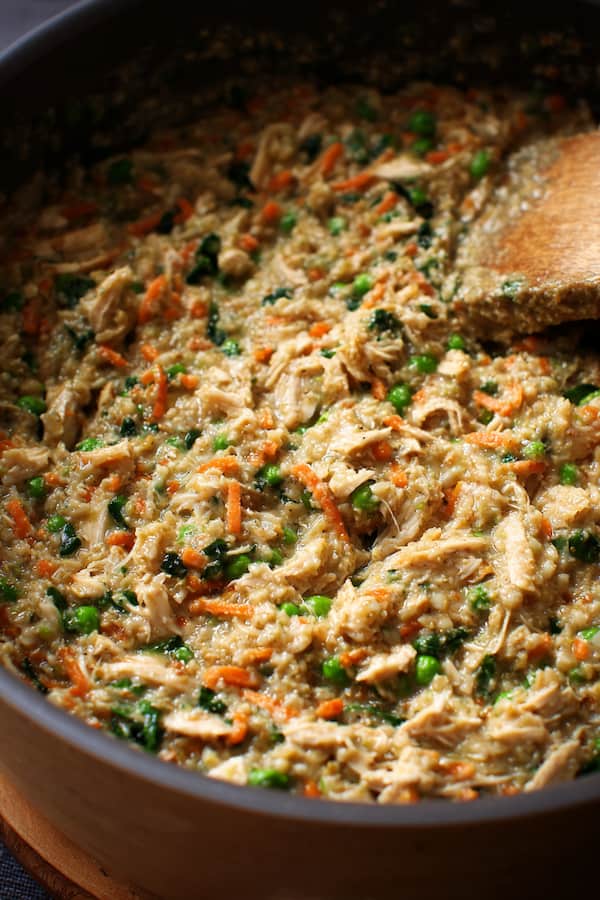
Step 1: Cook the Chicken
Place the chicken breasts in a pot with 6 cups of water. Bring to a boil, then reduce to a simmer. Cook for 20 to 25 minutes until the internal temperature hits 165F. Pull the chicken out and set it on a cutting board. Save the broth.
Step 2: Cook the Oats and Vegetables in the Broth
Add the rolled oats, diced carrots, and frozen peas to the chicken broth. Bring to a simmer and cook for 12 to 15 minutes until the oats are soft and the carrots are tender enough to mash with a fork. In the last 2 minutes, stir in the chopped spinach until it wilts.
Step 3: Shred the Chicken Small
While the oats cook, shred the chicken into the smallest pieces you can manage. Two forks work, but honestly I find it faster to pulse it a few times in the food processor. You want it almost ground, not chunky. The Honest Kitchen’s texture is fine and uniform, not like a stew with big pieces.
Step 4: Combine Everything
In a large bowl, mix the shredded chicken, the oat and vegetable mixture, diced apple, ground flaxseed, kelp powder, and eggshell powder. Stir it all together thoroughly. The consistency will be thick, like a dense porridge.
The apple goes in raw. It dehydrates well and adds a slight natural sweetness that mimics what Honest Kitchen does with their fruit additions. Remove all seeds first (and yes, I’ve made this mistake). Apple seeds contain a compound that’s mildly toxic to dogs.
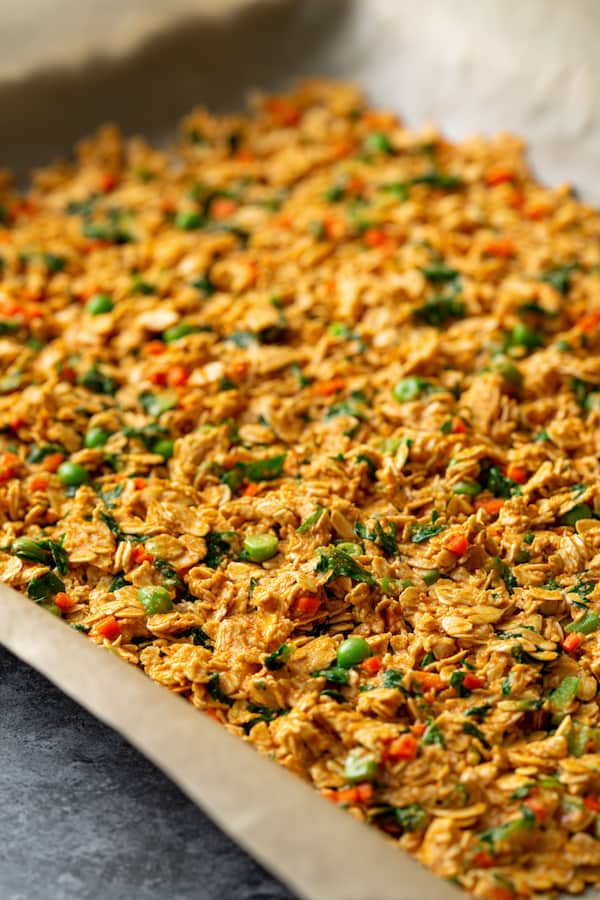
Step 5: Spread on Dehydrator Trays
Spread the mixture onto your dehydrator trays in a thin, even layer. About 1/4 inch thick is what you’re aiming for. If you have parchment paper inserts or fruit leather sheets for your dehydrator, use them. The mixture is wet and will fall through the mesh otherwise.
Step 6: Dehydrate
Set your dehydrator to 155F and run it for 10 to 14 hours. Check it around the 10-hour mark. The food is done when it’s completely dry and brittle. Break a piece in half. If there’s any moisture or softness in the center, keep going. Underdrying is the one thing you can’t afford to get wrong here. Any remaining moisture will cause mold during storage.

Step 7: Grind Into Flakes
Once everything is bone dry and cooled to room temperature, break the dried sheets into chunks and run them through your food processor. Pulse until you get a coarse, flaky texture similar to what comes out of an Honest Kitchen box. Don’t over-process it into a fine powder. You want small flakes, not dust.
Step 8: Store
Transfer the ground flakes into airtight containers or vacuum-sealed bags. Label with the date.
Storage
Room temperature in a sealed container for up to 3 weeks. Vacuum sealed at room temperature for up to 3 months. Freezer in a vacuum-sealed bag for up to 6 months. The key is keeping moisture out. If you live somewhere humid, go with vacuum sealing. It makes a real difference.
Rehydrating and Serving
Scoop your portion of dry flakes into your dog’s bowl. Add warm water at a 1 to 1.5 ratio (1 cup of flakes gets about 1 to 1.5 cups of warm water). Stir it up and let it sit for 8 to 10 minutes. It’ll absorb the water and turn into a thick, soft meal. Stir in the fish oil right before serving.
This batch makes roughly 5 to 6 cups of dried flakes, which rehydrates into about 12 to 15 cups of food.
Serving Guidelines (Rehydrated)
| Dog Weight | Daily Amount (Rehydrated) | Meals Per Day |
|---|---|---|
| 10 lbs | 1 cup | Split into 2 |
| 15 lbs | 1.25 cups | Split into 2 |
| 20 lbs | 1.5 cups | Split into 2 |
| 25 lbs | 1.75 cups | Split into 2 |
| 30 lbs | 2 cups | Split into 2 |
Start with these amounts and weigh your dog every two weeks. Adjust up or down based on whether they’re gaining or losing. Dehydrated food is calorie-dense, so it’s easy to overfeed if you eyeball it.
Recipe 2: Turkey & Sweet Potato Dehydrated Mix (Grain-Free Version)
This one is based on The Honest Kitchen’s Grain-Free Turkey recipe, which uses turkey, flaxseed, potatoes, spinach, carrots, coconut, apples, eggs, cranberries, and kelp. It’s their go-to for dogs with grain sensitivities. I swapped regular potatoes for sweet potatoes since they dehydrate better and added pumpkin because it shows up in several of their other grain-free formulas.
Ingredients
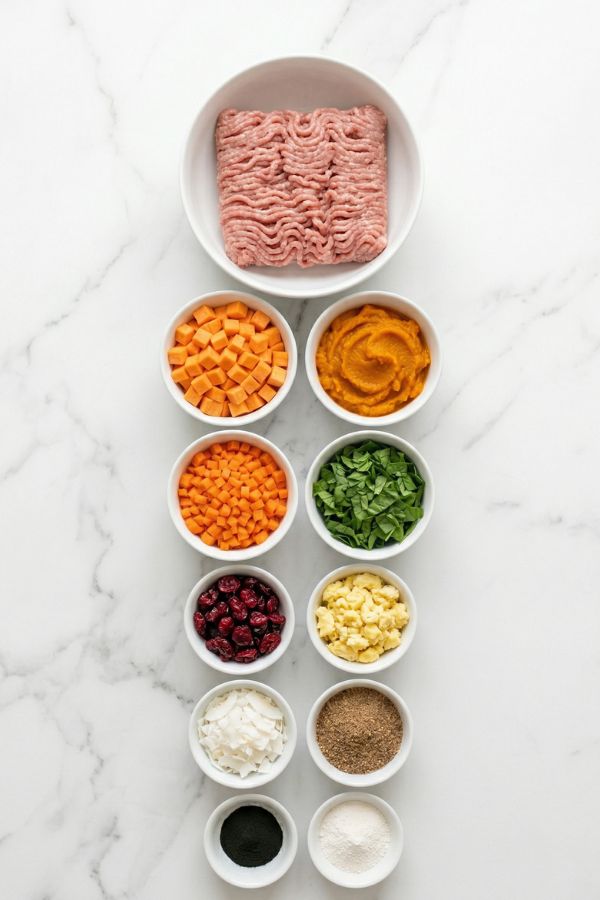
| Ingredient | Amount |
|---|---|
| Ground turkey (93% lean) | 2 lbs |
| Sweet potato | 1 large, peeled and cubed small |
| Pumpkin puree (canned, plain, not pie filling) | 1/2 cup |
| Carrots | 2 medium, diced small |
| Fresh spinach | 1.5 cups, roughly chopped |
| Dried cranberries (unsweetened) | 2 tablespoons |
| Eggs | 2 large, scrambled |
| Unsweetened shredded coconut | 2 tablespoons |
| Ground flaxseed | 3 tablespoons |
| Dried kelp powder | 1/2 teaspoon |
| Eggshell powder | 1.5 teaspoons |
| Fish oil | 1 tablespoon (added at rehydration) |
| Water | 4 cups |
Use plain canned pumpkin, not pumpkin pie filling. The pie filling has sugar, spices, and sometimes xylitol, which is extremely toxic to dogs. The can should list one ingredient: pumpkin.
Steps
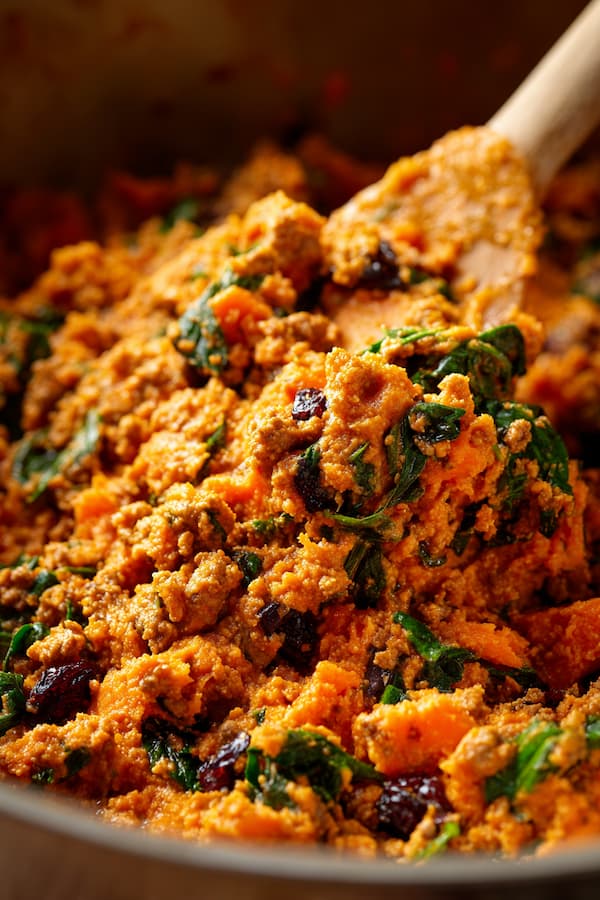
Step 1: Cook the Turkey
In a large pot over medium heat, cook the ground turkey. Break it into fine crumbles as it cooks, about 8 to 10 minutes. Don’t drain the liquid. Add 4 cups of water and stir.
Step 2: Add the Sweet Potato and Carrots
Toss in the cubed sweet potato and diced carrots. Bring to a simmer, cover, and cook for 15 to 18 minutes until the sweet potatoes are fork-tender. Mash about half of them against the side of the pot with the back of a spoon. Leave the rest in small chunks.
Step 3: Scramble the Eggs Separately
While the pot simmers, scramble the two eggs in a small pan with no oil or butter. Cook them dry and chop them into small pieces. The Honest Kitchen uses dehydrated eggs in their formula, and scrambled eggs dehydrate surprisingly well. They get crumbly and light.
Step 4: Combine Everything in the Pot
Stir in the chopped spinach, pumpkin puree, dried cranberries, shredded coconut, scrambled eggs, ground flaxseed, kelp powder, and eggshell powder. Cook over low heat for 3 to 4 minutes until the spinach is wilted and everything is mixed evenly.
Step 5: Spread on Dehydrator Trays
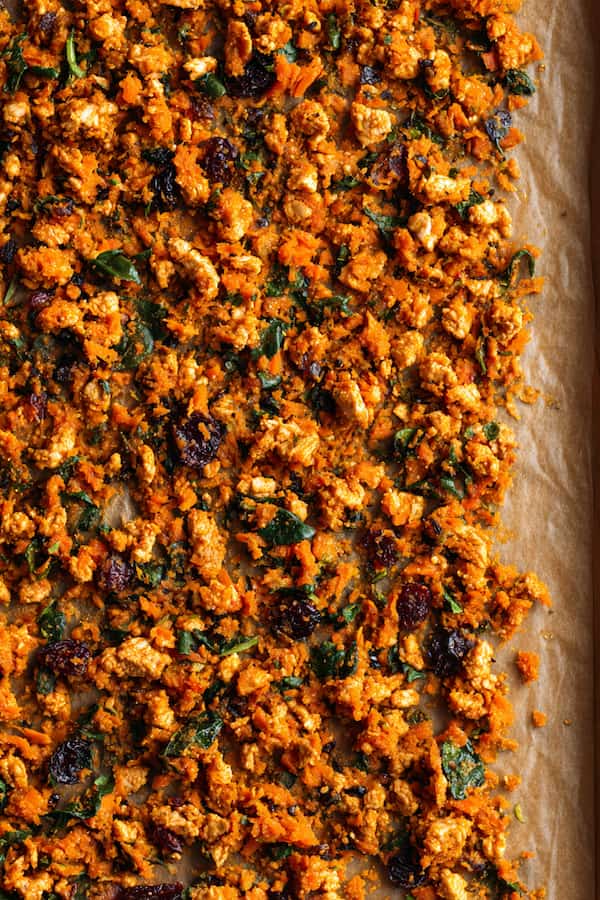
Same as Recipe 1. Spread the mixture in a thin, even layer, about 1/4 inch thick, on lined dehydrator trays. This batch is a little wetter than the chicken mix because of the pumpkin, so take a minute to spread it as evenly as possible. Thick spots take longer to dry and can cause uneven results.
Step 6: Dehydrate
Set your dehydrator to 155F for 12 to 16 hours. The pumpkin and sweet potato add extra moisture, so this batch takes a bit longer than the chicken one. Check at 12 hours. If the center of any section is still pliable, give it more time. It should snap cleanly when you bend it.
The first time I made this batch, I pulled it at 11 hours because the edges looked done. The center wasn’t fully dry and two days later I noticed a faint sour smell. Had to toss the whole thing. Lesson learned. Better to over-dry by an hour than under-dry by five minutes.
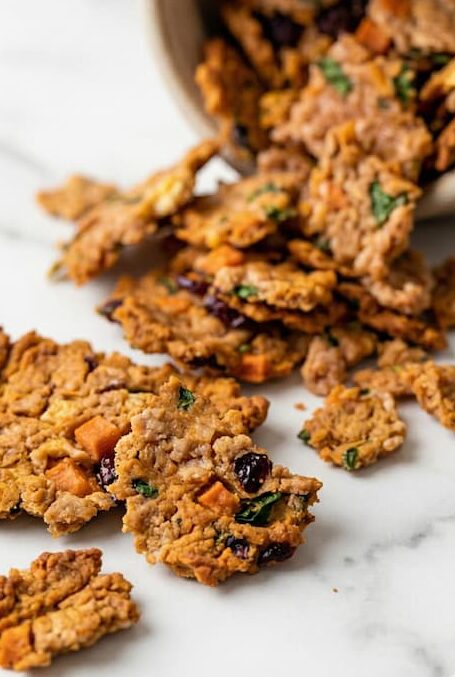
Step 7: Grind Into Flakes
Let everything cool completely, then break into pieces and pulse in a food processor until you get a coarse, flaky texture. The turkey version comes out slightly darker than the chicken one, with orange and green flecks from the sweet potato and spinach. Looks a lot like what comes out of an Honest Kitchen box.
Step 8: Store
Same storage rules as Recipe 1. Airtight containers at room temperature for 3 weeks, vacuum sealed for up to 3 months, or freezer for up to 6 months.
Rehydrating and Serving
Same method. Add warm water at a 1 to 1.5 ratio, stir, wait 8 to 10 minutes, then stir in the fish oil. The turkey version absorbs water a little faster than the chicken, so start with a 1:1 ratio and add more water if it’s too thick after sitting.
This batch makes about 5 cups of dried flakes, which rehydrates into roughly 10 to 13 cups of food.
Serving Guidelines (Rehydrated)
| Dog Weight | Daily Amount (Rehydrated) | Meals Per Day |
|---|---|---|
| 10 lbs | 0.75 cups | Split into 2 |
| 15 lbs | 1.25 cups | Split into 2 |
| 20 lbs | 1.5 cups | Split into 2 |
| 25 lbs | 1.75 cups | Split into 2 |
| 30 lbs | 2 cups | Split into 2 |
The turkey recipe is slightly more calorie-dense per cup because of the sweet potato and coconut. Start a little lower than the chicken version and adjust based on your dog’s weight over the first two weeks.
A Note on Supplements (Don’t Skip This Part)
Here’s the honest truth about homemade dog food. A 2025 study from Texas A&M looked at over 1,700 homemade dog diets and found that 94% of them were missing at least one essential nutrient. The most common gap was calcium. Without enough calcium, your dog’s body pulls it from their bones over time, which leads to serious problems.
That’s why both recipes include eggshell powder. One large eggshell, washed, dried, and ground to a fine powder in a coffee grinder, gives you roughly 1,800 mg of calcium. About 1.5 teaspoons per batch covers the calcium needs for these recipes. I keep a small jar of it in the pantry and it lasts a while (trust me on this one).
The kelp powder handles iodine, which supports thyroid function. The flaxseed covers some omega-3s, and the fish oil at serving time adds the EPA and DHA that flaxseed alone can’t provide.
For everything else, I use a general-purpose dog multivitamin. Sprinkle it on top when you serve, not before dehydrating. Heat and long drying times can break down some vitamins.
If you plan on feeding these recipes as your dog’s primary food long-term, talk to your vet. A one-time consultation with a veterinary nutritionist costs around $200 to $400 and you’ll get a customized formula reviewed by someone who does this for a living. For occasional rotation meals alongside regular food, these recipes are solid as-is.
Tips for Getting the Dehydration Right
The cooking part of these recipes is straightforward. The dehydrating is where people run into trouble. A few things I learned after messing up the first couple of batches.
- Thin and even wins the race. If your layer is thicker in the middle than the edges, the edges will be bone dry while the center is still soft. Take the extra minute to spread it evenly. A 1/4 inch layer is your target.
- Check the center, not the edges. Edges dry first. Always. The center is what you need to worry about. Break a piece from the middle and snap it. If it bends, keep going.
- Cool completely before grinding. If you grind warm food, the steam gets trapped and reintroduces moisture. Wait until everything is fully cooled to room temperature. I usually leave it on the counter for an hour after pulling it from the dehydrator.
- Don’t dehydrate fats or oils. This is why the fish oil goes in at serving time. Fat doesn’t dehydrate properly and goes rancid quickly. Trim excess fat from chicken, use lean ground turkey, and save the oils for the bowl.
- Parchment or fruit leather sheets are not optional. The mixture will fall through standard dehydrator mesh. Line your trays every time.
I’m a passionate dog owner who spends too much time researching pet nutrition, but I’m not a veterinarian or certified animal nutritionist. These recipes are inspired by The Honest Kitchen’s publicly listed ingredients and my own experience. If you’re switching your dog to a fully homemade diet, talk to your vet first, especially for long-term feeding.
Happy cooking for your pup!