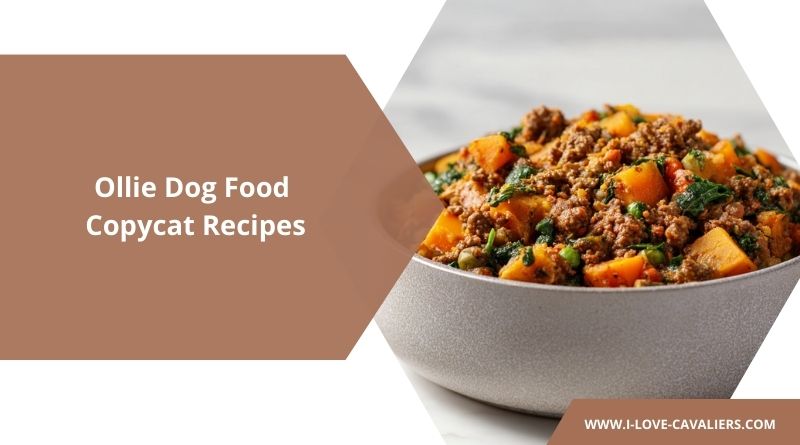
I signed up for Ollie last fall. Filled out the quiz, picked the Chicken & Carrots recipe, and waited for the box to arrive like it was Christmas. When it showed up, Snickers lost his mind. I’ve never seen him eat that fast. Bowl licked clean in under 90 seconds. Not a crumb of evidence left behind.
Then I looked at the bill. $168 a month. For a 15-pound Cavalier. I sat there doing the math, dividing it out to about $5.60 a day, and tried to figure out how I’d been paying that for three months without fully processing the number.
The food was good. Really good. Snickers loved it and his coat looked better than it had in a while. But $168 a month for a small dog? That’s my electric bill. I couldn’t justify it long-term.
So I did what any slightly obsessive dog owner would do. I pulled up the ingredient list on Ollie’s website, stared at it for a while, and started buying the same stuff at the grocery store.
It took me a few rounds of adjusting ratios and cooking methods, but I eventually landed on two recipes that get very close to the real thing. Not identical. But close enough that Snickers eats them with the same enthusiasm, and my bank account doesn’t flinch every month.
What Makes Ollie’s Food So Good (And What We’re Copying)
Before jumping into the recipes, it helps to know what you’re actually trying to replicate. Ollie isn’t doing anything mysterious. They’re just using real, whole ingredients and cooking them gently. That’s the whole trick.
- Human-grade protein as the first ingredient. Real chicken, real beef. Not meal, not by-products, not rendered anything. Just the actual meat.
- Simple carbs for energy and digestion. Rice, potatoes, sweet potatoes. Nothing exotic.
- Vegetables mixed throughout. Carrots, peas, spinach, and sometimes cranberries. All cooked soft enough for easy digestion.
- Organ meats blended in. This is the part most homemade recipes miss. Ollie uses chicken livers and beef kidneys in small amounts. They’re packed with vitamins and minerals that muscle meat alone doesn’t cover. And they’re dirt cheap.
- Salmon oil for omega-3s. A small amount goes a long way for skin and coat health.
The recipes below follow the same blueprint. Real protein, simple carbs, mixed vegetables, a small amount of organ meat, and a fish oil supplement. The textures and ratios are as close to Ollie’s as I could get after comparing my batches side by side with what came in the box.
One thing I can’t fully replicate at home is Ollie’s custom vitamin and mineral premix. They add specific supplements like zinc gluconate, taurine, and tricalcium phosphate that are formulated by a veterinary nutritionist. I use a general-purpose dog multivitamin and a calcium supplement to cover that gap. It’s not a perfect match, but my vet looked at both recipes and said they’re nutritionally solid for regular rotation.
The Cost Difference
This is the part that sold me on making the switch. Here’s what I was spending on Ollie versus what I spend now, for a 15-pound Cavalier.
| Ollie (Delivered) | Homemade Copycat | |
|---|---|---|
| Daily cost | ~$5.60 | ~$1.40 |
| Weekly cost | ~$39.20 | ~$9.80 |
| Monthly cost | ~$168.00 | ~$42.00 |
| Annual cost | ~$2,016 | ~$504 |
That’s roughly $1,500 saved per year. And this is for a small dog. If you have a 50 or 60-pound dog paying $8 to $10 a day for Ollie, the savings get even bigger.
Recipe 1: Chicken & Carrots Copycat (Ollie’s Most Popular)
This one mimics Ollie’s Chicken Dish with Carrots, which is their gentlest recipe and the one they recommend for dogs with sensitive stomachs. It was the first Ollie recipe Snickers tried, and it’s still his favorite. The original contains chicken, rice, carrots, chicken livers, peas, potatoes, spinach, cranberries, and salmon oil.
If you already make rice-based meals for your dog, this recipe will feel very familiar.
Ingredients
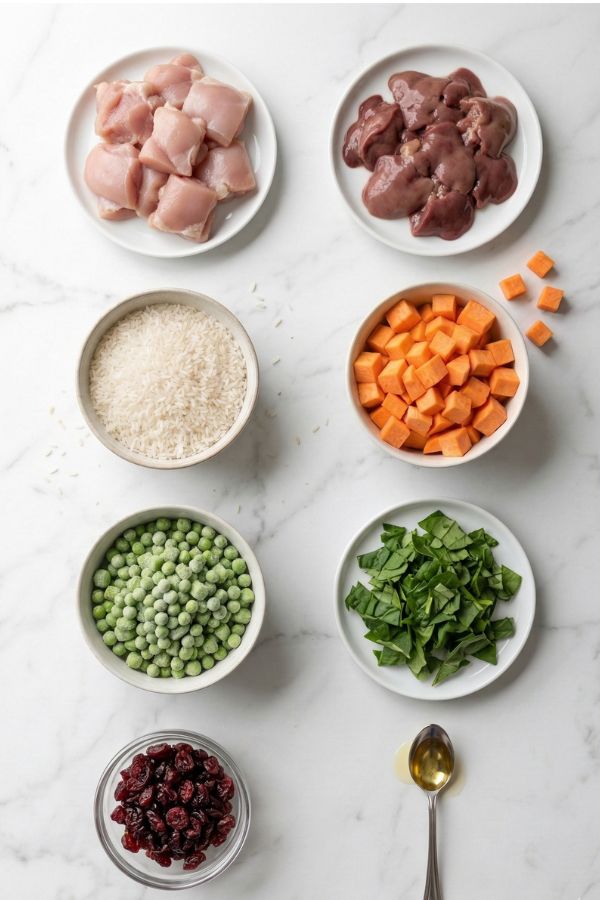
| Ingredient | Amount | Approx. Cost |
|---|---|---|
| Boneless, skinless chicken thighs | 2 lbs | $4.40 |
| Chicken livers | 4 oz (about 3-4 livers) | $0.60 |
| White rice (uncooked) | 1.5 cups | $0.35 |
| Carrots | 2 medium, diced | $0.40 |
| Frozen peas | 1 cup | $0.60 |
| Fresh spinach | 1.5 cups, roughly chopped | $0.70 |
| Dried cranberries (unsweetened) | 2 tablespoons | $0.25 |
| Salmon oil | 1 tablespoon | $0.30 |
| Calcium supplement | Per package directions | $0.15/day |
| Water | 5 cups | Free |
| Total | ~$7.60 + supplement |
Use unsweetened dried cranberries only. The ones marketed for baking usually have added sugar. Check the bag. If cranberries are the only ingredient listed, you’re good.
Steps
Step 1: Prep the Chicken and Livers
Cut the chicken thighs into roughly 1-inch pieces. Trim any large chunks of fat but don’t go crazy removing every bit. Some fat is good. Rinse the chicken livers and cut each one in half. They cook down small, so don’t worry about making them tiny.
Step 2: Cook the Chicken
Place the chicken pieces and liver halves in a large pot with 5 cups of water. Bring to a boil, then reduce to a low simmer. Cook for 20 minutes. Skim any foam from the surface. The livers will turn grayish-brown and get soft. That’s exactly what you want.
Step 3: Remove the Meat, Keep the Broth
Use a slotted spoon to pull the chicken and livers out of the pot and set them on a cutting board. Don’t dump the broth. That liquid is loaded with flavor and nutrients, and the rice is going to absorb it all.
Step 4: Cook the Rice and Carrots in the Broth
Add the rice and diced carrots to the broth. Stir once, bring it back to a simmer, cover, and cook for 18 minutes. The carrots should be soft enough to mash with the back of a spoon.
Step 5: Shred the Chicken, Mash the Livers
While the rice cooks, shred the chicken into small pieces with two forks. Take the cooked livers and mash them with a fork until they’re paste-like. This is the step that makes the biggest difference. In Ollie’s food, you can’t see or taste the organ meat because it’s blended smoothly into the mixture. Mashing the livers does the same thing. Snickers has no idea they’re in there.
Step 6: Combine Everything
Add the shredded chicken and mashed livers back to the pot. Toss in the frozen peas, chopped spinach, and dried cranberries. Stir everything over low heat for 3 to 4 minutes until the spinach wilts and the peas are heated through.
Step 7: Finish With Salmon Oil
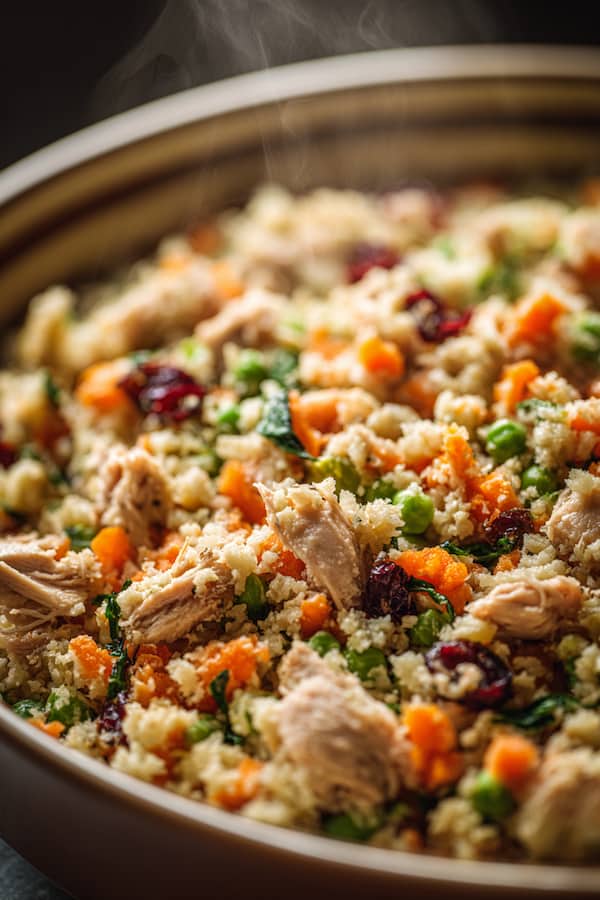
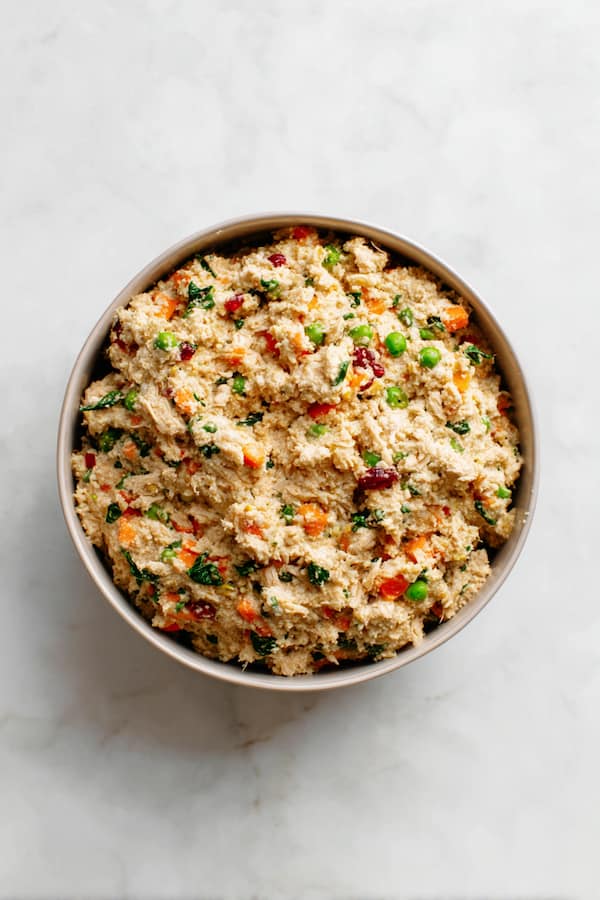
Turn off the heat. Drizzle in the salmon oil and stir it through. The final texture should be thick and porridge-like, similar to what comes out of an Ollie pouch. If it’s too thick, add a splash of warm water. If it’s soupy, leave the lid off for a few minutes and it’ll thicken as it sits.
Step 8: Cool and Store
Spread the batch in a large baking dish or sheet pan to cool faster. Don’t put warm food straight into containers (and yes, I’ve made this mistake). Once it’s room temperature, portion into daily containers.
Storage
Fridge for up to 5 days. Freezer for up to 3 months. This batch makes roughly 9 to 10 cups, which lasts Snickers about 6 days. I prep on Sundays and don’t think about it again until the following weekend.
Serving Guidelines
| Dog Weight | Daily Amount | Meals Per Day |
|---|---|---|
| 10 lbs | 1 cup | Split into 2 |
| 15 lbs | 1.5 cups | Split into 2 |
| 20 lbs | 1.75 cups | Split into 2 |
| 25 lbs | 2 cups | Split into 2 |
| 30 lbs | 2.25 cups | Split into 2 |
These are starting portions. Weigh your dog every two weeks and adjust up or down. If you’re switching from Ollie, start by matching the volume of what Ollie was sending and tweak from there.
Recipe 2: Beef & Sweet Potato Copycat (Ollie’s Heartiest)
This one is based on Ollie’s Beef Dish with Sweet Potatoes, which is their richest, most filling recipe. It’s got a deeper color and a thicker texture than the chicken version. Snickers gets this about twice a month as a rotation. The original uses beef, carrots, beef kidneys, potatoes, peas, sweet potatoes, chickpeas, spinach, and salmon oil.
If you’ve been doing weekly meal prep for your dog, this recipe fits perfectly into a rotation schedule.
Ingredients
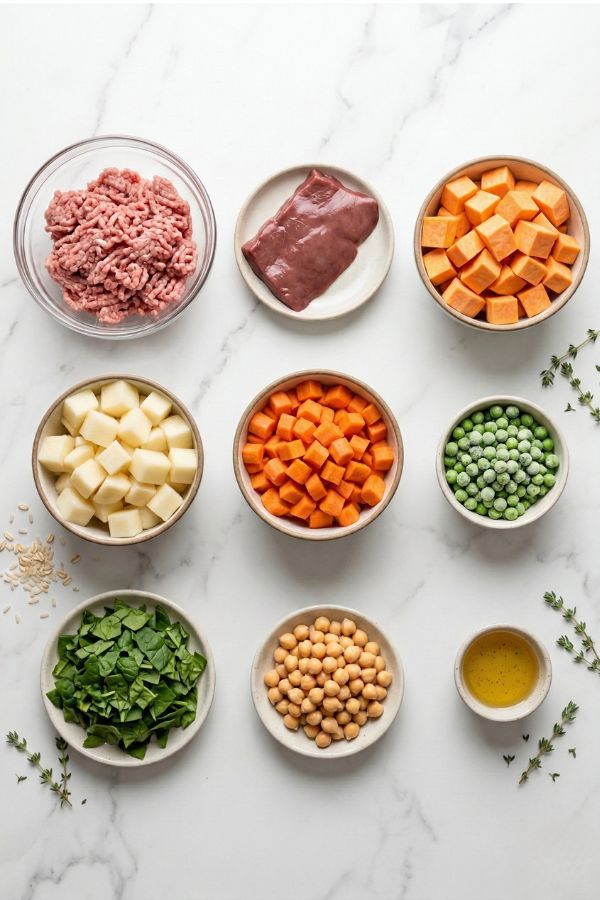
| Ingredient | Amount | Approx. Cost |
|---|---|---|
| Ground beef (85/15) | 2 lbs | $5.80 |
| Beef liver | 3 oz (one small piece) | $0.50 |
| Sweet potato | 1 large, peeled and cubed | $1.10 |
| Russet potato | 1 medium, peeled and cubed | $0.50 |
| Carrots | 2 medium, diced | $0.40 |
| Frozen peas | 1 cup | $0.60 |
| Fresh spinach | 1 cup, roughly chopped | $0.50 |
| Canned chickpeas | 1/3 cup, drained and rinsed | $0.30 |
| Salmon oil | 1 tablespoon | $0.30 |
| Calcium supplement | Per package directions | $0.15/day |
| Water | 3 cups | Free |
| Total | ~$10.00 + supplement |
Beef liver is the copycat secret here. Ollie uses beef kidneys, but liver is easier to find at most grocery stores and has a similar nutritional profile. If your store does carry kidneys, feel free to swap them in. Same amount, same prep.
Steps
Step 1: Cook the Beef Liver First
Place the beef liver in a small saucepan, cover with water, and simmer for 12 to 15 minutes until it’s cooked through and firm. Pull it out, let it cool for a few minutes, and mash it with a fork until it’s a smooth paste. Set it aside.
Beef liver has a strong smell while cooking. Just a heads up. Open a window if you’re sensitive to it. Snickers, on the other hand, will be glued to the kitchen doorway.
Step 2: Brown the Ground Beef
In a large pot over medium heat, brown the ground beef. Break it into small crumbles with a wooden spoon as it cooks, about 7 to 8 minutes. Don’t drain the fat. Ollie keeps the natural fat in their recipes, and your dog needs those calories and fatty acids.
Step 3: Add the Potatoes, Sweet Potato, and Carrots
Toss in the cubed sweet potato, regular potato, and diced carrots. Pour in 3 cups of water. Stir everything together, bring to a boil, then lower the heat. Cover and simmer for 18 to 20 minutes until the potatoes are fork-tender.
Step 4: Mash Some of the Potatoes
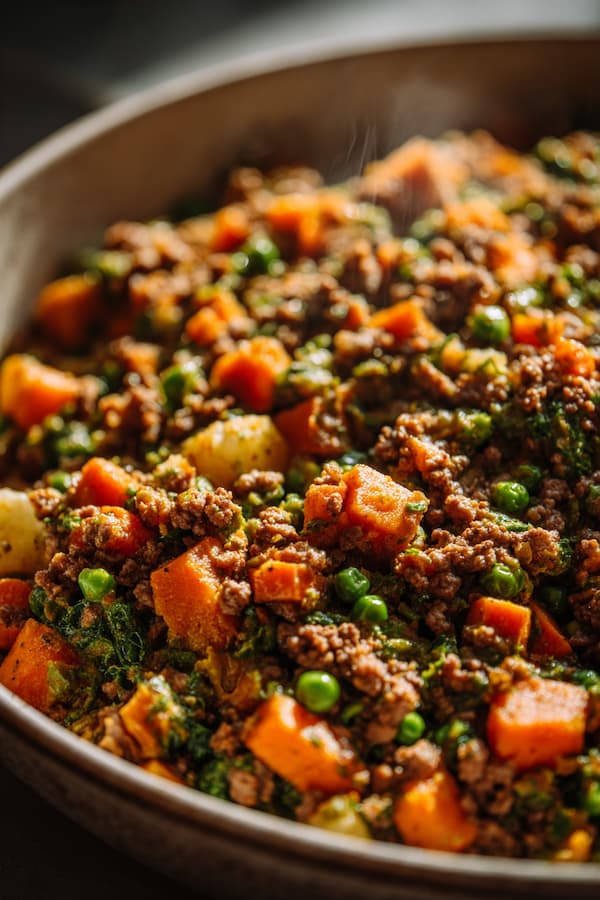
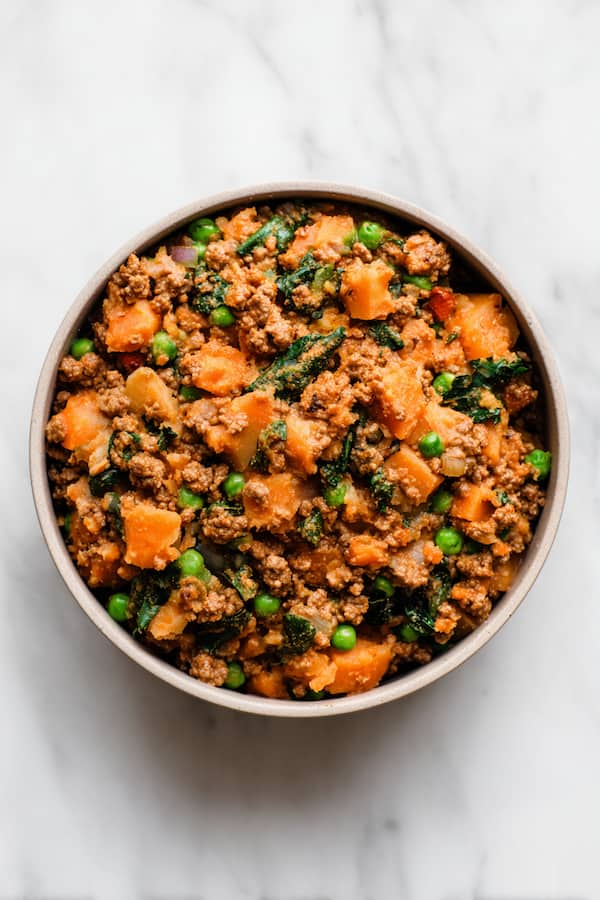
Here’s the trick that gets the texture right. Take the back of your spoon and mash about half the potato and sweet potato pieces against the side of the pot. Leave the other half in chunks. This gives you that thick, stew-like consistency that Ollie’s beef recipe has. Not a puree, not a chunky soup. Somewhere in between.
Step 5: Add the Remaining Ingredients
Stir in the frozen peas, chopped spinach, drained chickpeas, and the mashed beef liver. Cook over low heat for another 4 minutes until everything’s warmed through and the spinach is wilted. The liver paste should disappear into the mixture completely.
Step 6: Finish With Salmon Oil
Turn off the heat and stir in the salmon oil. Give the whole pot a good stir. The consistency should be thick enough to hold its shape on a spoon, not run off it. If it’s too thick, add water a tablespoon at a time. Too thin, leave the lid off and let it sit on the warm burner.
Step 7: Cool and Portion
Same drill as the chicken recipe. Spread it out to cool, then portion into daily containers. This batch makes about 10 to 11 cups. Takes Snickers about a week, so I only make it twice a month and alternate with the chicken recipe.
Storage
Fridge for up to 5 days. Freezer for up to 3 months. The beef recipe holds its texture better after freezing than the chicken one, so if you want to make a double batch and freeze half, this is the recipe to do it with.
Serving Guidelines
| Dog Weight | Daily Amount | Meals Per Day |
|---|---|---|
| 10 lbs | 0.75 cups | Split into 2 |
| 15 lbs | 1.25 cups | Split into 2 |
| 20 lbs | 1.5 cups | Split into 2 |
| 25 lbs | 1.75 cups | Split into 2 |
| 30 lbs | 2 cups | Split into 2 |
The beef recipe is slightly higher in calories than the chicken one because of the ground beef fat and the double-potato base. That’s why the portions are a little smaller. If your dog is on the heavier side, stick with the chicken copycat as the primary and use the beef as a rotation.
How Close Is It, Really?
I’ll be honest. It’s not a perfect 1:1 copy. A few differences worth knowing.
What’s the same: The core ingredients, the general ratio of protein to carbs to vegetables, the texture, and the overall nutritional profile. Both my recipes use organ meats and salmon oil, which are the two things most generic homemade recipes leave out. That’s where a lot of the nutritional density in Ollie’s food comes from.
What’s different: Ollie uses a proprietary blend of vitamins and minerals formulated by a board-certified veterinary nutritionist. I can’t replicate that at home. I use a general-purpose dog multivitamin and a calcium supplement, and my vet is fine with it for ongoing feeding. But if your dog has specific health conditions, get your vet’s input on which supplement to use.
The taste test: I put a scoop of Ollie and a scoop of my chicken copycat in two identical bowls once. Snickers sniffed both, went for mine first, and then cleaned up the Ollie. I’m not saying mine is better. But I’m not not saying it.
Tips for Getting the Texture Right
Texture is the thing that separates most homemade dog food from the premium brands. Ollie’s food has that thick, smooth, almost mousse-like quality. Here’s how to get close.
- Mash the organ meats into a paste. Don’t leave chunks. The whole point of organ meats in these recipes is that they blend invisibly into the mixture. If your dog spots a liver chunk, they might pick around it.
- Cook the rice and potatoes in broth, not water. The chicken or beef broth from cooking the protein adds flavor and helps everything bind together. Plain water makes the batch blander and looser.
- Mash a portion of your carbs. Mashing half the rice or half the potatoes while leaving the rest in pieces gives you layers of texture instead of one uniform consistency. This is how Ollie gets that thick base.
- Don’t overcook the vegetables. Toss the peas and spinach in at the end. Three to four minutes max. Overcooked peas turn gray and mushy. You want them bright and soft, not dissolved.
FAQ
Can I use chicken breast instead of thighs?
You can, but the recipe won’t be as close to Ollie’s. Thighs have more fat and moisture, which is what gives the food its richness. Breast meat makes the batch drier and leaner. If you do use breast, add an extra tablespoon of salmon oil or olive oil to compensate.
Do I really need the organ meats?
You don’t need them, but they’re what make this a copycat and not just another basic homemade recipe. Organ meats are where a huge chunk of the vitamins come from, things like vitamin A, B12, iron, and folate. Skip them if you want, but add a more robust multivitamin to cover what you’re missing.
Is salmon oil necessary?
It makes a noticeable difference for coat and skin health. Snickers’ coat got visibly shinier after about three weeks of having salmon oil in his food. A bottle costs around $12 and lasts two to three months. Worth it, in my opinion. You can also use fish oil capsules. Just pierce one and squeeze it in.
Can I swap beef for turkey or lamb?
Yes. Turkey works as a direct swap for the ground beef. Same amount, same cooking time. Lamb is fattier, so reduce the portion sizes slightly if you go that route. The key ingredients to keep are the organ meat, salmon oil, and the same vegetable mix.
How do I transition from Ollie to homemade?
Mix 75% Ollie with 25% homemade for the first 3 days. Then 50/50 for 3 days. Then 25% Ollie and 75% homemade for 3 days. Then full homemade. The gradual switch prevents stomach upset. I did this over about 10 days and Snickers had zero issues.
The $168 I Don’t Miss
I still think Ollie makes a great product. If I had the budget for it long-term, maybe I’d still be ordering. The convenience of having pre-portioned pouches show up at my door every two weeks was genuinely nice. No cooking, no planning, no cleanup.
But there’s something different about making it yourself. Not just the cost savings, although saving over a hundred dollars a month is hard to ignore. It’s knowing exactly what’s in the bowl because you put it there. Watching Snickers inhale a batch you made on a Sunday afternoon while listening to a podcast. It just hits different.
He’s on the couch right now, half-asleep, with his nose resting on the armrest closest to the kitchen. Every once in a while one ear twitches, like he’s monitoring the situation. Keeping tabs on the fridge. He knows there’s a fresh container in there with his name on it. Well, not his name specifically. But a strip of blue tape that says “S” and tomorrow’s date, which is close enough.
If you’re on Ollie and love it but wince at the monthly bill, give one of these a try. You might not cancel your subscription the first week. But once you see the comparison in your dog’s bowl and your bank account, you’ll probably do what I did. Keep the recipes, cancel the box.
I’m a dedicated dog owner who spends too much time in the kitchen, but I’m not a veterinarian or certified animal nutritionist. These recipes are based on Ollie’s publicly listed ingredients and my own experience, not a licensed nutritional analysis. If you’re switching your dog to a fully homemade diet, run it by your vet first.
Happy cooking for your pup!