Your dog deserves dinner that’s as wholesome as it is delicious. Store‑bought kibble can be convenient, but nothing beats the feel‑good factor of cooking up a nourishing meal yourself.
This slow‑cooker Chicken & Veggie Dog Food is a one‑pot wonder: lean protein, fiber‑rich grains, and a rainbow of veggies, all simmered to perfection. Plus, it’s ridiculously easy—just toss, cook, stir, and serve.
This recipe is especially beneficial for dogs with food sensitivities or allergies, as you can easily customize ingredients to avoid problem foods. Let’s get cooking!
Benefits of This Crockpot Meal
- High‑Quality Protein
- Complex Carbs
- Veggie Power
- Cost-Effective
- Digestive Health
Crockpot Chicken Dog Food Recipe
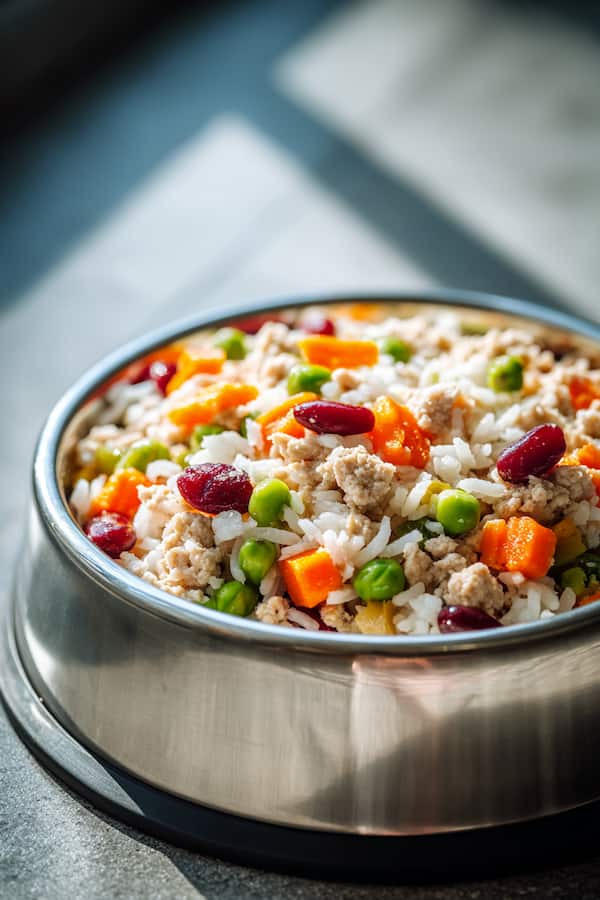
Ingredients
| Ingredient | Amount | Nutritional Benefits | Selection Tips |
|---|---|---|---|
| Lean ground chicken | 3 lb | Complete protein, B vitamins, selenium | Choose 90% lean or higher; organic preferred |
| Uncooked rice | 1 ⅓ cups | Complex carbs, B vitamins, energy | White rice for sensitive stomachs; brown rice for extra fiber |
| Butternut squash (cubed) | 1 cup | Beta-carotene, fiber, potassium | Choose firm, heavy squash; pre-cut saves time |
| Kidney beans (drained) | 15 oz can | Plant protein, fiber, folate | Rinse thoroughly to remove excess sodium |
| Peas | 1 cup | Vitamin K, fiber, antioxidants | Fresh or frozen work equally well |
| Green beans | 1 cup | Vitamin C, fiber, low calories | Trim ends; cut into bite-sized pieces |
| Carrots (diced) | 1 cup | Vitamin A, fiber, natural sweetness | Peel and dice uniformly for even cooking |
| Water | 3 ½ cups | Hydration, cooking medium | Filtered water preferred; adjust as needed |
Step-by-Step Instructions
Step 1: Prep Your Ingredients
Gather all your ingredients. Chop the butternut squash into bite‑sized cubes, dice the carrots, and drain the kidney beans. Measuring everything out before you start will make assembly a breeze.
Step 2: Layer in the Slow Cooker
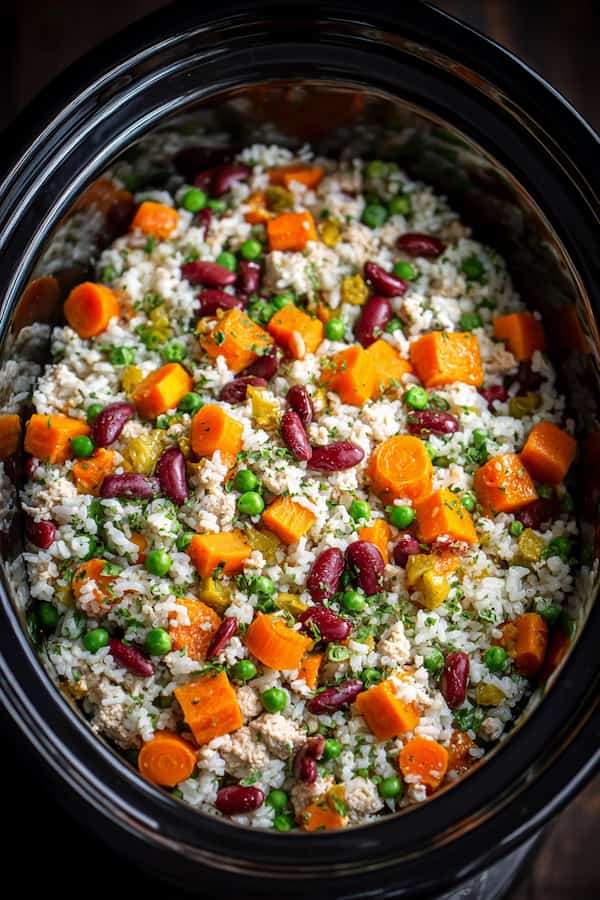
Add the ground chicken to the bottom of your crock‑pot. Top with butternut squash, drained beans, peas, green beans, and carrots in that order. Sprinkle the uncooked rice evenly across the top. Finally, pour in the water to cover everything. This layering method ensures the chicken cooks thoroughly on the bottom while vegetables steam perfectly above
Step 3: Set and Forget
Cover your slow cooker and choose High for 4 hours or Low for 6 hours. The longer, gentler cook on Low yields a softer texture, ideal for senior dogs or pups with sensitive teeth. For puppies or dogs with digestive issues, the Low setting is always recommended as it creates a more tender, easily digestible meal.
Step 4: Stir and Check
About halfway through, give everything a gentle stir to ensure even cooking. If it looks too dry, add a splash more water; if it’s too soupy, remove the lid for the last 30 minutes to let excess liquid evaporate.
Step 5: Cool Before Serving
Once cooking is complete, turn off the heat and let the pot sit for 10 minutes. This cooling period helps ingredients settle and makes serving safer for your dog’s mouth and tummy.
Storage Tips
- Refrigerator: Store leftovers in airtight containers for up to 4 days. Glass containers are ideal as they don’t absorb odors and are easy to clean.
- Freezer: Portion into freezer‑safe bags or containers and freeze for up to 3 months. Thaw overnight in the fridge before serving. Label containers with the date and contents for easy identification.
- Portioning Strategy: Divide into meal-sized portions before freezing. Ice cube trays work great for small dogs, while larger containers suit bigger breeds. This makes thawing and serving much more convenient.
- Reheating Tips: Warm refrigerated portions slightly before serving to enhance aroma and palatability. Add a splash of warm water if the mixture seems too thick after refrigeration.
- Batch Cooking: This recipe doubles or triples easily, making it perfect for meal prep. Consider making a large batch monthly and freezing portions for convenience.
Feeding Guidelines
Homemade slow-cooker chicken dog food can be served as a full meal or mixed with your dog’s usual kibble, depending on their needs and your veterinarian’s advice. The ideal portion will vary based on your dog’s size, age, activity level, and overall health—there’s no universal amount that works for every pup.
As a general rule, start by replacing a small portion of your dog’s regular food with the homemade recipe, especially if this is their first time trying it. Gradually increase the amount over several days to give their digestive system time to adjust and to watch for any sensitivities or allergies.
Monitor your dog’s weight, appetite, and energy after switching to homemade meals, and adjust portions if needed. If you’re unsure how this recipe fits into your dog’s nutritional needs, or if you’re planning to feed it exclusively, check in with your veterinarian to ensure your dog is getting a balanced diet.
Customization Ideas
- Grain Swap: Use brown rice or quinoa for extra fiber. Barley is another excellent option that adds chewy texture and additional B vitamins.
- Protein Variation: Substitute ground turkey or beef for chicken. Fish like salmon (boneless) provides omega-3 fatty acids for coat health.
- Veggie Mix‑ins: Add spinach, pumpkin puree, or sweet potato cubes for variety. Broccoli florets, zucchini, and bell peppers also work wonderfully.
- Seasonal Additions: Incorporate seasonal vegetables like asparagus in spring or winter squash varieties in fall for nutritional variety.
FAQs
Can my puppy eat this?
Yes—puppies can enjoy this recipe. Use the Low setting for a softer finish, and start with smaller portions to gauge tolerance.
What if my dog has a sensitive stomach?
This recipe is great for dogs with senstive stomachs. However, always introduce new foods gradually.
Can I add supplements to this recipe?
Yes, but consult your vet first. Common additions include fish oil for omega-3s, calcium for bone health, or multivitamins designed for dogs.
Final Thoughts
There you have it—a simple, nutritious, slow‑cooker meal that’ll make your dog feel like royalty at dinner time. Less stress, more tail wags, and the satisfaction of knowing exactly what’s in your pet’s bowl. Go ahead, give it a try, and watch that happy dance unfold.
Remember, every dog is unique, and what works perfectly for one might need adjustments for another. Start with this base recipe and feel free to customize based on your dog’s preferences and dietary needs. The beauty of homemade dog food is that you can adapt it to create the perfect meal for your specific furry friend.