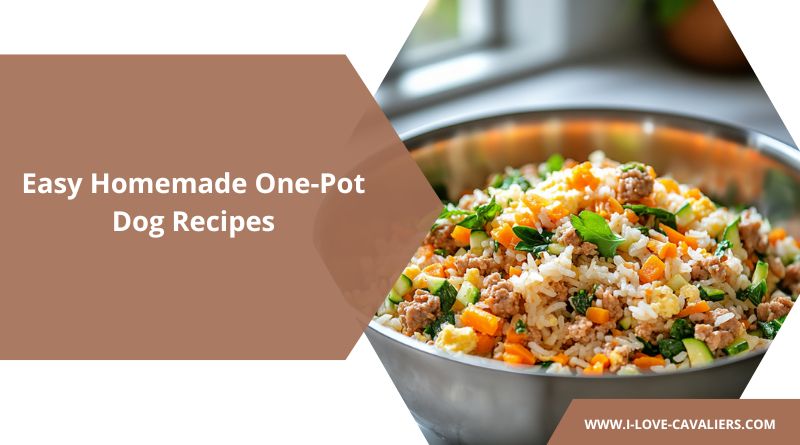
You know that look your dog gives you when you’re making dinner? Pure hope—and maybe a little bit of jealousy.
Let’s be honest: tossing kibble in a bowl is easy, but nothing beats the feeling of serving up a meal you actually made yourself. Fresh, real food with ingredients you recognize (and can pronounce) just hits different—for both of you.
If you want to keep it simple but still win “best dog parent” status, these one‑pot dog dinners are about to be your new secret weapon. Lean protein, hearty grains, and a rainbow of veggies, all in a single pot. Less mess, less fuss, and way more tail wags at mealtime.
Stick around—your pup’s about to eat better than ever.
Why You’ll Love These One‑Pot Dog Food Recipes
- Balanced Nutrition: Each recipe combines protein, complex carbs, and fiber‑rich veggies in optimal ratios that support your dog’s overall health. Unlike commercial kibble that’s processed at high temperatures, these gentle cooking methods preserve more vitamins and minerals.
- Ease & Efficiency: One pot means fewer dishes and less time in the kitchen. Perfect for busy pet parents who want to provide homemade nutrition without spending hours cooking and cleaning.
- Customizable: Swap proteins or add safe extras to suit your dog’s tastes and dietary needs. Got a dog with allergies? No problem. Prefer organic ingredients? Easy swap. Want to add seasonal vegetables? Go for it.
- Cost-Effective: Making large batches is often more economical than premium dog food, especially for multiple-dog households. You’re getting human-grade ingredients at a fraction of the cost.
- Quality Control: You know exactly what goes into every meal—no mystery meat, artificial preservatives, or questionable fillers.
Homemade One‑Pot Dog Recipes
1. Savory Beef & Broth One‑Pot Stew
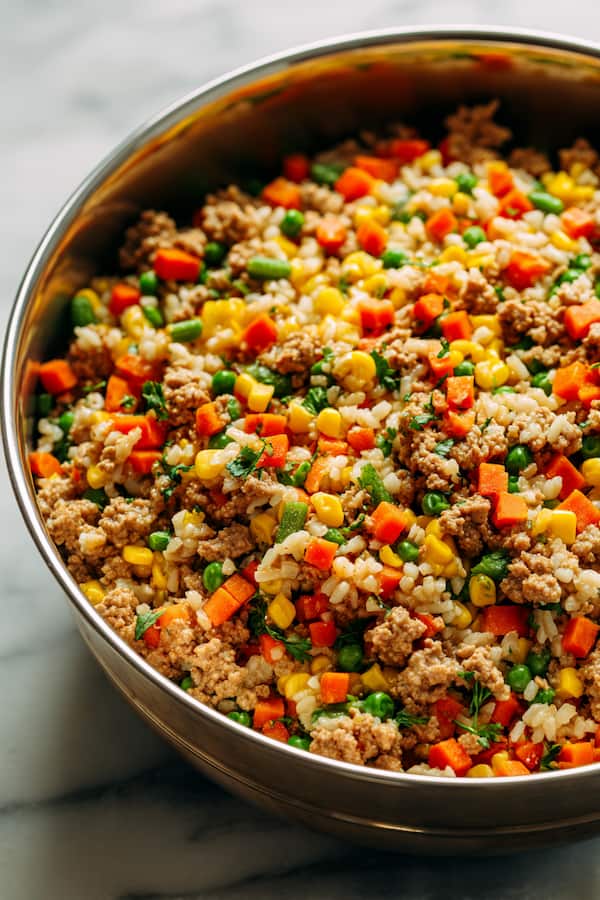
A comforting, meaty stew that will have your dog begging for seconds without any extra effort on your part. This recipe is perfect for cold weather or when your dog needs some extra comfort food.
| Ingredient | Amount | Benefit | Selection Tips |
|---|---|---|---|
| Lean ground beef | 2 lb | High‑quality protein for muscle maintenance | Choose 90% lean or higher; grass-fed preferred |
| Cooked rice | 1 cup | Complex carbs for steady energy | Use day-old rice for better texture |
| Frozen mixed veggies | 24 oz (corn, carrots, green beans, peas) | Fiber, vitamins, and antioxidants | Check that corn is included—it’s safe for dogs |
| No‑salt beef bone broth | 1 ½ cup | Hydration and minerals for joint support | Look for organic, low-sodium options |
| Coconut oil | 2 tbsp | Healthy fats for coat and energy | Virgin, unrefined coconut oil is best |
Recipe Notes:
- This stew is particularly good for active dogs who need sustained energy
- The bone broth provides natural glucosamine for joint health
- Coconut oil supports cognitive function and provides medium-chain triglycerides for quick energy
Stepy-by-Step-Instructions
Step 1: Brown the Beef
Cook the ground beef in a large pot over medium‑high heat, breaking it up as it browns. Drain and discard excess grease, then return the beef to the pot. Pro tip: Don’t over-drain—a little fat adds flavor and essential fatty acids.
Step 2: Add Veggies & Oil
Stir in the frozen vegetables and coconut oil. Heat just until the oil melts and veggies begin to soften. The coconut oil will help your dog absorb fat-soluble vitamins from the vegetables.
Step 3: Pour in Broth & Rice
Add the bone broth and cooked rice, stirring to combine everything evenly. The rice will absorb the flavors and create a hearty, satisfying texture.
Step 4: Simmer to Thicken
Bring to a gentle boil, reduce heat, and simmer 10–15 minutes until most of the liquid is absorbed and flavors meld. Stir occasionally to prevent sticking.
Step 5: Cool & Portion
Remove from heat, let cool, then divide into serving‑size portions. Refrigerate half and freeze the rest. This recipe makes about 8-10 cups, perfect for meal prep.
2. Turkey, Zucchini & Rice Skillet
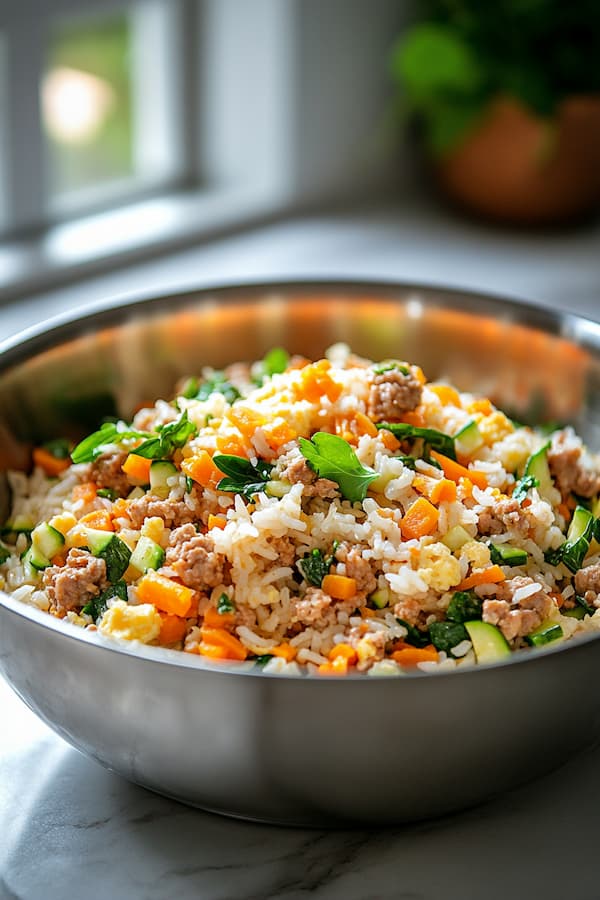
A light yet protein‑packed skillet meal that balances lean meat with fresh greens for a healthy, colorful dinner. This recipe is ideal for dogs who need to maintain a healthy weight or have sensitive stomachs.
| Ingredient | Amount | Benefit | Selection Tips |
|---|---|---|---|
| Cooked rice | 3 cups | Sustained energy from whole grains | Brown rice adds extra fiber |
| Ground turkey | 1 lb | Lean protein for muscle repair | Choose 93% lean ground turkey |
| Zucchini, shredded | 1 large | Low‑calorie fiber and vitamins | Fresh zucchini has better texture than frozen |
| Baby spinach, chopped | 1 cup | Iron and antioxidants for immune support | Pre-washed spinach saves time |
| Large egg | 1 | Protein and essential amino acids | Free-range eggs provide better nutrition |
| Coconut oil | 1 tbsp | Healthy fats for coat sheen and brain health | Start with less if your dog is sensitive |
Recipe Notes:
- This is the lowest-calorie option of the three recipes
- Perfect for senior dogs or those with weight management needs
- The egg acts as a natural binder and adds complete protein
Stepy-by-Step-Instructions
Step 1: Sauté Turkey
Heat coconut oil in a pot over medium‑high heat. Add ground turkey and cook until no pink remains, about 8–10 minutes. Break it up well for even cooking and better texture.
Step 2: Stir in Veggies
Lower heat to medium. Add zucchini and spinach, cooking until veggies are just tender, about 5 minutes. Don’t overcook—you want the vegetables to retain some texture and nutrients.
Step 3: Incorporate the Egg
rack the egg into the skillet, stirring to scramble and bind the mixture until cooked through. The egg will help hold everything together and add richness.
Step 4: Mix in Rice
Remove from heat and gently fold in the cooked rice until well combined. The residual heat will warm the rice perfectly.
Step 5: Cool & Store
Allow to cool slightly, then portion into meal‑size servings. Store in the fridge or freezer. This recipe makes about 6-8 cups.
3. Chicken, Lentil & Sweet Potato Mash
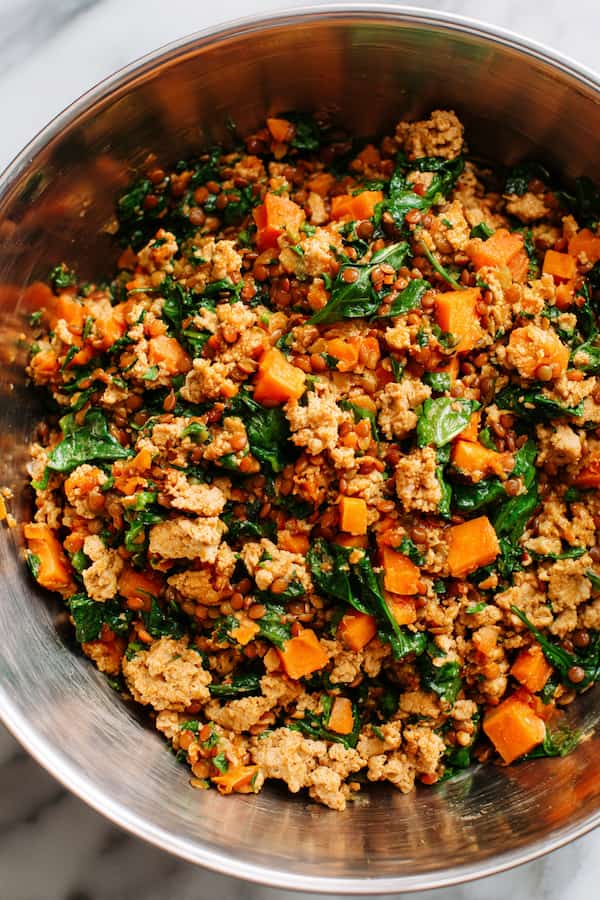
A hearty mash blending lean chicken, protein‑rich lentils, and sweet potatoes for a nutrient‑dense meal. This recipe is excellent for dogs who need extra fiber or those with grain sensitivities.
| Ingredient | Amount | Benefit | Selection Tips |
|---|---|---|---|
| Ground chicken | 2 lb | Lean protein for tissue repair | Choose organic, hormone-free when possible |
| Fresh spinach | 5 oz | Iron and vitamins for red blood cell health | Baby spinach is more tender |
| Sweet potato, chopped | 1 large | Beta‑carotene and fiber for eye and gut health | Orange varieties have more nutrients |
| Carrots, chopped | 2 medium | Vitamin A for immunity and vision | Cut into uniform pieces for even cooking |
| Dry lentils, rinsed | 1 cup | Plant‑based protein and fiber | Red lentils cook faster than green |
| Water | 3 ½ cups | Hydration and gentle cooking medium | Filtered water is ideal |
| Olive oil | 1 tbsp | Healthy monounsaturated fats | Extra virgin olive oil provides antioxidants |
Recipe Notes:
- This is the most fiber-rich option, great for digestive health
- Lentils provide plant-based protein that complements the chicken
- Sweet potatoes are naturally sweet—most dogs love them
Stepy-by-Step-Instructions
Step 1: Cook Lentils
Combine lentils and water in a saucepan. Bring to a boil, then simmer covered for 15–20 minutes until tender and liquid is absorbed. Red lentils will cook faster than green ones.
Step 2: Brown the Chicken
In a large pot, heat olive oil over medium heat. Add ground chicken and cook until fully browned. Make sure to break it up well for even cooking.
Step 3: Sauté Veggies & Spinach
Add carrots, sweet potato, and spinach. Sauté 4–5 minutes until veggies soften and spinach wilts. The sweet potato should be fork-tender but not mushy.
Step 4: Combine Lentils
Stir the cooked lentils into the chicken‑veggie mixture until evenly distributed. Remove from heat and let cool before serving. This creates a hearty, satisfying texture that dogs love.
Storage Tips
Refrigerator: Airtight containers, up to 4 days. Glass containers are best as they don’t absorb odors and are easy to reheat.
Freezer: Portion into freezer‑safe bags or trays, up to 3 months. Thaw overnight in the fridge. Silicone muffin cups make perfect individual portions.
Meal Prep Strategy: Make one recipe per week and rotate proteins to provide variety. This prevents boredom and ensures diverse nutrition.
Feeding Guidelines
These homemade one-pot dog meals offer a healthy alternative to store-bought food, but every dog’s needs are unique. The ideal serving size for your dog depends on several factors: their size, age, activity level, metabolism, and any special dietary requirements.
What works for one dog may be too much or too little for another, so there’s no universal portion that fits all.
The best way to get started is to introduce these homemade meals slowly, mixing a small amount with your dog’s regular food and gradually increasing over several days. Monitor your dog’s weight, appetite, energy, and stool quality as you transition to homemade meals.
You can adjust portion sizes up or down depending on how your dog responds—healthy weight, bright energy, and steady appetite are all signs you’re on the right track. More active or younger dogs may need larger servings, while senior or less active pups might do well with less.
If you plan to feed homemade meals exclusively, it’s a good idea to consult your veterinarian for advice on balanced nutrition, especially for long-term feeding.
Transition Tips: If switching from kibble, transition gradually over 7-10 days. Start with 25% homemade food mixed with 75% kibble, increasing the homemade portion every few days.
Activity Adjustments: Active dogs may need 10-20% more food, while less active dogs may need slightly less. Monitor your dog’s weight and adjust accordingly.
Customization Ideas
- Protein Swaps: Use lamb, fish, or venison for variety. Always ensure proteins are fully cooked and boneless.
- Grain Alternatives: Substitute quinoa, barley, or oatmeal for rice. Each provides different nutritional benefits.
- Seasonal Vegetables: Add pumpkin in fall, asparagus in spring, or butternut squash in winter for variety and seasonal nutrition.
- Texture Modifications: Puree partially for senior dogs or add extra water for a stew-like consistency.
FAQs
Can I use these recipes for puppies? Yes, but puppies need more frequent meals and may require additional calcium and phosphorus. Always consult your vet about puppy nutrition requirements.
How do I know which recipe is best for my dog? Consider your dog’s age, activity level, and health status. The turkey recipe is best for weight management, beef for active dogs, and chicken/lentil for digestive health.
What if my dog has food allergies? These recipes are easily customizable. Remove problem ingredients and substitute with safe alternatives. The single-protein approach makes it easy to identify and avoid allergens.
Can I make these recipes in larger batches? Absolutely! All recipes double or triple easily. Just ensure you have adequate storage space and properly cool large batches before refrigerating.
Final Thoughts
Three recipes, three full nutritional profiles—yet just one pot each. Whether you’re rotating proteins, sneaking in extra veggies, or simplifying dinner prep, these homemade meals make it easy to show your dog some real love. Give them a try and watch your pup dig in with pure delight!
Remember, the best dog food is the one your dog thrives on. Start with these base recipes and adjust based on your dog’s individual needs, preferences, and health requirements. Your furry friend will appreciate the variety, and you’ll love the peace of mind that comes with knowing exactly what’s in their bowl.
These one-pot wonders prove that healthy, homemade dog food doesn’t have to be complicated or time-consuming. With minimal prep and maximum nutrition, you’re just one pot away from becoming your dog’s favorite chef. Happy cooking, and here’s to many satisfied tail wags ahead!