Friday night, rain on the windows, and a bag of popcorn doing its thing in the microwave. Snickers, my Cavalier, heard the first pop from two rooms away.
By the time I sat down, he’d already picked his spot. Right between my feet and the coffee table, eyes locked on the bowl like it owed him money.
One piece hit the floor. Gone before I could lean forward.
That’s when I flipped the empty bag over and actually read it. Butter flavoring, oil, salt, and a few words I couldn’t pronounce.
Not exactly dog food. So I spent the rest of the movie reading what vets say about dogs and popcorn (the movie was bad anyway).
Turns out the popcorn was never the problem. The stuff we put on it was.
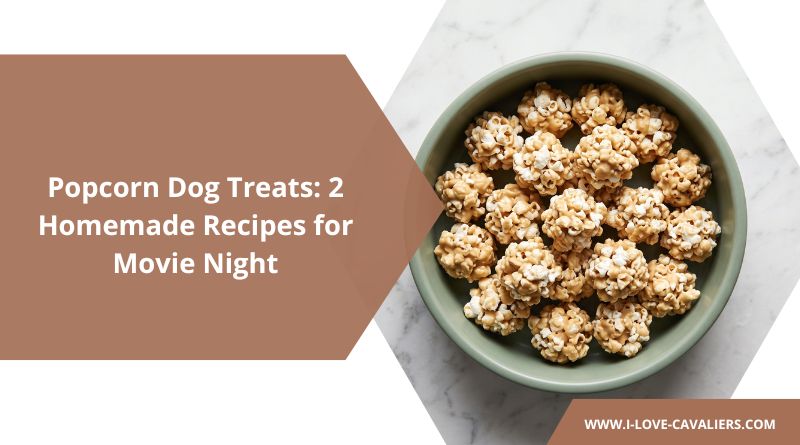
The next weekend I popped a plain batch and turned it into two popcorn dog treats: a no-bake peanut butter one and a baked pumpkin biscuit. Snickers gets his own bowl now, and I get to finish mine in peace.
Can Dogs Eat Popcorn? What Vets Actually Say
Yes, with one big condition. It has to be plain.
The American Kennel Club says plain, air-popped popcorn is safe for dogs in small quantities. PetMD agrees that popcorn itself isn’t toxic, and that the trouble starts with how we prepare it.
It’s light, too. The veterinary nutrition team at Tufts University lists half a cup of air-popped popcorn at 15 calories.
AKC adds that popped kernels carry fiber and a few useful minerals, including magnesium, manganese, phosphorus, and zinc. Nobody’s calling it a superfood, though.
It’s a crunchy, low-calorie excuse to share the couch. That’s enough.
And the old line about corn being “cheap filler”? Tufts’ veterinary nutritionists file that one under myths.
What Makes Popcorn Risky for Dogs
Four things, and none of them is the fluffy white part.
- Unpopped and half-popped kernels
AKC warns that kernels can get stuck in a dog’s teeth and are a choking hazard. PetMD adds that in very small dogs, a swallowed kernel can even cause an intestinal blockage.
- Butter and oil
PetMD lists upset stomach, obesity, and pancreatitis as the risks of buttery popcorn. AKC notes that even one large helping of fatty food may be enough to trigger a pancreatitis attack.
- Salt
Too much salt can cause salt poisoning in dogs, according to PetMD. If salt is already a worry in your house, my low sodium dog treats show how fast it adds up.
- Sweet coatings
Kettle corn and caramel corn are out. Besides the sugar, PetMD points out they can hide chocolate or xylitol, and both are toxic to dogs.
Warning: Xylitol is the one to memorize. The FDA says it can crash a dog’s blood sugar within 10 to 60 minutes, and it sometimes hides on labels as “birch sugar.”
If you think your dog ate something with xylitol in it, the FDA’s advice is to get to your vet or an emergency animal hospital immediately. Don’t wait for symptoms, because the serious effects can take 12 to 24 hours to show.
One odd detail. PetMD notes that xylitol is made from birch wood and from corncob remnants.
So one of the worst things your dog can eat can start out as a corncob, and it isn’t in a bowl of plain popcorn. It’s in the wrong jar of peanut butter.
Dogs That Should Sit This One Out
Most healthy dogs can have these. A few shouldn’t.
- Dogs on a prescription diet. PetMD is blunt about it: no foods or treats outside the diet.
- Dogs with a history of pancreatitis. Skip the peanut butter balls, because most of their calories come from fat. AKC also notes that long-term coconut oil feeding can trigger pancreatitis.
- Very small dogs, if you plan to skip the sifting. Kernels are the blockage risk PetMD flags for tiny breeds, so sift properly or bake the biscuits.
- Dogs with a known corn allergy. It’s rare (more on that in the questions below), but it rules out both recipes.
Not sure which group your dog is in? That’s a two-minute call to your vet.
Popping Plain Popcorn With Zero Hard Kernels
Now that you know where the risks are, here’s how to pop around them. Most dog popcorn recipes give this part one line, if they mention it at all.
Start With Plain Kernels
Buy a bag of plain popping kernels, not microwave popcorn. The bag I read on movie night had the butter flavoring, oil, and salt already inside, and there’s no taking them back out.
A hot air popper is the easiest tool, because it needs no oil at all. A silicone microwave popper works too.
I skip the stovetop for dog batches, since that method starts with a layer of oil in the pan.
The Popcorn Board’s rule of thumb is that 1 ounce of kernels pops into 1 quart. In kitchen terms, that’s about 2 tablespoons of kernels for 4 cups of popcorn.
Stop at Two Seconds Between Pops
Stay close and listen. The Popcorn Board says popcorn is done when you can count 2 seconds between pops.
Pull it earlier and you get more hard kernels. Push it later and you get the smell of regret.
Sift Over a Cooling Rack
Set a wire cooling rack over a baking sheet and pour the popcorn on top in a single layer. Shake the rack gently for about 20 seconds.
Unpopped kernels are small and heavy, so they drop through the gaps. The popcorn stays on top.
The first time I did this, I couldn’t believe how many kernels were hiding in one small batch. I’d have guessed two or three.
Check for Half-Popped Pieces by Hand
The rack won’t catch everything. Half-popped kernels are bigger, so they sit on top and look innocent.
Run your fingers through the popcorn and pull out anything small, dark, and hard in the middle. It takes a minute (and yes, I’ve skipped it and regretted it).
Pro tip: If the papery hulls bother you, try white popcorn. The Popcorn Board says no variety is truly hull-less, but some white kernels have less noticeable hulls.
Recipe 1: No-Bake Peanut Butter Pupcorn Balls
This is the fast one. Three ingredients, no oven, and the same idea as my Rice Krispie treats for dogs: something light and crunchy held together by something sticky.
A lot of popcorn ball recipes for dogs use honey as the glue. I use coconut oil instead, because it turns solid in the fridge and gives the balls something to hold on to.
Ingredients
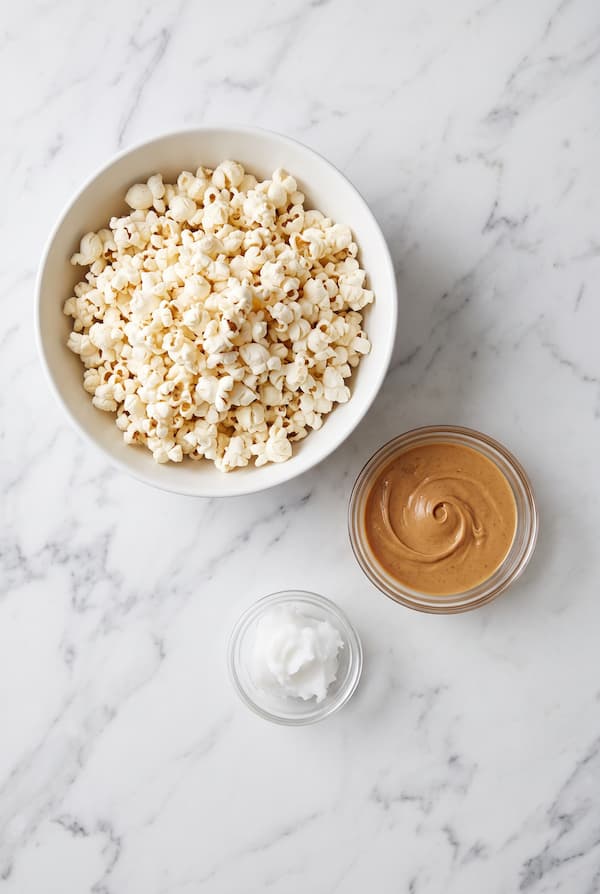
| Ingredient | Amount | Notes |
| Plain air-popped popcorn, sifted | 4 cups | From about 2 tablespoons of kernels |
| Natural peanut butter | ¼ cup | Unsalted and xylitol-free |
| Coconut oil | 1 tablespoon | Refined or unrefined, both work |
Read the peanut butter label every time, even on a brand you trust. The FDA’s advice is short: if you give your dog nut butter, check the label for xylitol first.
The best jar lists one ingredient. Peanuts.
AKC lists unsalted peanut butter among the healthiest options for dogs, so that’s the one I buy.
Step 1: Pop and Sift the Popcorn
Pop and sift 4 cups of plain popcorn using the method above. Then crush it lightly with your hands until the pieces are about the size of a pea.
Smaller pieces need less glue. They also make smaller bites, which suits small dogs.
Step 2: Melt the Peanut Butter Binder
Put the peanut butter and coconut oil in a microwave-safe bowl. Heat for 20 to 30 seconds, then stir until it’s smooth and pourable.
Warm, not hot. If it’s steaming, give it a minute to cool.
Step 3: Fold, Then Press Into Balls
Pour the binder over the crushed popcorn and fold with a spatula until every piece is coated. Then put the whole bowl in the fridge for 10 minutes (don’t skip this part).
That short chill is the difference between rolling balls and wearing them.
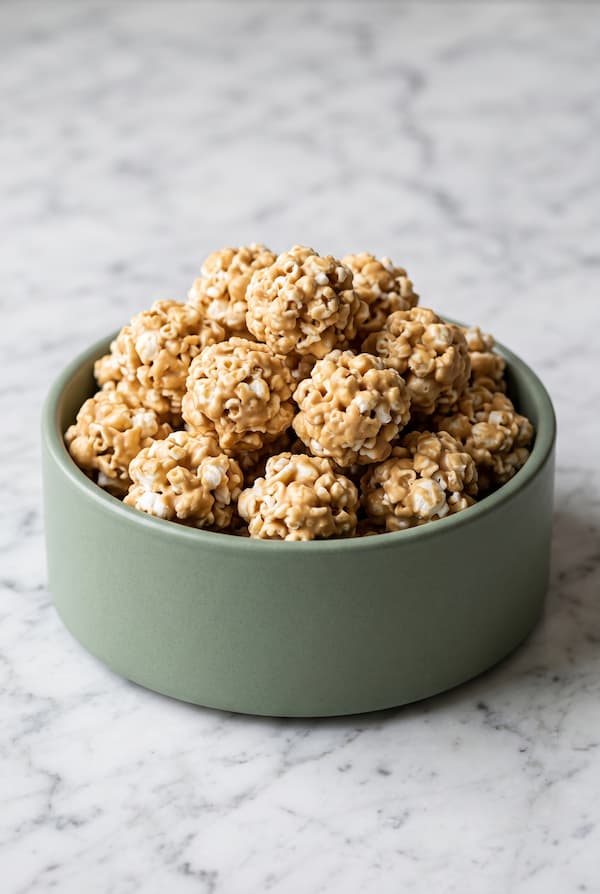
Scoop a level teaspoon for minis, or a tablespoon for big-dog size. Press each one firmly between damp palms and set it on a parchment-lined plate.
You’ll get about 50 minis or about 16 tablespoon-size balls.
Step 4: Chill Until Firm
Refrigerate the plate for at least 30 minutes. The coconut oil hardens as it cools and locks everything together.
Serve them cold, straight from the fridge. They soften at room temperature, which is fine for eating and terrible for pockets.
The whole batch comes to about 630 calories, going by USDA numbers for the three ingredients. That works out to roughly 13 per mini, or about 40 for a tablespoon-size ball.
Ended up with fewer than 50? Yours are bigger, so divide 630 by your own count.
If They Turn Out Sticky or Crumbly
Popcorn balls tend to fail in one of three ways. Each has a quick fix.
- Too sticky to roll. The mix is still warm, so give it another 10 minutes in the fridge and wet your hands again.
- Falling apart. The popcorn pieces are too big. Crush them smaller, press harder, and if that fails, stir in 1 more teaspoon of peanut butter.
- Greasy on the plate. Your kitchen is warm, so keep them in the fridge until the second you serve them.
Resist the urge to fix a crumbly batch with honey. It’s extra sugar your dog doesn’t need, and AKC says raw honey isn’t for puppies and honey in general isn’t for diabetic dogs.
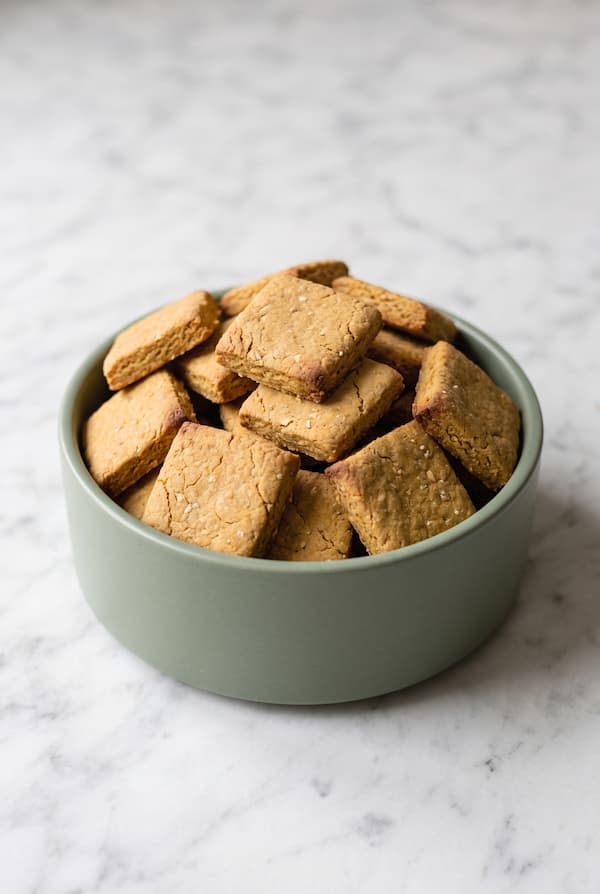
Recipe 2: Baked Pumpkin Popcorn Biscuits
That was the quick one. This is the one I’d make for a small dog.
Here the popcorn gets ground into a soft meal and baked into a crunchy biscuit. No loose pieces to gulp, and about a third of the fat of Recipe 1.
Ingredients
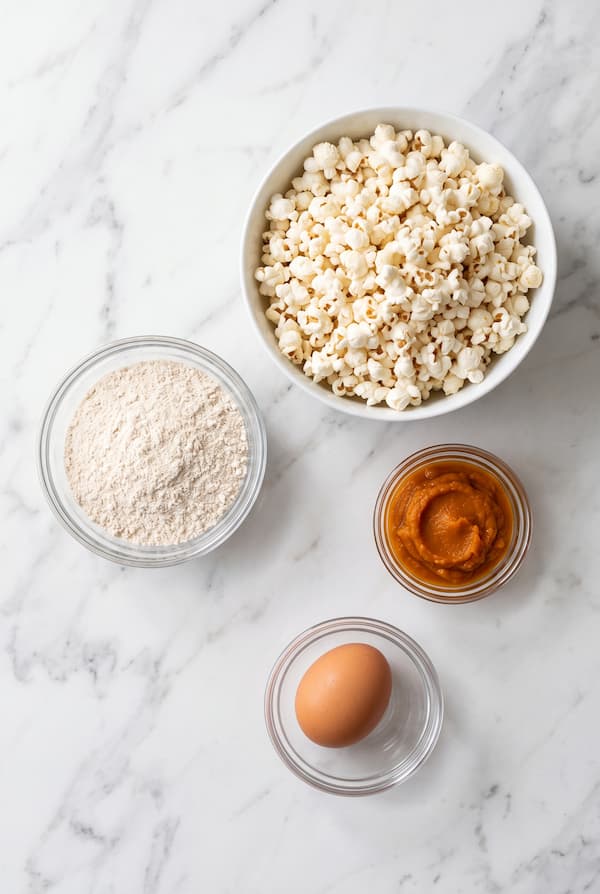
| Ingredient | Amount | Notes |
| Plain air-popped popcorn, sifted | 3 cups | Gets ground into meal |
| Oat flour | 1 cup, plus extra for rolling | Or blend rolled oats for 30 seconds |
| Pumpkin puree | ½ cup | 100% pumpkin, nothing added |
| Egg | 1 large | Binds the dough |
Check the pumpkin can before you open it. PetMD says pumpkin pie filling is off the list, since it can contain nutmeg or even xylitol.
Step 1: Grind the Popcorn Into Meal
Heat the oven to 350°F (175°C) and line a baking sheet with parchment. Pulse the sifted popcorn in a blender or food processor until it looks like coarse, fluffy crumbs.
Sift before you grind, always. A blender won’t soften a hard kernel, it just turns one into several.
Three cups shrinks down to a surprisingly small pile. That’s normal.
Step 2: Mix the Dough
Whisk the egg and pumpkin in a large bowl until smooth. Stir in the popcorn meal, then add the oat flour half a cup at a time.
You’re after a soft dough that holds together and doesn’t cling to your fingers.
Too sticky? Add oat flour a tablespoon at a time.
Too dry? Add water a teaspoon at a time.
Step 3: Roll and Cut
Dust the counter with oat flour and roll the dough to about ¼ inch thick. Cut it with a small cutter, around 1½ inches, or slice it into squares with a knife.
I cut squares. Faster, no scraps, and no dog has ever asked me for a bone shape.
You should land at about 36 small biscuits.
Step 4: Bake and Cool
Bake for 22 to 25 minutes, until the tops feel firm and the edges turn lightly golden. For a harder crunch, switch the oven off and leave the tray inside for another 15 minutes.
Then cool the biscuits completely on the tray, at least 30 minutes. Bag them warm and they’ll steam themselves soft.
The whole batch is about 625 calories by USDA numbers, so each small biscuit runs around 17. Cut yours bigger or smaller and just divide 625 by your count.
Used extra oat flour to fix a sticky dough? Add about 25 calories to the batch for every tablespoon.
How Many Popcorn Treats Per Day, by Dog Weight
Every vet source I read repeats the same rule: treats stay at 10% of daily calories or less. Tufts puts real numbers on it, with about 30 treat calories a day for a 10 lb dog and about 140 for a 75 lb dog.
I worked out the other weights with the standard vet calorie formula, matched to Tufts’ two numbers. Each row is sized for the lightest dog in its band and rounded down, so it errs low.
This is my math, not a prescription.
| Dog weight | Treat calories per day | Pupcorn minis (about 13 cal each) | Pumpkin biscuits (about 17 cal each) |
| Under 10 lb | Under 30 | 1 | 1 |
| 10 to 20 lb | About 30 | 2 | 1 |
| 21 to 30 lb | About 50 | 4 | 3 |
| 31 to 50 lb | About 70 | 5 | 4 |
| 51 to 90 lb | About 100 | 7 | 5 |
| 91 lb and up | About 160 | 12 | 9 |
Pick one column, not both. These numbers also assume the popcorn treats are the only treats your dog gets that day.
For a dog under 5 lb, break one treat in half.
Giving plain popcorn straight from the bowl instead? PetMD’s guide is stricter: one or two pieces for dogs under 20 lb, up to a handful for dogs over 90 lb.
Start there the first time. Give one piece, wait a day, and watch how your dog’s stomach handles it.
If your dog is on a diet, my low-calorie dog treats are a better everyday pick than anything with peanut butter in it.
Keeping Popcorn Dog Treats Crisp
Moisture is the enemy here. Popcorn goes stale as it pulls water out of the air, so an airtight container matters more than usual.
- Pupcorn balls: airtight container in the fridge, up to 5 days. They’re at their best in the first two.
- Pumpkin biscuits: airtight container in the fridge, up to 1 week. The pumpkin keeps them moist inside, so the counter isn’t the place for them.
- Freezer: either one keeps for up to 3 months. Freeze them in a single layer first, then move them to a bag.
Leftover plain popcorn doesn’t keep well at all. Eat it yourself tonight.
Popcorn Treat Questions I Get Asked
My dog swallowed a few unpopped kernels. Now what?
PetMD says a dog that ate just one or two kernels may be fine, depending on the dog’s size. Keep an eye on your dog for the next day or two anyway.
The exceptions matter. If your dog is small, ate several kernels, or is choking, PetMD’s advice is to get to your vet immediately.
If your dog is choking and can’t breathe at all, PetMD says to use the Heimlich maneuver and call your vet right away.
Is corn a common allergy in dogs?
Less common than the internet suggests. A 2016 review of 297 dogs with food allergies found corn was a culprit in 13 of them, about 4%.
Beef led the list at 34%, followed by dairy at 17% and chicken at 15%. Tufts notes that when owners blame corn, the real cause usually turns out to be something else.
Does popcorn work as a training treat?
For easy practice at home, yes. Half a cup is only 15 calories, and one piece tears into two or three rewards.
It isn’t smelly or exciting enough for hard distractions, though. For those I’d reach for something meatier, like the recipes in my dog training treats post.
If popcorn is fine, can my dog have corn on the cob?
No. Corn cut off the cob is fine in small amounts, but AKC warns that a dog can choke on the cob, and a swallowed one can cause a serious intestinal blockage.
Cut the kernels off and put the cob somewhere your dog can’t reach.
Back to the Couch
Last Friday the rain came back, and so did my bad taste in movies. This time there were two bowls on the coffee table.
Mine had butter. His had two peanut butter minis, and for once he didn’t even look at mine.
Snickers finished both in about nine seconds, checked the bowl twice in case it refilled, and fell asleep against my leg before the opening credits ended. I count that as a five-star review.
The Popcorn Board calls October Popcorn Poppin’ Month, though I doubt Snickers checks the calendar. And if your movie nights lean spooky, my homemade Halloween dog treats belong on the same coffee table.
Pop a plain batch, sift it like you mean it, and save your dog a seat.
I’m a passionate dog lover and kitchen enthusiast, but I’m not a certified veterinarian or animal nutritionist. Treats like these are extras, not meals, and any new food is worth a quick word with your vet first, especially if your dog has a history of pancreatitis, food allergies, or a sensitive stomach.
Bon appétit to your furry friend!