Snickers had rolled in something. I couldn’t see it. I couldn’t identify it. But I could smell it, and my Cavalier sat there wagging his tail like this was all going according to plan.
We were still two miles from home. It was July, my car had cream seats, and I had exactly one dog wipe left in my bag.
That was the day I stopped thinking of dog deodorizer spray as a nice-to-have and started keeping a bottle by the front door. Not the pink-lemonade-scented stuff from the pet aisle either. Something I actually knew every ingredient of.
Turns out the good version takes 90 seconds to make, uses three things you probably already have, and costs less than a coffee.
Why This Spray Actually Works
- Kills the source, not just the smell. Wet-dog funk is bacteria and yeast on the coat, and witch hazel gently hits both without stripping natural oils.
- Safe between baths. Most dogs shouldn’t be bathed more than every 4-6 weeks. This buys you time without drying out skin.
- You control what goes on your dog. No mystery fragrance, no dyes, no cheap alcohol drying out the coat.
- Cheap. A whole bottle costs about $2 to make and lasts a month.
I use this after muddy walks, before your dog gets on the couch, and anytime he decides to greet something unspeakable in the grass.
Cheat Sheet: The 90-Second Version
If you already know your way around a spray bottle, here’s the fast pass.
| Ingredient | Amount |
|---|---|
| Distilled water | 3/4 cup |
| Witch hazel (alcohol-free) | 1/4 cup |
| Lavender essential oil | 5-6 drops |
Combine in an 8 oz amber glass spray bottle, shake before every use, and mist from 6-8 inches away. Store in a cool, dark spot for up to 3 months.
That’s really it. Below is the full walk-through with the parts nobody tells you.
The Recipe: Simple 3-Ingredient Dog Deodorizer Spray
The base is a classic vet-friendly combo. Witch hazel is the mild antibacterial doing the heavy lifting, water dilutes it to a safe strength, and lavender is the softest dog-safe scent you can add.
Ingredients
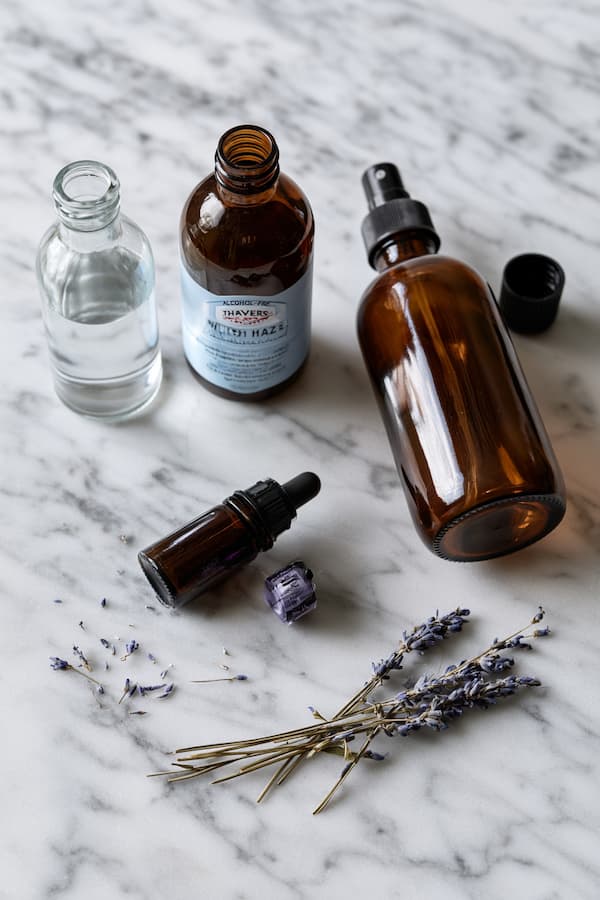
| Ingredient | Amount | Why It’s In Here |
|---|---|---|
| Distilled water | 3/4 cup (180 ml) | Dilutes the witch hazel and carries the oil. Tap water works but shortens shelf life. |
| Witch hazel, alcohol-free | 1/4 cup (60 ml) | Mild antibacterial and coat freshener. Get the glycerin-based kind, not the drugstore rubbing-alcohol type. |
| Lavender essential oil | 5-6 drops | Calming scent that’s on every vet-approved short list. Barely there, on purpose. |
| Amber glass spray bottle, 8 oz | 1 | Blocks UV. Keeps the oil from going rancid. |
The witch hazel is the one thing people get wrong most often. Standard drugstore witch hazel is diluted with isopropyl alcohol, which is toxic if your dog licks it off. You want the label to say “alcohol-free” or “glycerin-based” (Thayers and Dickinson’s both sell one).
Step 1: Add the water
Pour the distilled water into your bottle first. Doing it in this order keeps the oil from clinging to a dry inside surface.
Step 2: Add the witch hazel
Slowly pour in the witch hazel. Give the bottle one gentle swirl to combine. No shaking yet, the oil goes in dry.
Step 3: Add the essential oil
Count out 5-6 drops of lavender oil, no more. That’s roughly a 0.5% dilution, which is the safe sweet spot for dogs (much lower than what’s used on humans).
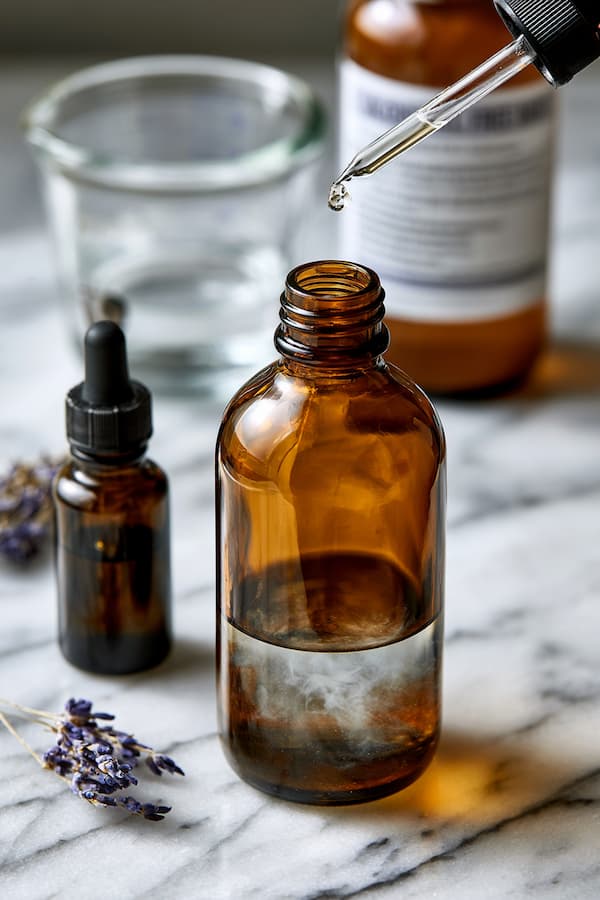
More is not better here. A dog has around 300 million olfactory receptors to your 6 million, so what smells faint to you is already strong to your dog.
Step 4: Cap and shake
Screw the cap on tight and shake for about 20 seconds. Then give it a quick shake before every use forever after (the oil separates from water within minutes).
Step 5: Spot test
Mist a small patch of fur on your dog’s shoulder and wait an hour. If skin looks calm, you’re good. If it turns pink or your dog starts scratching, dump the batch and try again with a lower drop count, or skip the oil entirely.
Essential Oils: What’s Safe, What to Skip
Not every “natural” oil belongs on a dog. Some are fine at low doses. A few are genuinely dangerous.
Here’s the short list I go by.
| Oil | Safe for Dogs? | Notes |
|---|---|---|
| Lavender | Yes, at 0.5% or less | The default. Calming, soft scent. |
| Chamomile (Roman) | Yes, at 0.5% or less | Anti-inflammatory. Good for sensitive skin. |
| Frankincense | Yes, at 0.5% or less | Woodsy, faint. Great alternative to lavender. |
| Myrrh | Yes, at 0.5% or less | Earthy. Uncommon but safe. |
| Tea tree | No | ASPCA reports toxicity at just 7-8 drops of concentrated oil. Not worth the risk at any dose. |
| Peppermint | No | Irritates mucous membranes. |
| Eucalyptus | No | Dogs can’t metabolize it. Causes vomiting, lethargy. |
| Citrus (lemon, orange, lime) | No | Skin irritation, GI risk if licked. |
| Clove, cinnamon, wintergreen, pennyroyal, pine, ylang ylang | No | All on the ASPCA toxic-to-dogs list. |
If you’re building your own scent blend, stick to 6 total drops per 8 oz bottle as an absolute ceiling. That’s the number I’d tattoo on the bottle if I could. Skip the oil entirely for puppies under 12 weeks, pregnant dogs, or any dog with a history of seizures or liver disease.
How to Actually Spray Your Dog (So It Works)
There’s a difference between spraying a dog and spraying at a dog. The second one is why so many owners give up.
Brush the coat first. A quick 30-second brush lifts loose fur and lets the mist actually reach the skin instead of pooling on top. This is the step most people skip, and it’s the single biggest reason DIY sprays underperform.
Hold the bottle 6-8 inches from the coat. Mist in short bursts across the back, shoulders, chest, and outside of the legs. Avoid the face entirely, and never spray toward the head.
If you want to freshen around ears or muzzle, spray your hands first and wipe gently. Skip the belly if your dog rolls a lot (they’ll ingest more than you think), the genital area, and any hot spots or scratches.
If your dog has broken skin anywhere, wait until it heals or you’ll cause real pain. Air dry. That’s it.
When the Smell Is a Vet Issue, Not a Spray Issue
Here’s the part most articles won’t tell you. A homemade spray can freshen a healthy dog’s coat. It cannot fix a medical smell, and using it to mask one just delays a diagnosis.
Fishy smell from the rear usually means impacted or infected anal glands. Healthy anal glands produce essentially zero human-detectable odor.
Musty, corn-chip smell from skin or ears can be yeast overgrowth (malassezia). Ears with a strong sweet-yeasty smell need a vet, not a spray. VCA Animal Hospitals has a solid rundown on seborrhea and yeast issues that’s worth reading if this sounds familiar.
Ammonia-like or urine smell coming from skin or breath can point to kidney disease. Rotten breath is often dental.
In either case, no spray is going to help. If the smell is sudden, coming from one specific spot, or doesn’t improve after a proper bath, that’s a vet visit. Sometimes an off smell shows up alongside behavior changes worth paying attention to (our post on 10 subtle signs your dog is stressed covers a few of those).
This is the method I’d go with: spray for daily maintenance on a healthy dog, book an appointment for anything that doesn’t respond.
Storage & Shelf Life
Store the bottle in a cool, dark cabinet, not a sunny bathroom windowsill. The amber glass matters more than people think. UV light breaks down essential oils in about a week if you leave the bottle exposed.
Made with distilled water, this recipe lasts about 3 months. Tap water cuts that to 3-4 weeks because of microbes. If the color changes, the smell goes off, or anything cloudy is floating in there, dump it and make a fresh batch.
You can refrigerate the bottle to stretch shelf life to 4-5 months (just take it out 20 minutes before using so the mist isn’t cold on your dog’s skin).
Snickers Approved, Couch Restored
Snickers is asleep next to me right now, smelling faintly of lavender and (mostly) like himself. Which is the whole point.
A good deodorizer spray isn’t there to make your dog smell like a candle. It’s there to buy you a week between baths without lying about it, without dumping chemicals on skin that’s more sensitive than yours, and without pretending it can fix things it can’t.
This one does that. And when Snickers rolls in something questionable next weekend (he will, he always does), the bottle by the door will be exactly where I left it.
If you’re on a DIY grooming kick, my tear stain remover guide uses a similar three-ingredient approach and pairs well with this one.
I’m a passionate dog lover and DIY tinkerer, but I’m not a certified veterinarian or animal aromatherapist. Any new topical product should be discussed with your vet, especially for puppies, senior dogs, or dogs with existing skin conditions.
A cleaner dog, a happier couch.