
I ran out of oat flour on a Sunday. Had the peanut butter out, the egg cracked, Snickers already sitting in his spot by the oven because he knows what baking day means. And then I opened the pantry and realized I’d used the last of the oats two days ago on his frozen yogurt bites.
There was a bag of almond flour shoved behind the baking soda. I’d bought it months ago for some recipe I never ended up making. I looked at Snickers. He looked at me. I figured, why not.
Turns out, almond flour makes a better dog treat than oat flour in a lot of ways. The texture is softer, almost crumbly in a good way. The treats hold together but they’re not tough or hard to bite through. And the flavor pairs with peanut butter like they were made for each other. Snickers finished his first one and then sat back down in his treat-waiting position, which is his very polite way of saying “give me another one immediately.”
I’ve made this recipe probably ten times since that Sunday. Same four ingredients every time. Same result every time. It’s become my go-to when I want a quick batch of treats without any fuss.
Why Almond Flour Is a Great Pick for Dog Treats
Most homemade dog treat recipes call for oat flour, whole wheat flour, or coconut flour. Almond flour doesn’t come up as often, which is a shame because it has some real advantages.
- Naturally grain-free. If your dog has a grain sensitivity or you’re trying to avoid wheat and oats, almond flour is one of the simplest swaps. No need to hunt down specialty grain-free blends
- High in protein and healthy fats. Almond flour has about 6 grams of protein and 14 grams of fat per quarter cup. The fats are mostly monounsaturated, which support skin and coat health
- Makes a soft, tender treat. Because almond flour has no gluten, the treats don’t get chewy or tough. They come out with a crumbly, shortbread-like texture that’s easy for small dogs and older dogs to eat
- Easy to find. Most grocery stores carry it now. It’s in the baking aisle, usually near the specialty flours
Peanut Butter Almond Flour Dog Treats Recipe
This makes a batch of about 20 to 25 small biscuits depending on your cookie cutter size. They’re crunchy on the outside, slightly soft on the inside, and they smell ridiculously good coming out of the oven. Like warm peanut butter cookies. I’ve been tempted to eat one myself more than once.
Ingredients
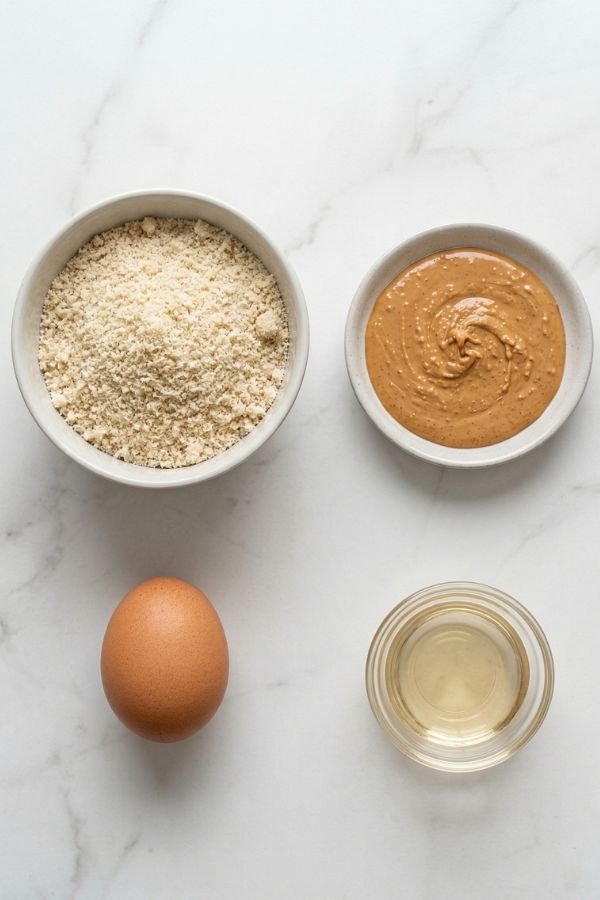
| Ingredient | Amount |
|---|---|
| Almond flour | 2 cups |
| Peanut butter | 1/3 cup |
| Egg | 1 large |
| Coconut oil | 1 tablespoon |
Use fine almond flour, not almond meal. Almond meal has coarser bits of skin in it that don’t break down fully. The treats will still work, but the texture gets gritty. Fine almond flour gives you a smooth dough and a cleaner biscuit.
Instructions

Step 1: Preheat Your Oven
Set it to 325 degrees Fahrenheit (165 Celsius). Line a baking sheet with parchment paper. Almond flour sticks to everything, so don’t skip the parchment. I tried greasing the pan once instead and spent fifteen minutes scraping biscuit bottoms off the sheet.
Step 2: Mix the Wet Ingredients
Combine the peanut butter, egg, and melted coconut oil in a large bowl. Stir until everything is smooth and blended. It’ll look glossy and a little runny. That’s normal.
Step 3: Add the Almond Flour
Pour the almond flour into the wet mixture and stir until a dough forms. This takes about a minute of mixing. The dough should be soft, slightly oily, and easy to press together with your hands. It won’t be as elastic as regular cookie dough. More like wet sand that sticks together when you squeeze it.
If it feels too crumbly and won’t hold a shape, add another teaspoon of coconut oil. If it’s too wet and sticky, add almond flour a tablespoon at a time until it firms up.
Step 4: Roll Out the Dough
Place the dough between two sheets of parchment paper and roll it to about 1/4 inch thick. The parchment paper trick matters here. Almond flour dough doesn’t roll out well on a floured surface because it’s too soft and oily. It’ll stick to your rolling pin and your counter. Parchment on both sides solves the problem completely (don’t skip this part).
Step 5: Cut Into Shapes
Peel off the top sheet of parchment and use a small cookie cutter to cut your shapes. Bones, circles, hearts, whatever you’ve got. A 1 to 2 inch cutter works best for small breeds like Cavaliers. Gather the scraps gently, press them back together, re-roll between parchment, and cut again.
You should get 20 to 25 biscuits from this batch. Maybe a few more if you use a smaller cutter.
Step 6: Bake for 12 to 15 Minutes
Place the cut biscuits on your lined baking sheet with a little space between each one. Bake until the edges are golden brown and the tops look dry and set. Almond flour burns faster than other flours, so start checking at 12 minutes. They go from golden to burnt in about 90 seconds. Not exaggerating.
The centers will still feel soft when you take them out. That’s fine. They firm up as they cool.
Step 7: Cool Completely
Let the biscuits cool on the baking sheet for 5 minutes, then transfer to a wire rack. They’re fragile when warm because almond flour has no gluten holding them together. Give them a full 30 minutes on the rack before handling or stacking them.
Once cool, they’ll have a firm outside and a slightly crumbly inside. Snap one in half. It should break cleanly without bending. That’s how you know they’re done right.

Storage
- Room temperature: Up to 7 days in an airtight container. These keep well because there’s no dairy or moisture-heavy ingredients
- Refrigerator: Up to 2 weeks. The fridge firms them up a bit more, which some dogs actually prefer
- Freezer: Up to 3 months in a freezer bag. Thaw at room temperature for about 15 minutes before serving. They come back to their original texture perfectly
I usually make a double batch and freeze half. That way I’ve always got treats ready without having to bake every week. Snickers doesn’t know the difference between a fresh biscuit and a thawed one (trust me on this one).
Serving Guidelines
| Dog Weight | Treats Per Day |
|---|---|
| Under 10 lbs | 1 to 2 small biscuits |
| 10 to 25 lbs | 2 to 3 small biscuits |
| 25 to 50 lbs | 3 to 4 small biscuits |
| Over 50 lbs | 4 to 5 small biscuits |
These are based on 1 to 2 inch biscuits. Almond flour treats are calorie-dense because of the fat content in almonds and peanut butter. Keep treats under 10% of your dog’s daily calorie intake no matter how much they beg.
Snickers gets two per day, one after his morning walk and one in the evening. That’s his limit, even though he’d happily eat the whole container if I left it open.
A Quick Note on Almonds and Dogs
You might’ve read somewhere that almonds aren’t safe for dogs. Here’s the deal. Whole almonds can be a choking hazard and they’re hard for dogs to digest. That’s true. But almond flour is a completely different thing.
The almonds are ground into a fine powder, which makes them easy to digest and eliminates any choking risk.
That said, almond flour is calorie-dense. A quarter cup has about 160 calories. The treats in this recipe are small enough that the calorie count per biscuit is reasonable, but this isn’t the flour to use if your dog is on a strict weight management plan.
For lower-calorie options, our budget-friendly treat recipes use oat flour which comes in at about half the calories per serving.
That Bag of Almond Flour Earned Its Spot
It sat in my pantry for months doing nothing. I honestly forgot I owned it. Now it’s the first thing I reach for on baking day, and I keep a backup bag behind it so I don’t run out again.
Four ingredients. Fifteen minutes of actual work. A kitchen that smells like a peanut butter shop for the rest of the afternoon. And a dog who sits by the oven door with his tail going because he’s figured out exactly what that smell means.
I don’t know what I originally bought that almond flour for. But I’m pretty sure this is a better use for it.
I’m a passionate dog lover and kitchen enthusiast, but I’m not a certified veterinarian or animal nutritionist. If your dog has specific dietary needs or allergies, always check with your vet before introducing new ingredients into their routine.
Bon appétit to your furry friend!