
Snickers turned four last month. No party, no cake, just an extra scoop of food and a belly rub that lasted way too long. But somewhere between his first birthday and now, I realized I’d been feeding him the same two homemade recipes on repeat for quite some time.
He still ate them. Cavaliers aren’t exactly picky. But I started noticing he’d walk up to the bowl, sniff, pause for a second, and then eat. That pause wasn’t there before. It was the dog equivalent of opening the fridge and sighing.
So I spent a weekend testing two new recipes. One’s a slow-cooked beef stew with pumpkin that makes the whole kitchen smell like fall. The other is a quick salmon and egg skillet I can throw together on a weeknight when I don’t feel like standing at the stove for an hour. Both are built for adult dogs, which means the protein-to-carb ratio is different from what you’d feed a puppy.
The pause is gone now. Snickers inhales both of these.
What Adult Dogs Actually Need
Feeding an adult dog isn’t the same as feeding a puppy, but a lot of homemade recipes online don’t bother making that distinction. Here’s what changes once your dog is fully grown.
- Less protein per pound of body weight. Puppies need roughly 25-30% protein to support growth. Adult dogs do fine with 18-25% depending on activity level. Both recipes below sit right in that range.
- More fiber for digestion. Adult stomachs slow down a bit. Adding vegetables like pumpkin and green beans keeps things moving without causing loose stools.
- Controlled fat intake. Cavaliers are prone to weight gain after they stop growing. You want healthy fats from fish and oils, not excess fat from skin-on meat.
- Calcium and phosphorus balance. This one matters more than most people think. Too much of one without the other causes long-term bone issues. If you’re going fully homemade, a supplement fills this gap.
The first two matter most. The rest are things your vet can help fine-tune based on your specific dog.
Recipe 1: Slow Cooker Beef & Pumpkin Stew
This is the set-it-and-forget-it recipe. I throw everything into the slow cooker before lunch and it’s done by dinner. The pumpkin breaks down into the broth and gives the whole thing a thick, stew-like texture that Snickers goes absolutely nuts over.
If you’ve already tried our simple 4-ingredient recipe and want something with more substance, this is the next step up.
Ingredients
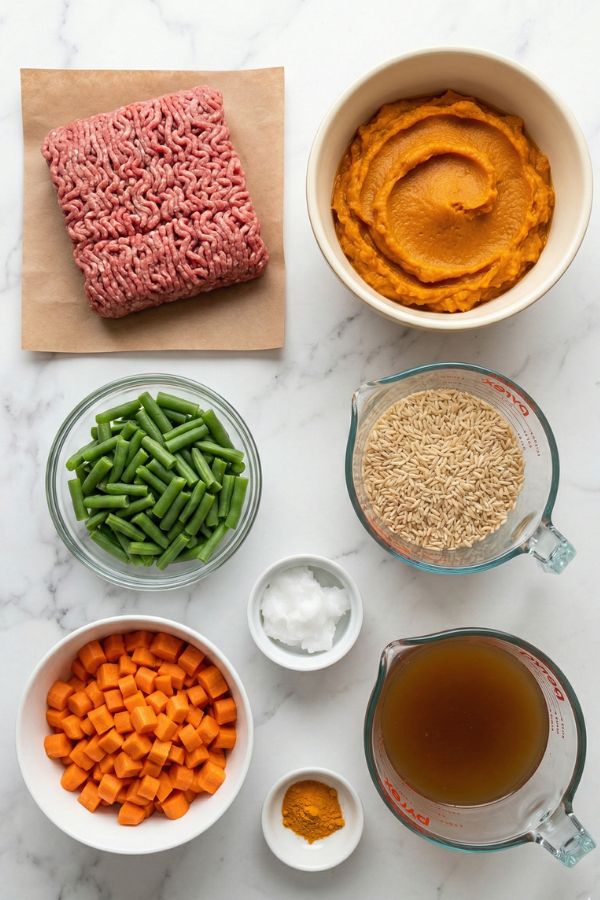
| Ingredient | Amount |
|---|---|
| Lean ground beef (90/10) | 2 lbs |
| Pumpkin puree (plain, not pie filling) | 1 cup |
| Green beans (fresh or frozen) | 1.5 cups, chopped |
| Carrots | 2 medium, peeled and diced small |
| Brown rice (uncooked) | 1.5 cups |
| Low-sodium beef broth | 4 cups |
| Coconut oil | 1 tablespoon |
| Turmeric powder | 1/4 teaspoon |
Make sure the pumpkin is plain puree. Pie filling has sugar and spices that aren’t safe for dogs. Check the label twice.
Steps
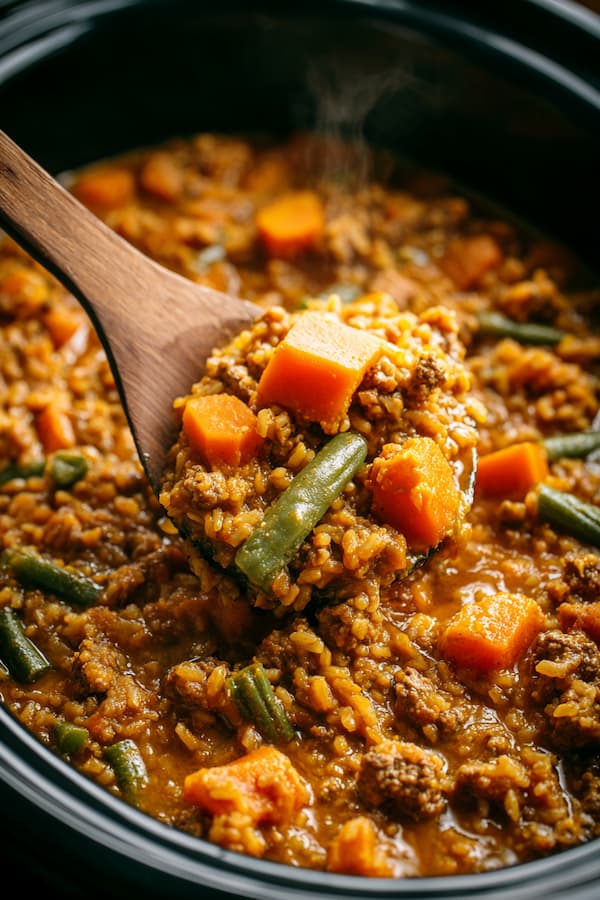

Brown the Beef First
I know, this defeats the “throw everything in” promise a little. But browning the beef in a skillet for 5 to 6 minutes before adding it to the slow cooker makes a real difference. It renders out excess fat and gives the stew better flavor. Drain the grease before transferring.
Layer Everything In
Put the rice on the bottom of the slow cooker. Add the browned beef, carrots, and green beans on top. Spoon the pumpkin puree over everything, then pour the broth in. Don’t stir yet.
Cook Low and Slow
Set it to low for 6 hours or high for 3.5 hours. The rice absorbs the broth and the pumpkin melts into everything. When it’s done, the consistency should be thick and spoonable, not soupy.
Stir and Add the Finishing Touches
Once it’s cooked, stir the coconut oil and turmeric in while everything is still warm. The turmeric is optional but it’s a mild anti-inflammatory. I started adding it after Snickers had some joint stiffness last winter (and yes, I checked with the vet first).
Cool and Portion
Let it cool completely, then divide into containers. This makes roughly 10 cups of food, which lasts Snickers about 5 days.
Storage
Fridge for up to 5 days. Freezer for up to 3 months. I portion into daily servings so I just grab one container each morning. No measuring, no thinking.
Recipe 2: Salmon & Egg Skillet
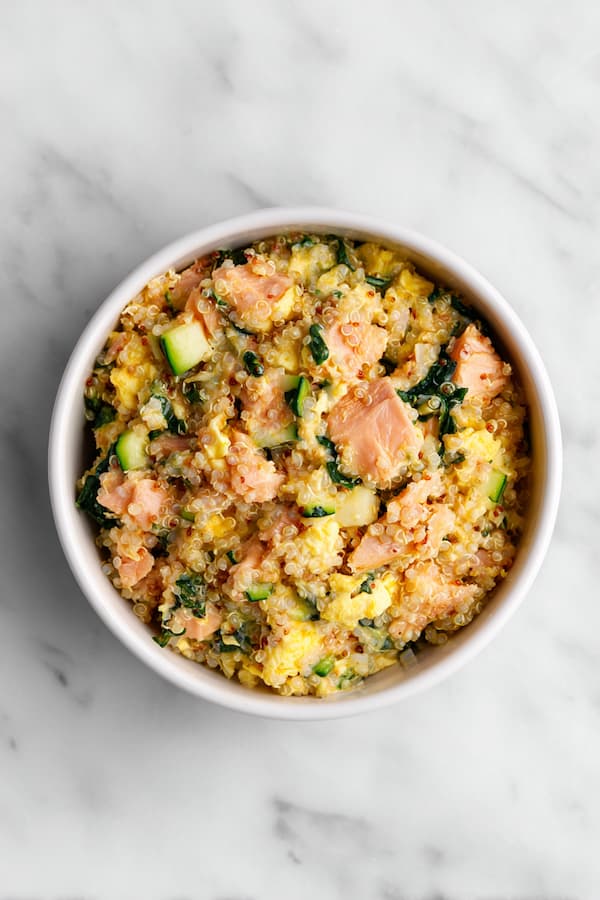
This is my weeknight recipe. Start to finish, it takes about 20 minutes. It’s lighter than the beef stew but packed with omega-3s from the salmon, which does wonders for coat and skin health. Snickers’ fur gets noticeably softer within a couple of weeks when I rotate this in.
Ingredients
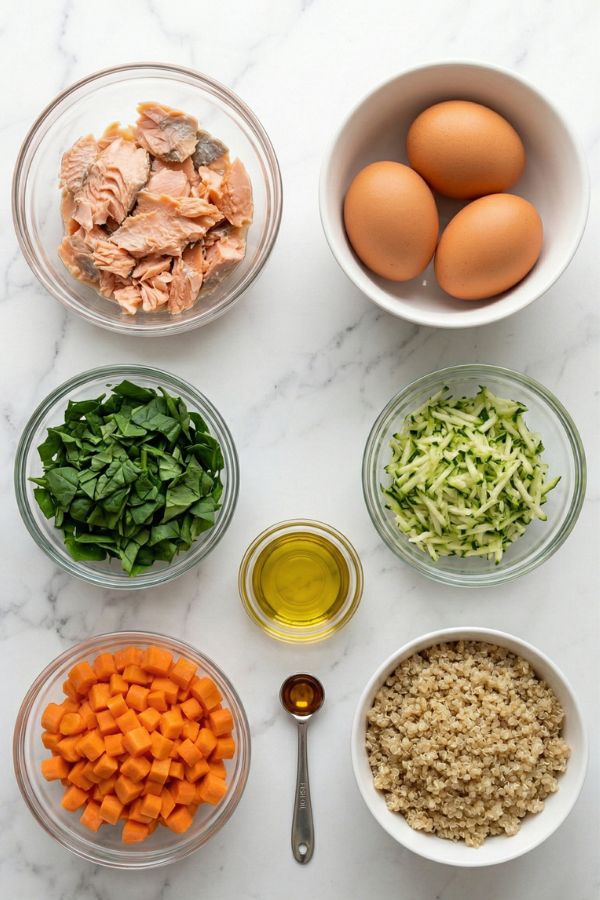
| Ingredient | Amount |
|---|---|
| Canned salmon (in water, no salt added) | 2 cans (14.75 oz total) |
| Eggs | 3 large |
| Zucchini | 1 medium, grated |
| Spinach (fresh) | 1 packed cup, roughly chopped |
| Cooked quinoa | 1.5 cups |
| Olive oil | 1 tablespoon |
| Fish oil | 1 teaspoon |
Canned salmon with bones is actually fine. The bones are soft enough for dogs to eat and they’re a good calcium source. Just make sure there’s no added salt.
Steps
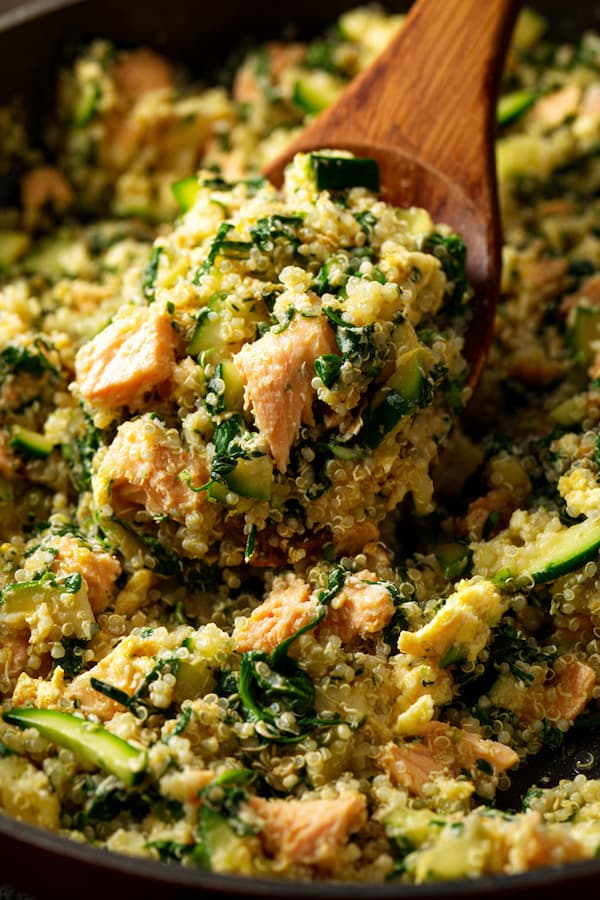
Cook the Quinoa Ahead of Time
If you don’t have leftover quinoa sitting in the fridge, cook 3/4 cup dry quinoa in 1.5 cups of water. Takes about 15 minutes. I usually make a big batch on Sundays and use it throughout the week for both my meals and Snickers’.
Scramble the Eggs
Heat the olive oil in a large skillet over medium heat. Crack the eggs in and scramble them loosely. You want big, soft curds, not rubbery flat pieces. Pull them out when they’re just barely set and put them on a plate.
Sautee the Vegetables
Same skillet, no extra oil needed. Toss in the grated zucchini and chopped spinach. Stir for about 2 to 3 minutes until the spinach wilts and the zucchini softens. Don’t overcook them.
Add the Salmon
Drain both cans and break the salmon into the skillet with the vegetables. Stir gently for a minute to warm it through. You’re not really cooking it since it’s already cooked in the can. Just combining.
Bring It All Together
Add the quinoa and scrambled eggs back into the skillet. Drizzle the fish oil on top and fold everything together. The texture should be chunky and moist, not mushy.
Cool Before Serving
Give it 10 minutes on the counter. Snickers has zero patience for this step, which is how I learned that dogs can give you a guilt trip without saying a single word.
Storage
This one’s best fresh, but it keeps in the fridge for 3 to 4 days. I wouldn’t freeze it because the eggs get rubbery when thawed. If you want to batch-cook, make double the salmon-vegetable part and add fresh eggs when you reheat each portion.
Serving Guidelines for Adult Dogs
These portions are starting points for moderately active adult dogs. If your furry friend tends to gain weight easily, start at the lower end and adjust.
| Dog Weight | Beef Stew (daily) | Salmon Skillet (daily) |
|---|---|---|
| 10 lbs | 3/4 cup | 2/3 cup |
| 15 lbs | 1 cup | 3/4 cup |
| 20 lbs | 1 1/4 cups | 1 cup |
| 25 lbs | 1 1/2 cups | 1 1/4 cups |
| 30 lbs | 1 3/4 cups | 1 1/2 cups |
The salmon skillet is slightly more calorie-dense per cup because of the eggs and fish oil, which is why the portions are a little smaller. Split into two meals per day.
If you’re going fully homemade with these recipes, talk to your vet about adding a calcium and mineral supplement to round things out. These meals cover protein, carbs, fats, and vegetables, but long-term you want to make sure nothing’s missing.
Common Questions
Can I use fresh salmon instead of canned? You can. Bake or poach a salmon fillet with no seasoning, then flake it apart. Canned is just easier and cheaper. I use fresh maybe once a month when it’s on sale.
Is quinoa safe for all dogs? Most dogs handle it fine. It’s not a grain, it’s technically a seed, so it works for dogs with grain sensitivities too. Start with a small amount and see how your dog reacts.
Can I swap the ground beef for turkey? Absolutely. Turkey is leaner, which is fine for less active dogs or dogs watching their weight. The stew texture stays the same either way.
How do I know if these recipes are working for my dog? Consistent energy levels, solid stools, shiny coat, and a dog that actually looks forward to mealtime. If you’re seeing all four after two weeks, you’re on the right track. If something seems off, check in with your vet before making more changes.
The Pause Is Gone
That little hesitation Snickers used to do at the bowl? Haven’t seen it in months. Now he hears me opening the fridge and comes sliding across the kitchen floor like he’s late for the most important meeting of his life.
I rotate between these two recipes and the weekly meal prep I was already doing. Three recipes in rotation means he never gets bored, and I never get stuck making the same thing every single week. That’s the kind of system that works when you’re not trying to become a full-time dog chef.
The beef stew is the crowd-pleaser. The salmon skillet is the quick weeknight save. Between the two, dinner is handled.
I’m a passionate dog lover and home cook, but I’m not a certified veterinarian or animal nutritionist. If you’re switching your dog to a fully homemade diet, run it by your vet first to make sure your pup is getting everything they need.
Happy cooking for your furry friend!