
I did the math on a Tuesday night because I couldn’t sleep. Grabbed the kibble bag from the pantry, flipped it over, and started working out what I was actually paying per meal to feed Snickers.
The bag cost $58. It lasted about 30 days. That’s roughly $1.93 per day for a 15-pound Cavalier who acts like he’s a 90-pound lab at dinner time.
Then I opened my grocery store app and started pricing out the last homemade batch I’d made him. Ground turkey. Rice. A bag of frozen veggies. A sweet potato. The whole thing cost me about $8, and it lasted him six days.
$1.33 per day. I stared at the screen for a good minute.
I’d spent months assuming homemade food was the “expensive but worth it” option. Turns out, I had it completely backward. The kibble was the expensive one. I’d just never bothered to actually compare the numbers side by side.
These two recipes are what I’ve been rotating for the past few months. Both cost less per serving than mid-range kibble. Both are nutritionally solid. And both take less than an hour from start to finish, including cleanup.
Why Homemade Can Be Cheaper (When You’re Not Overcomplicating It)
Most people think cooking for your dog costs more because they see those Instagram recipes calling for wild-caught salmon and organic blueberries. That’s not what we’re doing here. We’re using regular grocery store ingredients, the kind that go on sale every other week.
- Bulk proteins like ground turkey and chicken thighs drop below $2/lb regularly. Watch for the family packs. I buy the big ones and freeze half.
- Carbs are almost free. A 5-pound bag of rice costs $3 and lasts a month of dog meals. Oats, same story.
- Frozen vegetables are just as nutritious as fresh. They’re flash-frozen at harvest, and a $1.50 bag stretches across multiple batches.
- You skip the premium brand tax. A big chunk of kibble cost goes to marketing, packaging, and shelf space. You’re not paying for any of that when you cook at home.
The only thing you need to add is a multivitamin or calcium supplement to cover the micronutrients that whole foods alone can miss. I use a powdered supplement that costs about $0.15 per serving. Even with that factored in, homemade still comes out cheaper.
If you’ve been making homemade food but spending too much, check out our recipes under $10 for more budget-friendly ideas.
The Real Cost Comparison
I tracked my actual spending for four weeks. Here’s how it broke down for Snickers, a 15-pound Cavalier eating twice a day.
| Feeding Method | Weekly Cost | Daily Cost | Monthly Cost |
|---|---|---|---|
| Mid-range kibble (30 lb bag) | $13.50 | $1.93 | $58.00 |
| Premium kibble (25 lb bag) | $18.20 | $2.60 | $78.00 |
| Homemade Recipe 1 (below) | $8.10 | $1.16 | $34.60 |
| Homemade Recipe 2 (below) | $9.40 | $1.34 | $40.30 |
These numbers are based on regular grocery store prices in the US. Your costs might be slightly different, but the gap stays the same. Homemade wins by a pretty wide margin.
Recipe 1: Turkey, Rice & Veggie Batch
This is the workhorse recipe. It’s the one I make most weeks because it’s cheap, easy, and Snickers has never once hesitated at the bowl. The whole batch runs about $8 in ingredients and lasts nearly a full week.
If you already do weekly meal prep for your dog, this recipe fits perfectly into that routine.
Ingredients
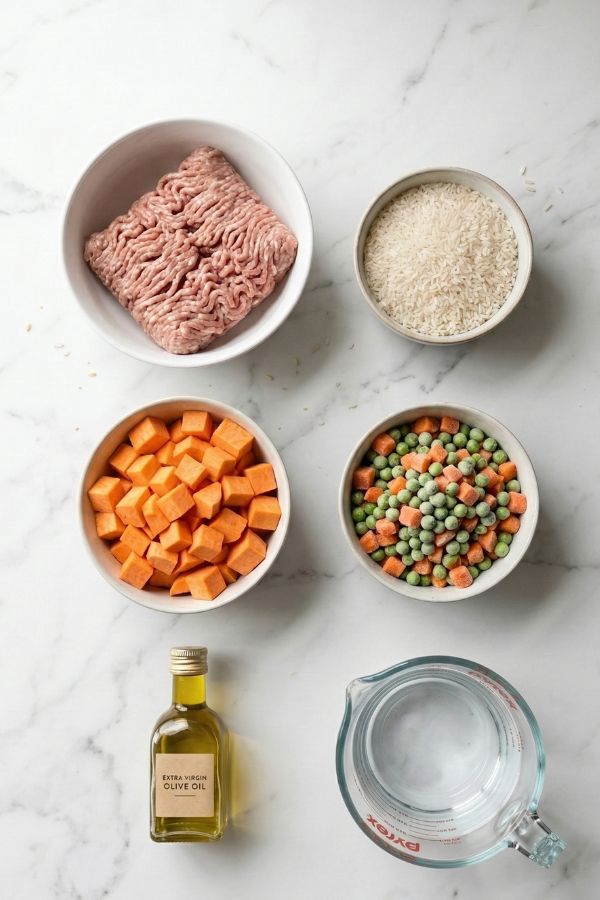
| Ingredient | Amount | Approx. Cost |
|---|---|---|
| Ground turkey (85/15) | 2 lbs | $3.80 |
| White rice (uncooked) | 1.5 cups | $0.35 |
| Frozen peas and carrots | 2 cups | $1.20 |
| Sweet potato | 1 medium | $0.90 |
| Olive oil | 1 tablespoon | $0.10 |
| Calcium supplement | Per package directions | $0.15/day |
| Water | 4 cups | Free |
| Total | ~$6.50 + supplement |
85/15 ground turkey works best. Leaner blends dry out too much. If you can only find 93/7, add an extra tablespoon of olive oil.
Steps
- Peel and dice the sweet potato into small cubes, about half an inch. Smaller pieces cook faster and mash more easily, which is what you want for a smooth mix.
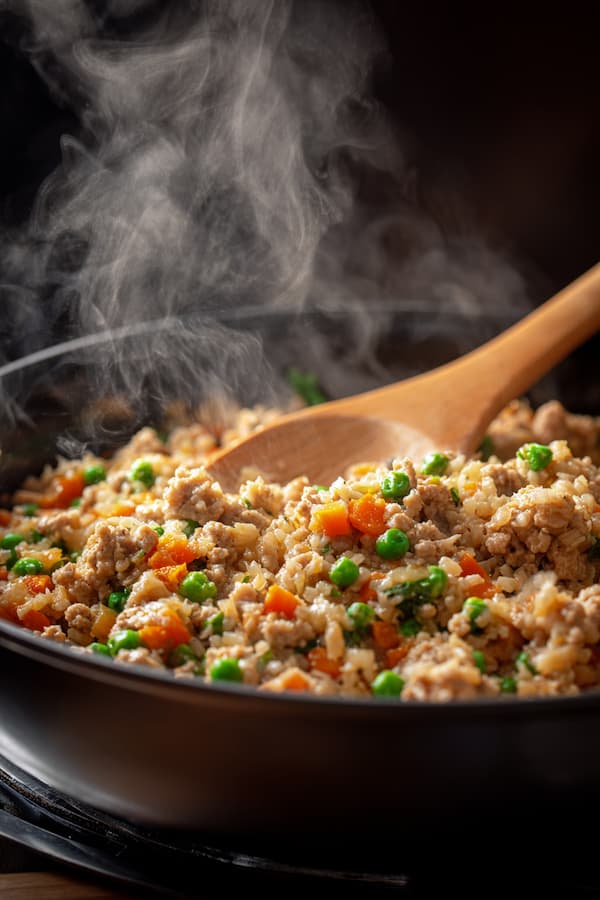
- Brown the ground turkey in a large pot over medium heat. Break it up with a wooden spoon as it cooks. You want small crumbles, not big chunks. This takes about 7 minutes. Don’t drain the fat (trust me on this one). That fat is flavor and calories your dog actually needs.
- Add the rice, sweet potato cubes, and 4 cups of water to the pot. Stir everything together, bring it to a boil, then drop the heat to low. Cover and let it simmer for 18 to 20 minutes. The rice should absorb most of the liquid.
- Toss in the frozen peas and carrots during the last 3 minutes. Just stir them right in. No thawing needed.
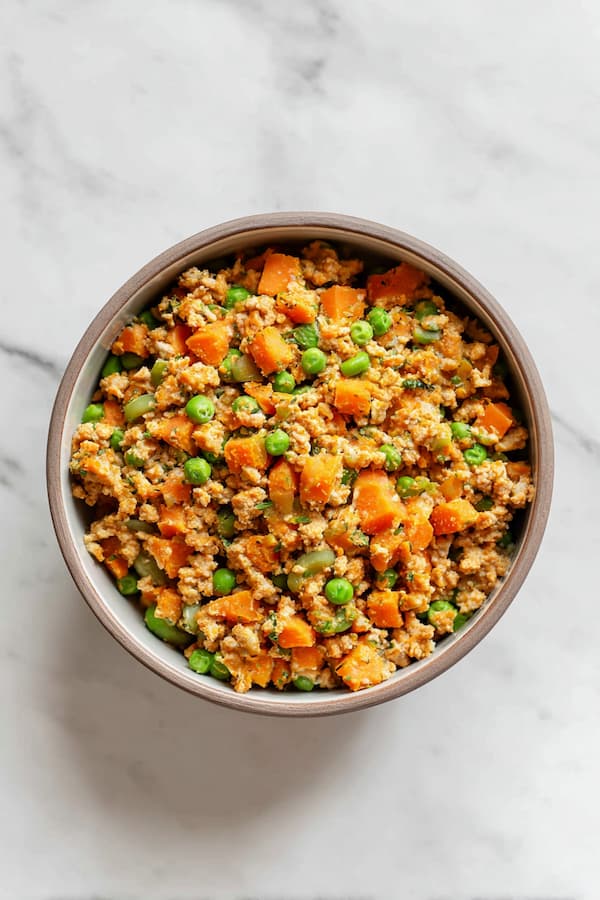
- Turn off the heat, drizzle in the olive oil, and stir. The consistency should be thick and sticky, like a risotto that’s been sitting for a few minutes. If it looks soupy, leave the lid off and let it sit on the warm burner for 5 minutes.
- Let it cool completely before serving or storing. I spread mine across a sheet pan to cool faster. Takes about 30 minutes instead of an hour.
Storage
Fridge for up to 5 days in sealed containers. Freezer for up to 3 months. This batch makes roughly 9 cups total, which lasts Snickers about 6 days. I portion it into daily containers right after it cools.
Serving Guidelines
| Dog Weight | Daily Amount | Meals Per Day |
|---|---|---|
| 10 lbs | 1 cup | Split into 2 |
| 15 lbs | 1.5 cups | Split into 2 |
| 20 lbs | 1.75 cups | Split into 2 |
| 25 lbs | 2 cups | Split into 2 |
Start with the lower amount and adjust based on your dog’s weight over 2 to 3 weeks. Every dog is different.
Recipe 2: Chicken, Oat & Pumpkin Bowl
This one’s a little heartier and slightly higher in fiber, which is good for dogs who tend to have soft stools. Snickers gets this one about twice a month as a rotation from the turkey recipe. The whole batch costs under $9.50 and the kitchen smells like Thanksgiving.
Ingredients
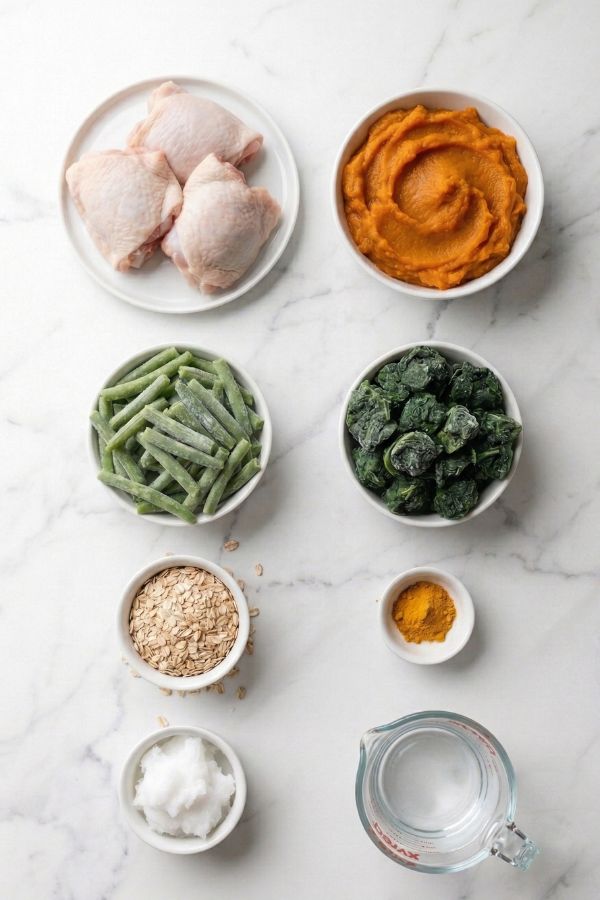
| Ingredient | Amount | Approx. Cost |
|---|---|---|
| Bone-in chicken thighs | 2.5 lbs | $4.20 |
| Old-fashioned oats | 1.5 cups | $0.30 |
| Canned pumpkin (pure, not pie filling) | 1 cup (half a can) | $0.90 |
| Frozen green beans | 1.5 cups | $1.00 |
| Frozen spinach | 1 cup | $0.80 |
| Coconut oil | 1 tablespoon | $0.15 |
| Turmeric powder | 1/4 teaspoon | $0.05 |
| Calcium supplement | Per package directions | $0.15/day |
| Water | 6 cups | Free |
| Total | ~$7.40 + supplement |
Make sure you grab pure canned pumpkin, not pumpkin pie filling. Pie filling has sugar and spices that aren’t safe for dogs. The cans look almost identical, so check the label.
Steps


- Place the chicken thighs in a large pot and cover with 6 cups of water. Bring it to a boil, then reduce to a low simmer. Cook for 25 to 30 minutes until the meat falls off the bone. Skim the foam off the top as it cooks.
- Pull out the chicken and set it on a cutting board. Keep all the broth in the pot. Once the chicken is cool enough to handle (about 10 minutes), strip the meat off the bones and shred it into small pieces. Throw away every single bone. Cooked chicken bones splinter and are dangerous.
- Add the oats to the broth and stir. Bring it back to a simmer and cook for 10 minutes with the lid on. Oats thicken faster than rice, so keep an eye on it. If it gets too thick, add half a cup of water.
- Stir in the pumpkin, frozen green beans, and frozen spinach. Cook for another 4 minutes until the vegetables are heated through and the pumpkin is fully mixed in.
- Add the shredded chicken back to the pot, along with the coconut oil and turmeric. Stir everything together well. The final texture should be like a thick stew.
- Cool completely before serving or storing. Spread it on a baking sheet or let the pot sit with the lid off. I made the mistake of putting warm food straight into containers once and ended up with condensation that made it go bad faster. Don’t repeat my mistake.
Storage
Fridge for up to 5 days. Freezer for up to 3 months. This batch makes roughly 10 cups, which covers about 6 to 7 days for Snickers. The pumpkin acts as a natural preservative, so this recipe actually holds up a little better in the fridge than the turkey one.
Serving Guidelines
| Dog Weight | Daily Amount | Meals Per Day |
|---|---|---|
| 10 lbs | 1 cup | Split into 2 |
| 15 lbs | 1.5 cups | Split into 2 |
| 20 lbs | 1.75 cups | Split into 2 |
| 25 lbs | 2 cups | Split into 2 |
If your dog has never had pumpkin before, start with half portions mixed with their current food for the first 2 to 3 days.
Tips to Keep Costs Even Lower
You don’t have to stop at just following the recipes. A few habits can shave your costs down even further.
- Buy protein on sale and freeze it. I check the weekly flyer every Sunday morning. When ground turkey or chicken thighs drop below $1.50/lb, I buy three or four packs and toss them in the freezer. One good sale day can cover a month of dog food.
- Use whatever vegetables are cheapest that week. The recipes call for specific veggies, but dogs don’t care if you swap peas for green beans or carrots for zucchini. Stick to dog-safe options and buy whatever’s on sale.
- Rice and oats in bulk are almost free. A 10-pound bag of rice costs about $6 and lasts two months of dog meals. That’s less than what you’d pay for a single dog treat bag at the pet store.
- Don’t buy “dog-specific” supplements if you can avoid it. A basic calcium carbonate powder from the baking aisle works fine and costs a fraction of the pet-branded version. Ask your vet about the right dose for your dog’s weight.
I’ll be the first to admit I didn’t start cooking for Snickers to save money. I started because I liked knowing exactly what was in his bowl. The cost savings were a surprise that showed up later, and they’re real.
What About Nutrition? Is Homemade Actually Complete?
This is the part people worry about, and honestly, they should. A little bit, anyway.
Homemade dog food can absolutely meet your dog’s nutritional needs, but only if you’re adding a supplement. Whole foods alone don’t cover everything. Calcium, zinc, vitamin D, and a few trace minerals are hard to hit without a supplement or a very carefully designed rotation of ingredients.
That’s why both recipes above include a calcium supplement in the ingredients list. I use a basic powdered one that my vet recommended. It costs about $12 for a container that lasts over two months.
If you’re feeding homemade regularly, a quick vet check every six months is a good idea. They can run a basic blood panel and make sure nothing’s off. I do this with Snickers and it takes about 15 minutes. Not a big deal.
For more on balanced meals for adult dogs specifically, our adult dog recipe guide covers the protein-to-carb ratios in more detail.
FAQs
Can I mix homemade food with kibble?
Yes. A lot of people do this, especially when transitioning. You can do a 50/50 split and still save money compared to full kibble. Just introduce the homemade portion gradually over a week so your dog’s stomach has time to adjust.
How do I know if my dog is getting enough calories?
Weigh your dog every two weeks for the first month. If they’re maintaining weight, you’re good. If they’re losing, increase portions by about 10%. If gaining, cut back slightly. It’s really that simple.
Won’t I spend all my time cooking?
Each of these recipes takes about 40 to 45 minutes, and you’re making a full week’s worth of food. That’s less time than most people spend driving to the pet store and back. I cook on Sundays while doing laundry. It fits right in.
Are there any ingredients I should never use?
Onions, garlic, grapes, raisins, chocolate, xylitol (an artificial sweetener), and macadamia nuts are all toxic to dogs. Stick to the safe list and you’ll be fine. If you’re ever unsure about a specific ingredient, a quick search or call to your vet clears it up fast.
The $1.93 That Changed My Mind
I keep coming back to that Tuesday night math session. Not because the numbers were dramatic or life-changing. It was more like realizing I’d been overpaying for something without ever questioning it. I just assumed the bag at the store was the affordable option because that’s what everyone does.
Snickers doesn’t know about any of this, obviously. He doesn’t know I track his food costs in a spreadsheet now. He doesn’t know his chicken thigh and pumpkin dinner costs less than the kibble he used to get. He just knows the bowl smells better and he finishes faster.
Right now he’s asleep on the couch with one paw hanging off the edge, twitching like he’s chasing something in a dream. Probably a squirrel. Possibly a price tag.
I’m a passionate dog owner who loves experimenting in the kitchen, but I’m not a veterinarian or certified animal nutritionist. If you’re switching to a fully homemade diet, check in with your vet to make sure your dog is getting everything they need, especially long-term.
Happy cooking for your pup!