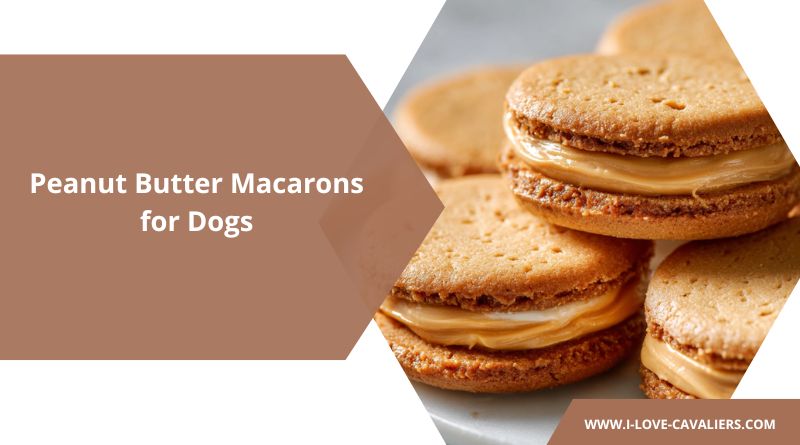
I’ll be the first to admit that I’m not exactly a fancy baker. My idea of going all out usually involves adding chocolate chips to something.
But last month, my older daughter had a school project about France, and suddenly our kitchen was filled with pictures of the Eiffel Tower, berets, and those delicate little sandwich cookies called macarons.
Snickers was supervising the whole project from his usual spot under the table, and somewhere between helping with poster board and looking at photos of Parisian bakeries,
I had a thought: what if I made him the dog version of macarons? Turns out, you don’t need culinary school to make your dog feel like royalty.
Why These Macarons Are Worth Making
- Easy Elegance Without the Fuss
Traditional macarons are notoriously difficult with their precise techniques and temperamental meringues. These dog-friendly versions skip all that complexity while keeping the charming sandwich cookie concept.
- Perfect Party Treats
These little sandwich cookies look impressive at dog birthday parties, puppy playdates, or gotcha day celebrations. They photograph beautifully and show you put thought into the occasion.
- Peanut Butter Appeal
Most dogs go absolutely wild for peanut butter, and these macarons deliver that flavor both in the cookie and the filling. It’s a peanut butter lover’s dream in portable, elegant form.
Peanut Butter Macarons for Dogs Recipe
Ingredients
| Ingredient | Amount |
|---|---|
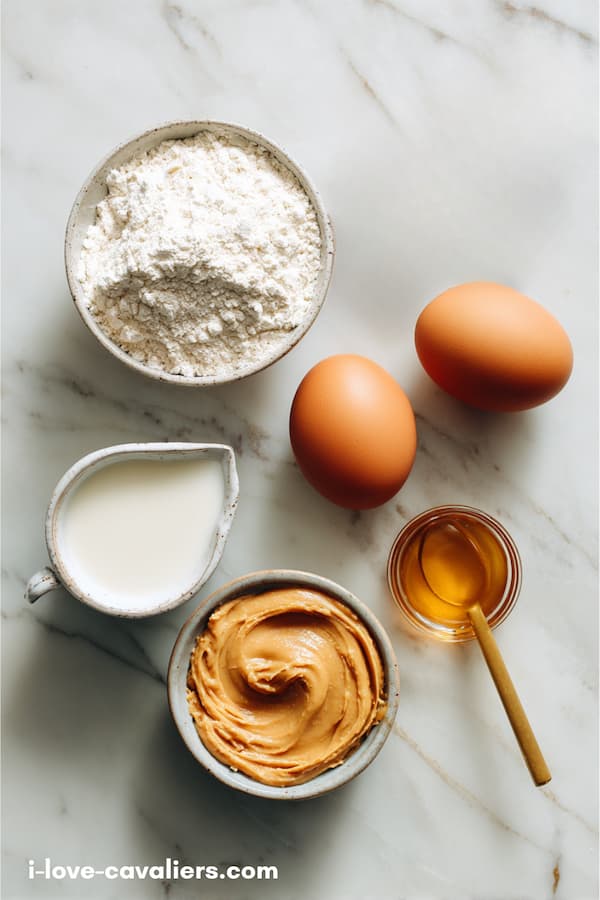
| All-purpose flour | 1¼ cups |
| Creamy peanut butter (xylitol-free) | ½ cup (plus extra for filling) |
| Milk | ½ cup |
| Large egg (room temperature) | 1 |
| Honey | 1½ tablespoons |
| Baking powder | ⅓ teaspoon |
Critical Peanut Butter Warning: Always verify your peanut butter contains NO xylitol, an artificial sweetener that’s extremely toxic to dogs even in tiny amounts. Read labels carefully and choose peanut butter with only peanuts (and possibly salt) listed in the ingredients.
Step-by-Step Macaron Instructions

Step 1: Prepare Your Baking Environment
Set your oven to preheat at 350°F (175°C) so it reaches the proper temperature while you prepare the dough. Tear off a sheet of parchment paper and use it to line your baking sheet, smoothing it flat. Have your cookie cutter ready—a small round cutter about 1½ to 2 inches in diameter works perfectly for macaron-sized treats.
Step 2: Combine All Ingredients
If you have a stand mixer, attach the paddle attachment and add all your ingredients directly to the bowl—flour, baking powder, peanut butter, egg, honey, and milk. If mixing by hand, use a large mixing bowl and sturdy wooden spoon. Turn the mixer on medium speed (or start stirring vigorously by hand) and let everything combine for 2-3 minutes.
Step 3: Form a Cohesive Dough
Continue mixing until the separate ingredients disappear and transform into a unified, soft dough that pulls away from the sides of the bowl. The consistency should be smooth, pliable, and slightly sticky but manageable (similar to soft cookie dough). If your dough seems too wet and won’t hold together, add flour one tablespoon at a time.
Step 4: Prepare Your Rolling Surface
Sprinkle a light dusting of flour across your clean countertop or a large cutting board. Don’t overdo it, just enough to prevent sticking. Scrape all the dough out of your bowl and place it in the center of your floured surface. Dust your hands lightly with flour as well to make handling easier.
Step 5: Shape the Dough
Using your hands or a rolling pin, press and pat the dough outward into a rectangular shape. Work it evenly until you achieve a uniform thickness of approximately ½ inch throughout. The rectangle doesn’t need to be perfect; you’re just creating a flat surface to cut circles from.
Step 6: Cut Your Macaron Rounds
Take your small round cookie cutter and press it straight down through the dough, then lift directly up without twisting. Place each cut circle onto your prepared baking sheet, spacing them about an inch apart. Continue cutting circles from the dough, working your way across the rectangle. Gather any scraps, press them together, flatten again to ½ inch, and cut more rounds until you’ve used all the dough. You want an even number of cookies since they’ll be sandwiched together.
Step 7: Bake Until Golden
Slide your baking sheet onto the center rack of your preheated oven and set a timer for 10 minutes. Check them at this point (they should look lightly golden around the edges and feel firm when gently touched). If they still seem soft or pale, continue baking for another 3-5 minutes, checking frequently. Total baking time will typically fall between 10-15 minutes depending on thickness and your oven’s temperament.
Step 8: Cool Completely and Assemble
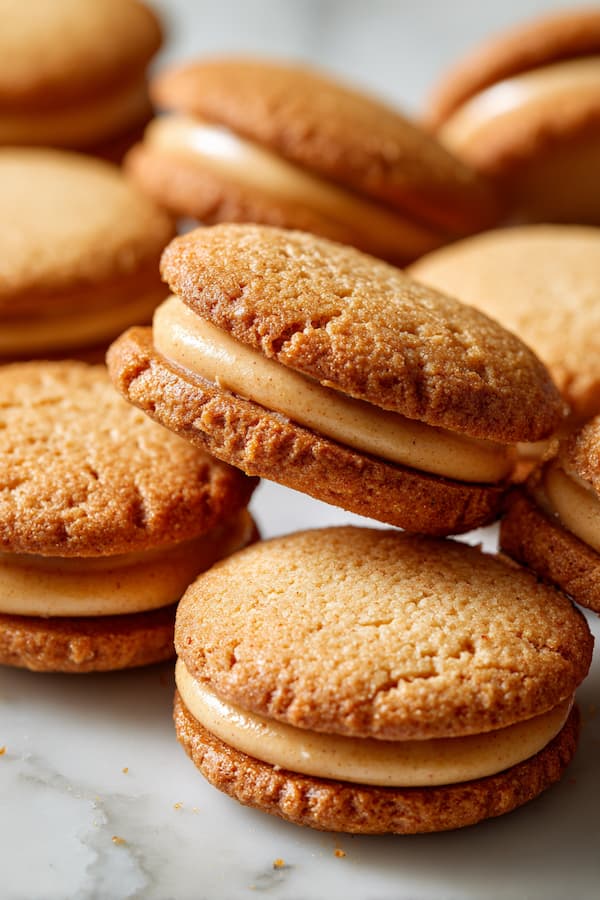
Allow the cookies to cool fully at room temperature. Once completely cool, lay out half of your cookies flat-side up. Take additional creamy peanut butter and spread a thin layer (about ½ teaspoon) onto each cookie, leaving a tiny border around the edge. Top each one with a second cookie, flat-side down, and press gently to create a sandwich.
Storage and Freshness
Refrigerator Storage (5-7 Days): Because these macarons contain peanut butter filling, they must be refrigerated. Store assembled sandwiches in an airtight container or zip-lock bag in the fridge.
Freezer Storage (Up to 2 Months): These freeze beautifully for longer storage. Place assembled macarons in a single layer on a tray and freeze for an hour, then transfer to a freezer bag with air pressed out.
Serving Recommendations
| Dog Weight | Macaron Size | Daily Maximum |
|---|---|---|
| Under 15 lbs | ½ sandwich | 1 piece |
| 15-30 lbs | 1 small sandwich | 1-2 macarons |
| 31-50 lbs | 1 sandwich | 2 macarons |
| 51-70 lbs | 1-2 sandwiches | 2-3 macarons |
| Over 70 lbs | 2 sandwiches | 3-4 macarons |
Remember, these are general recommendations, not veterinary guidance. Your individual dog’s needs depend on their activity level, metabolism, health status, and overall diet composition.
Treats should never exceed 10% of daily caloric intake regardless of how excited your pup gets about them.
Monitor your dog’s weight and condition regularly, adjusting portions as needed. For dogs with health conditions, allergies, or special dietary requirements, always consult your veterinarian before introducing new treats.
Nutritional Benefits
- Protein Power from Peanut Butter
Peanut butter delivers plant-based protein and healthy fats that support energy levels, muscle maintenance, and a lustrous coat. The natural oils also contribute to skin health.
- Energy from Honey
Raw honey provides natural sugars for quick energy, plus trace amounts of vitamins, minerals, and antioxidants. It’s also easier on the digestive system than processed sugars.
- Complete Protein from Eggs
Eggs supply all nine essential amino acids dogs need for cellular function, immune support, and tissue repair. They’re one of the most bioavailable protein sources available.
- Calcium from Milk
The milk adds calcium for strong bones and teeth, plus additional protein to support overall health and vitality.
Frequently Asked Questions
Can I use whole wheat flour instead?
Absolutely. Whole wheat flour works as a one-to-one substitute and adds more fiber and nutrients. The macarons will have a slightly denser texture and nuttier flavor, but dogs typically don’t mind at all.
My dough is too crumbly—what happened?
This usually means there’s not enough moisture. Add milk one teaspoon at a time, mixing thoroughly after each addition, until the dough becomes cohesive and pliable. Different flour brands absorb liquid differently, so adjustments are normal.
Can I make these without honey?
Yes, though honey adds moisture and natural sweetness dogs enjoy. You can substitute mashed banana (2 tablespoons) or simply omit it entirely—the macarons will be slightly less sweet but still delicious.
Can I make these grain-free?
Replace the all-purpose flour with oat flour (1¼ cups) or coconut flour (start with ⅔ cup, as it’s very absorbent). You’ll need to adjust liquid amounts with coconut flour—add milk gradually until you achieve the right consistency.
Final Thoughts
So there you have it, the treat that started as a school project inspiration and turned into Snickers’ new favorite fancy snack. She has no idea they’re supposed to be French or elegant; she just knows they taste like peanut butter heaven.
The best part? My daughter insists on helping make them now, carefully cutting out circles and arranging them on the baking sheet like we’re running an actual Parisian bakery. These little macarons might not win any awards at a French patisserie, but they’ve definitely earned a permanent spot in our treat rotation.
From our kitchen to yours—or should I say, from our cuisine to yours—happy baking!