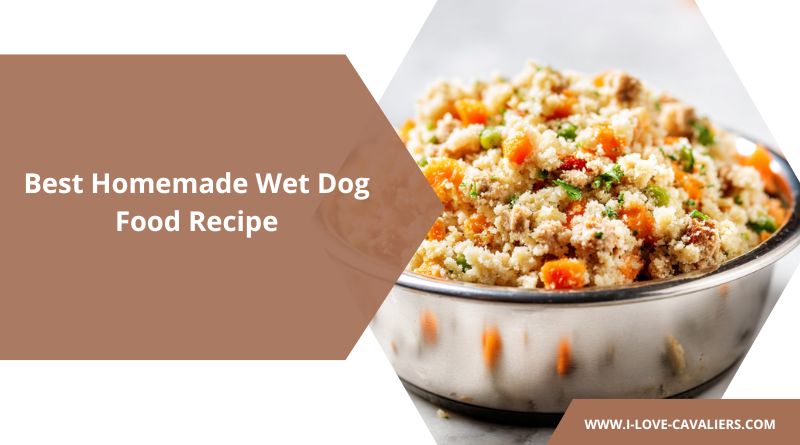
When I first became a dog parent, I was so naive that I really believed those glossy cans of wet food lined up at the store were just as healthy as anything I could make at home. The labels made big promises, the packaging looked trustworthy, and honestly, it felt convenient.
But over time, I started noticing things: long lists of unpronounceable ingredients, the way Bentley would sometimes eat with less enthusiasm, and the little voice in my head asking, “Is this really the best I can give him?”
That’s when I started learning about homemade wet food. Trust me, if you’ve never tried it, you’ll be amazed at the difference. Not only do you control every ingredient, but the texture, flavor, and nutrition are leaps ahead of what comes in a can.
And Snickers? He never even had the chance to try canned wet food. Honestly, I think he’d feel completely betrayed if I ever put one in his bowl. Lol!
Why Choose Homemade Wet Dog Food?
- Superior Ingredient Quality
Commercial wet dog food often contains fillers, by-products, and preservatives that offer little nutritional value.
- Perfect Texture Control
Many dogs prefer the soft, moist texture of wet food, especially senior dogs with dental issues, picky eaters, or dogs recovering from illness.
- Hydration Support
Wet food naturally provides more moisture than dry kibble, supporting proper hydration and kidney function.
Homemade Wet Dog Food Recipe
| Ingredient | Amount |
|---|---|
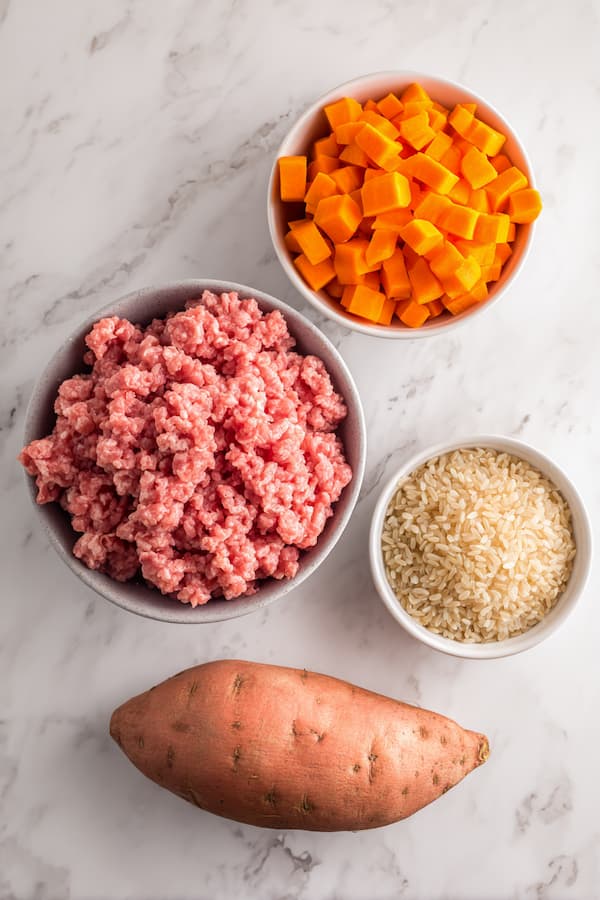
| Ground turkey or chicken (93% lean) | 2.5-3 lbs |
| Sweet potato (small to medium) | 1 |
| Carrots | 1 cup |
| Brown rice (uncooked) | 1 cup |
| Coconut oil | 4 tablespoons |
| Water | As needed |
Ingredient Notes:
Ground Turkey/Chicken: Choose 93% lean to provide adequate protein while keeping fat content moderate. Remove any visible skin or excess fat before cooking.
Coconut Oil: Use virgin, unrefined coconut oil for maximum nutritional benefits.
Cooking Equipment:
- Large skillet or heavy-bottom pan
- Medium saucepan with tight-fitting lid
- Large mixing bowl
- Potato masher or large fork
- Sharp vegetable peeler
- Cutting board and knife
Step-by-Step Direction
Step1. Prepare the Rice
Begin by preparing 1 cup of brown rice according to package directions, but use only plain water—never add salt, butter, or seasonings as suggested on commercial packaging. Add an extra ¼ to ½ cup of water beyond package recommendations to create a softer, more digestible texture perfect for wet food consistency.
Step2. Create the Protein Base
Heat 4 tablespoons of coconut oil in a large skillet over medium-high heat until it melts and begins to shimmer. Add ground turkey, using a wooden spoon or spatula to break it into uniform, bite-sized pieces roughly the size of a nickel. Cook thoroughly for 12-15 minutes, stirring frequently to ensure even browning and prevent sticking.
Step3. Prepare Fresh Vegetables
While your protein cooks, wash, peel, and dice your sweet potato and carrots into uniform ½-inch cubes. The small dice size makes these vegetables perfect for dogs of all sizes.
Step4. Reserve the Flavorful Drippings
Once turkey is fully cooked, transfer it along with all the flavorful cooking juices to a large mixing bowl. These natural drippings contain essential nutrients and flavor compounds that will enhance the overall taste and nutritional value of the final wet food. Never discard these valuable juices—they’re liquid gold for homemade dog food.
Step5. Steam-Cook the Vegetables
Using the same skillet, add your diced sweet potato and carrots. Pour in enough fresh water to just cover the vegetables completely. Bring to a vigorous boil over medium-high heat, then immediately reduce to a gentle simmer. Cover and cook for 12-14 minutes until vegetables pierce easily with a fork but aren’t completely falling apart.
Step6. Create the Perfect Texture
Drain the cooked vegetables, reserving the cooking liquid for later use. Using a potato masher or large fork, gently mash the vegetables into smaller, irregular pieces—not a smooth puree. This creates varied textures that keep meals interesting while ensuring digestibility.
Step7. Combine All Components
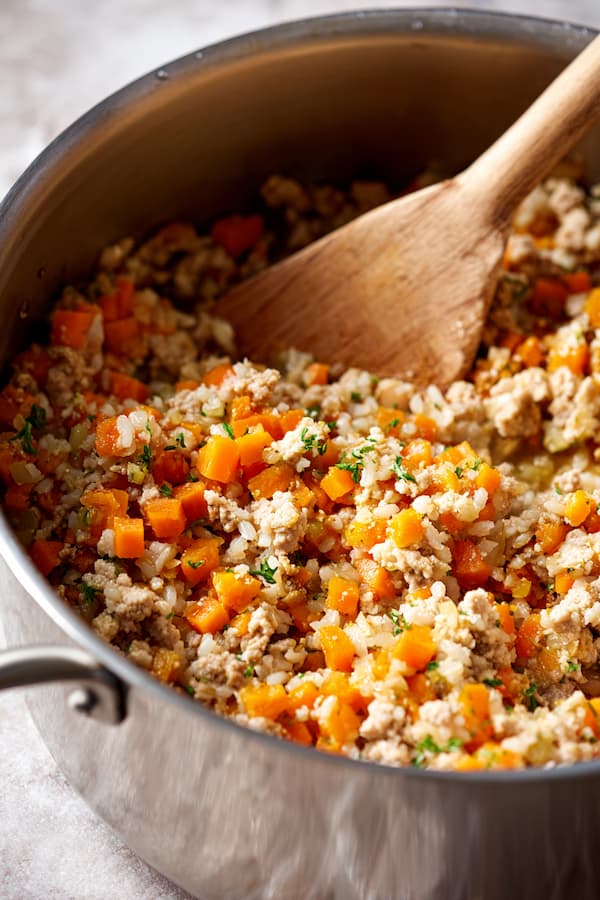
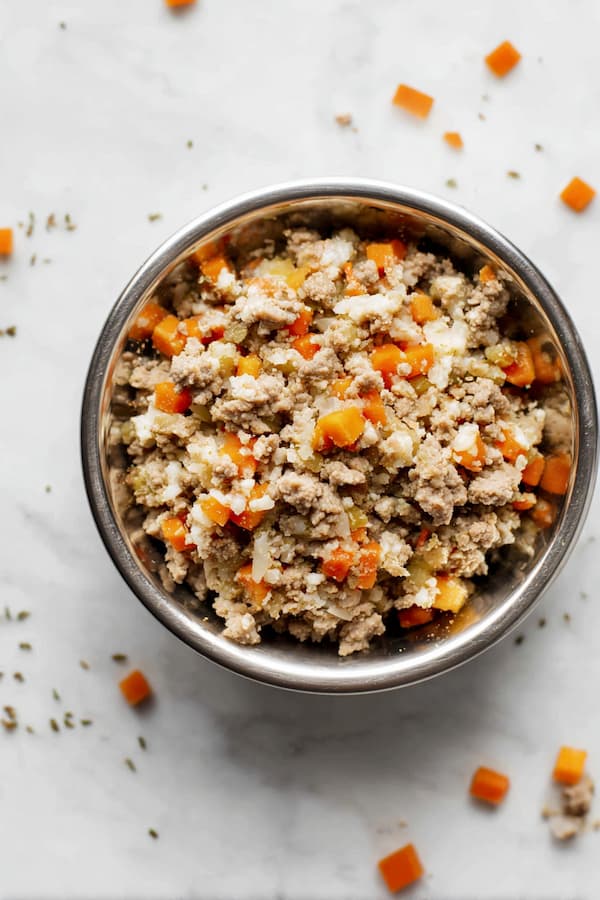
Add the mashed vegetables to your bowl containing the cooked turkey and drippings. Stir in the cooked brown rice, mixing gently but thoroughly to distribute all ingredients evenly throughout the mixture.
Step8. Achieve Perfect Moisture Content
Gradually add the reserved vegetable cooking liquid or plain water until you reach your desired consistency. Start with small amount. The final texture should be moist and cohesive but not soupy. For dogs who prefer wetter food, add more liquid; for those who like firmer textures, use less. The mixture should hold together when scooped but not be dry or crumbly.

Storage and Serving Guidelines
Refrigerator Storage:
- Store in airtight containers for up to 6 days maximum
- Keep temperature below 40°F at all times
- Stir before serving as ingredients may separate
Freezer Storage Methods:
- Individual portions: Divide into meal-sized containers before freezing
- Ice cube portions: Freeze in ice cube trays for easy thawing of small amounts
- Flat-pack method: Freeze in freezer bags laid flat for space-efficient storage
- Label everything with contents and date—frozen wet food keeps for up to 3 months
Portion Control Guidelines
Daily Serving Amounts
| Dog Weight | Daily Amount | Meals per Day |
|---|---|---|
| 10-20 lbs | ¾ – 1¼ cups | 2-3 meals |
| 21-40 lbs | 1¼ – 2 cups | 2 meals |
| 41-60 lbs | 2 – 2¾ cups | 2 meals |
| 61-80 lbs | 2¾ – 3½ cups | 2 meals |
| 80+ lbs | 3½ – 4½ cups | 2-3 meals |
Activity Level Adjustments:
- Low activity: Reduce portions by 10-15%
- Moderate activity: Use standard guidelines
- High activity: Increase portions by 15-25%
- Senior dogs: Often need 10-20% less food due to decreased metabolism
Keep in mind that these are general guidelines. I’m not a dog nutritionist, and exact portions can vary based on breed, age, health conditions, and food combinations. For the best results and to ensure your dog’s diet is balanced, you can always reach out to your veterinarian for personalized recommendations.
Recipe Variations for Special Needs
Grain-Free Version: Replace brown rice with equal amount of cooked quinoa or additional sweet potato for dogs with grain sensitivities
Senior Dog Modification: Cook vegetables longer (15-17 minutes) and mash more thoroughly for easier chewing and digestion
Allergy-Friendly Alternative: Substitute turkey with lean ground beef, lamb, or fish, and swap vegetables for dog-safe alternatives like zucchini or pumpkin
Nutritional Benefits Breakdown
- Protein Power: Ground turkey offers complete amino acids for muscle, immune, and overall health while being easy to digest.
- Steady Energy: Brown rice provides long-lasting fuel and easy digestion without blood sugar spikes.
- Antioxidant Boost: Sweet potatoes and carrots deliver vitamin A, fiber, and immune support for eyes, skin, and digestion.
- Healthy Fats: Coconut oil adds quick energy, supports skin, and keeps coats shiny.
Transitioning to Homemade Wet Food
Gradual Introduction Schedule:
- Days 1-3: Mix 25% homemade with 75% current food
- Days 4-6: Mix 50% homemade with 50% current food
- Days 7-9: Mix 75% homemade with 25% current food
- Day 10+: Feed 100% homemade wet food
This gradual approach works well for most dogs, several friends have tried it and found it to be a golden starting point. That said, every dog is unique, so it’s always best to adjust portions and pace based on your pup’s needs.
Frequently Asked Questions
Can I use a slow cooker or Instant Pot instead?
Absolutely! For slow cooker: cook rice separately, then add all ingredients except rice to the slow cooker for 4-6 hours on low. For Instant Pot: use the rice setting for rice, then sauté mode for the protein, and steam setting for vegetables. The stovetop method gives you more control over texture, but both appliances work well for busy schedules.
My dog has never eaten homemade food. Will they actually eat this?
Most dogs transition easily because this recipe smells amazing and tastes like real food—not processed kibble. The key is the gradual transition schedule.
Can I make this recipe in larger batches?
Yes! Double or triple the recipe easily. Just ensure your cooking equipment can handle the larger quantities.
What’s the best way to warm up refrigerated portions?
Let the food sit at room temperature for 15-20 minutes, or microwave for 10-15 seconds and stir well.