Snickers, my Cavalier, has an uncanny sense for the meat counter.
Last Tuesday I was standing there squinting at a tub of “premium freeze-dried food topper” priced at $34.99, and he was already tugging me two feet to the left, right toward the tray of chicken gizzards. Two dollars a pound. Two.
I’ve been buying that same $34 tub for months. Then I did the math on my walk home and got quietly annoyed at myself.
That afternoon I boiled a pound of gizzards and hearts, chopped them into pea-sized pieces, and spooned a bit into his dinner bowl. He inhaled it. The next morning he sat by his bowl five minutes before breakfast, which is not normal for him.
That was six weeks ago. He’s had this in his food most days since, and I’ve stopped buying the fancy topper entirely.
Here’s exactly how I make it, how much to give your dog by weight, and the two mistakes I made in the first week so you don’t repeat them.
Why This Recipe Is Worth 20 Minutes
- Cheap complete protein. A pound of hearts and gizzards runs $2 to $4 at most grocery stores. That same money buys about two tablespoons of the freeze-dried topper aisle stuff.
- Naturally rich in taurine and CoQ10. Chicken hearts pack roughly 170 mg of taurine and 19 mg of CoQ10 per 100g, both nutrients that support healthy heart function in dogs.
- Built-in glucosamine. Gizzards are muscle tissue built for grinding grit, so they’re loaded with the connective material that supports joints. Handy for older dogs.
- Zero fillers. No corn, no wheat, no mystery flavoring. Just meat and water.
This is the same math that pushed me toward homemade dog food that ends up cheaper than kibble in the first place. Once you see the numbers, the fancy tubs stop making sense.
What You’ll Need
The ingredient list is short on purpose. Nothing here is optional or replaceable.
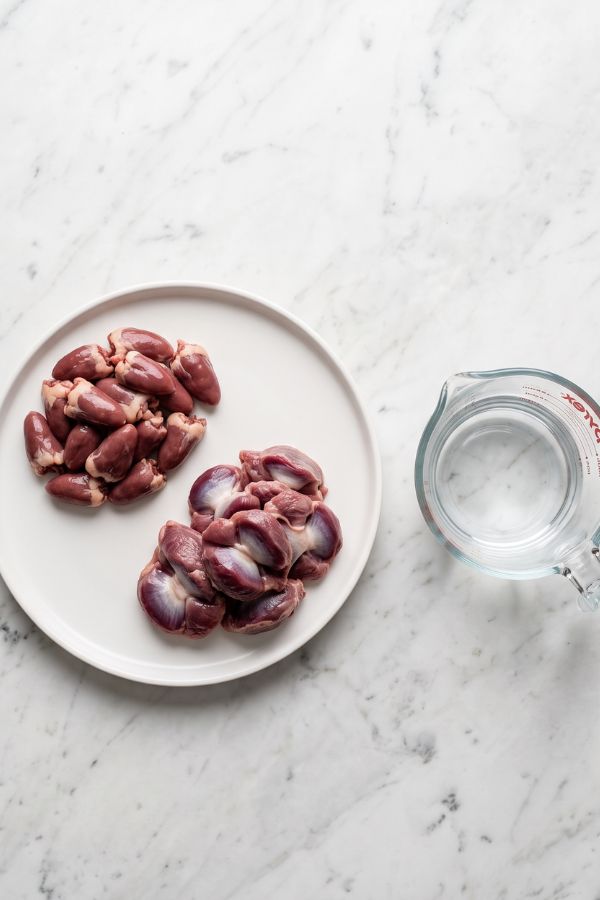
| Ingredient | Amount |
|---|---|
| Chicken hearts | 8 oz (about ½ lb / 225g) |
| Chicken gizzards | 8 oz (about ½ lb / 225g) |
| Filtered water | About 4 cups, enough to cover |
You’ll also want a medium pot, a colander, a sharp knife or kitchen shears, and a cutting board you use only for raw meat. That last part matters. Don’t chop these on the same board you use for vegetables unless you sanitize between.
How to Cook Chicken Hearts and Gizzards
The whole process takes about 25 minutes from start to a bowl of ready-to-serve meat. Real cooking, not much active work.
Step 1: Rinse and trim
Dump the hearts and gizzards into a colander and rinse under cold water for a full 30 seconds. Some packages have small bits of yellow fat or a stubborn silver membrane on the outside.
Trim off the obvious white fat with kitchen shears. If a gizzard has a tough white lining, snip that too, but don’t obsess over it.
Tip: rinsing knocks down surface bacteria and washes away the packaging juice, which is where most of the “gamey” smell comes from.
Step 2: Boil in plain water
Add the meat to a medium pot and cover with about 4 cups of cold water. Bring it to a gentle boil, then drop to a simmer for 15 to 20 minutes.
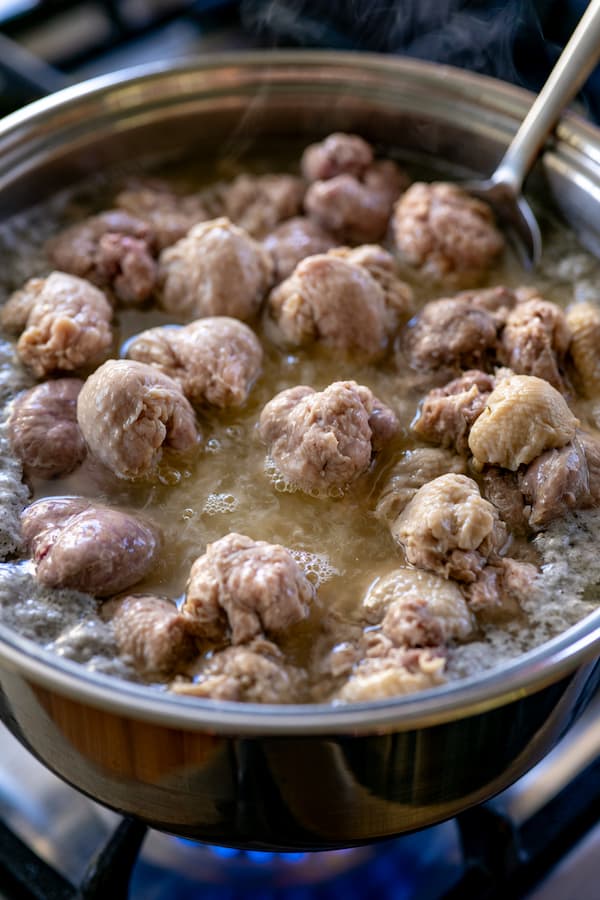
No salt. No garlic powder. Nothing.
You’ll see grayish foam rise to the top. Skim it off with a spoon if you want a cleaner broth. Skip it if you don’t care.
When they’re done, a heart cut in half should show no pink at the center. Gizzards will look pale beige all the way through.
Step 3: Cool and drain
Drain the meat into your colander. Don’t toss the cooking water.
That plain, unsalted broth is essentially bone broth’s leaner cousin, and you can pour a spoonful over your dog’s kibble later. Store it separately in a jar.
Let the meat cool on a plate for about 10 minutes. It should be barely warm to the touch before it goes anywhere near a dog.
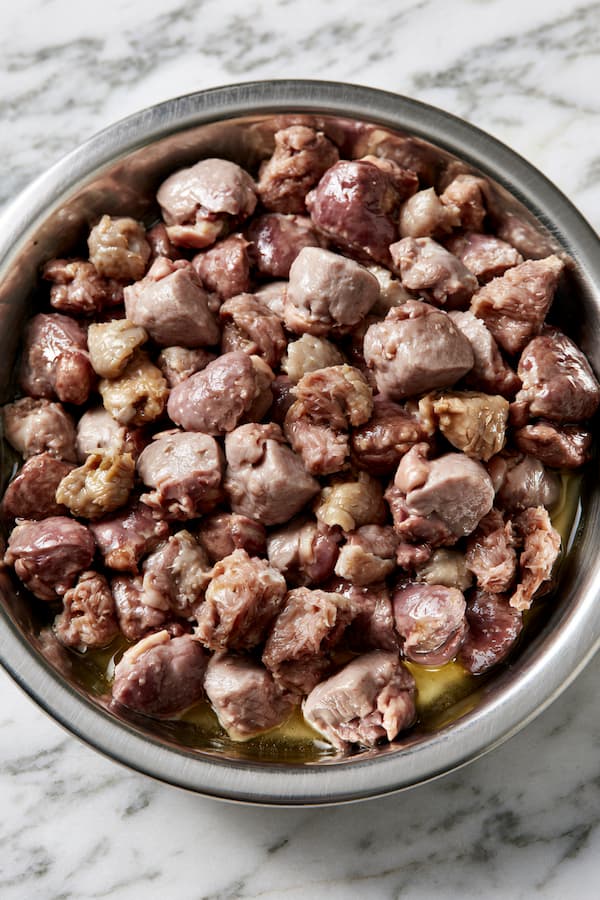
Step 4: Chop and portion
Chop everything into small pieces for a small dog, or roughly bite-sized for a large one.
Split the batch immediately. Half goes into a glass container for the fridge (you’ll use it within three days). The other half goes into a silicone ice cube tray, one heaping tablespoon per cube, straight into the freezer.
Frozen cubes thaw in about 20 minutes on the counter or 10 seconds in the microwave. Grab one, plop it on top of the kibble, done.
How Much to Feed Your Dog
Here’s where most owners get it wrong. Chicken hearts and gizzards are technically muscle meat, not organ meat like liver, so you can feed them more generously than you might assume. The old “5% of the diet” rule for organs doesn’t apply to hearts and gizzards.
Start small the first week anyway. Introduce over 5 to 7 days by mixing a small amount into their regular food. Sudden switches to a new protein cause loose stool in almost every dog, and no one wants that on a Wednesday morning.
Use this as a rough daily starting point, adjusting up or down based on your dog’s total food intake:
| Dog weight | Starting daily amount | Max daily amount |
|---|---|---|
| Under 10 lbs (under 5 kg) | 1 tsp | 1 tbsp |
| 10-25 lbs (5-11 kg) | 1 tbsp | 2 tbsp |
| 25-50 lbs (11-22 kg) | 2 tbsp | ¼ cup |
| 50-80 lbs (22-36 kg) | 3 tbsp | ⅓ cup |
| 80+ lbs (36+ kg) | ¼ cup | ½ cup |
If your dog is on a weight-management plan, count these calories in the daily total. Chicken hearts are calorie-dense at about 153 calories per 100g. Gizzards are much leaner at about 94.
Frequency matters less than consistency. Daily small amounts are fine, so is three times a week, whichever you’ll actually keep up with.
How to Serve It
Three ways I actually use it around the house:
- As a kibble topper. One tablespoon on top of the regular meal, mixed in slightly so it’s not a “pick and leave” situation.
- As a training reward. A single pea-sized piece is a jackpot-level treat, way better than anything from a bag.
- As part of a fuller meal. Layered over cooked rice with a batch of dog food built around chicken thighs for a complete home-cooked plate.
The topper method wins for consistency. Skip it if your dog is a rigid “kibble-only” type though. Some dogs get so used to the topper they start snubbing the dry food underneath.
Storage
Cooked hearts and gizzards keep for 3 days in a sealed glass container in the fridge. Any longer and the texture goes rubbery and the smell turns.
Frozen, they hold their quality for about 3 months in an airtight bag or container. Freeze them the day you cook them, not on day two.
Ice cube trays are the easiest portion trick I’ve found. One cube equals roughly one tablespoon, which handles most feeding calculations without weighing anything.
For thawing, always use the fridge overnight or a warm water bath. Never the countertop for hours. Warm meat sitting out grows bacteria fast, and that’s a stomach upset waiting to happen.
Back to the Meat Counter
I still walk past that $34 tub of freeze-dried topper on my Tuesday grocery run. Snickers walks past it too now, straight to the meat case, waiting for me to catch up.
The good stuff was never behind the fancy label. It was always two rows down, next to the whole chickens, and it costs less than a coffee.
I’m a passionate dog lover and kitchen enthusiast, but I’m not a certified veterinarian or animal nutritionist. Long-term homemade diets should always be discussed with your vet to make sure your pup is getting everything they need.
Bon appétit to your furry friend!