Saturday morning. I’d just walked back into the kitchen with my coffee and saw Snickers, my Cavalier, sitting perfectly still in front of the pantry door. Not whining. Not scratching. Just staring at the door like a monk mid-prayer.
He knew where the yellow box lived.
I pulled it out. That familiar Milk-Bone rattle. He did the front-paw dance, I handed over a Medium biscuit, and it was gone in six seconds. Then he sat back down and stared at the pantry, waiting for another one.
That was the morning I actually flipped the box over. I’d been buying these things for years without reading the ingredient panel. Not because I was careless, just because they’re one of those “everyone feeds their dog these” products my brain had filed away as fine.
Turns out the label is more interesting than I expected. Some of it is fine, some of it made me want to stir my coffee slower. And the calorie math on the back of the box (how many biscuits you’re “allowed” vs how many your dog can actually have) doesn’t line up the way most owners assume.
Here’s the full breakdown, plus a homemade copycat recipe I’ve been making instead.
What’s Actually Inside a Milk-Bone Biscuit
I pulled the current ingredient panel straight from milkbone.com for the Original Small biscuit. Here it is in plain order:
Ground Whole Wheat, Wheat Flour, Meat and Bone Meal, Beef Fat (BHA/BHT Used as a Preservative), Salt, Bone Phosphate, Milk, Calcium Carbonate, Malted Barley Flour, Sodium Metabisulfite, Minerals, Brewers Dried Yeast, Natural Flavor, Vitamins, BHA.
The first two ingredients are wheat. Which means, by weight, a Milk-Bone is mostly flour. That’s not a scandal on its own, but wheat is one of the more common dog allergens, and if your dog has itchy paws or chronic ear gunk, this is one of the first ingredients I’d rule out.
Meat and bone meal sounds fine until you look up what it is. It’s a rendered protein made from mammal tissues that weren’t sold for human food. It’s cheap and contains some real protein and minerals, but the source animal can vary batch to batch, and the quality is nowhere near a labeled meat like “chicken meal” or “lamb meal.”
Then there’s the preservative situation, which deserves its own section.
The MaroSnacks line has a different mix. Sugar is the third ingredient, right after wheat flour and meat and bone meal. That’s before salt, before the beef fat, before any of the flavor components. Milk-Bone doesn’t market MaroSnacks as a sweet treat, but by weight, they kind of are.
Soft & Chewy runs closer to 24 calories per treat and adds humectants like glycerin to keep the texture soft. Fewer preservatives in some sub-lines, but the wheat and meat and bone meal backbone is still there.
The Milk-Bone Product Line at a Glance
Milk-Bone has expanded well past the yellow box, so a quick sort-through:
Original Biscuits. The classic. Wheat, meat and bone meal, BHA/BHT. Comes in Mini, Small, Medium, Large. Cheapest and most calorie-dense per unit.
MaroSnacks. Filled with cooked bone marrow flavor, but sugar sits at the third ingredient. Also uses added color. Small dogs seem to love them. I’ve stopped feeding these.
Soft & Chewy. Softer texture, higher calorie per treat, adds glycerin. Easier on senior dogs with worn teeth, but the calorie hit adds up fast.
Brushing Chews. The only Milk-Bone product with a VOHC dental seal. Different shape, different formula. Actually does what the marketing says.
Flavor Snacks. Multicolored bone-shaped biscuits. Same base as Original with added artificial colors for the “bacon, beef, chicken, sausage, turkey” look. Dogs don’t care about the color. Their eyes see two shades. The dye is for you.
Now that the label side is covered, here’s what I’d hand over instead if my pantry was empty.
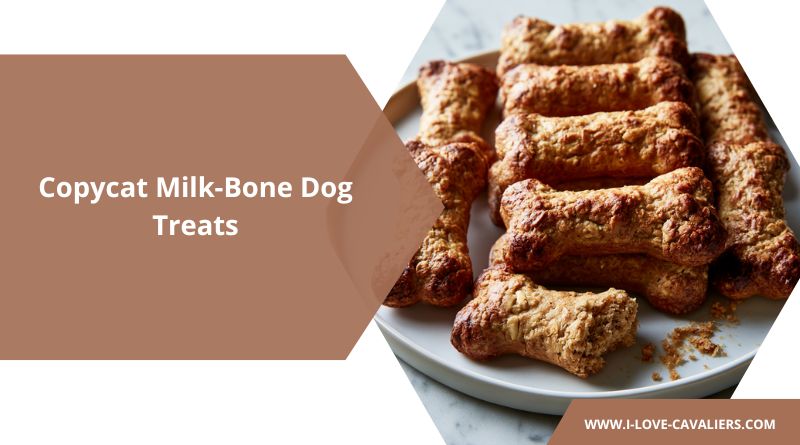
Homemade Copycat Milk-Bone Recipe
This is the version I’ve been making instead. Four ingredients, holds the bone shape when you cut it, and skips every single Milk-Bone ingredient I flagged above. Snickers can’t tell the difference (and yes, I’ve tested this by putting one Milk-Bone and one homemade side by side and letting him pick).
Yield: About 30 to 40 small bones or 20 medium. Total time: 45 minutes. Cost per batch: Under $2.
Ingredients
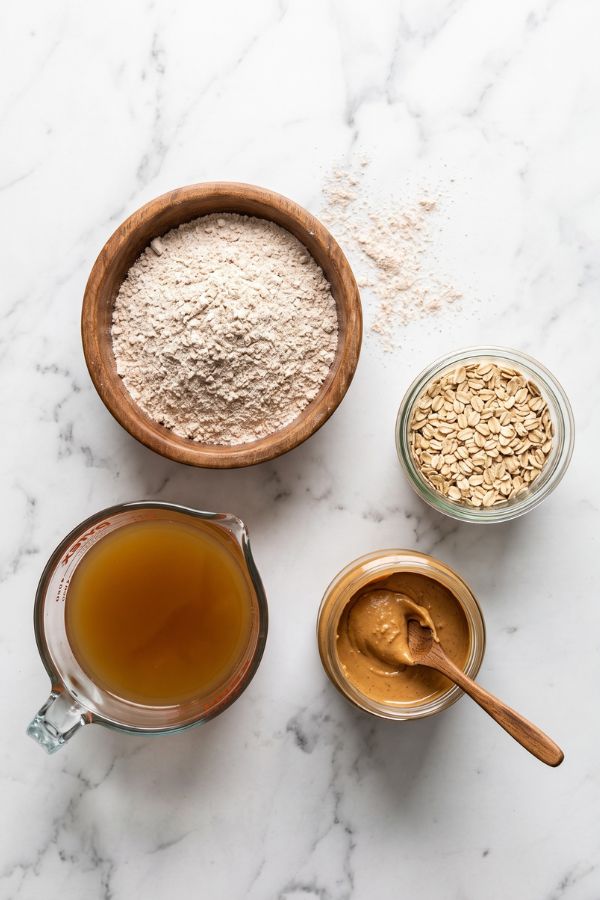
| Ingredient | Amount | Notes |
|---|---|---|
| Whole wheat flour or oat flour | 2 cups | Oat flour if your dog is wheat-sensitive |
| Old-fashioned rolled oats | 1/2 cup | Adds the classic crumbly bite |
| Natural peanut butter | 1/2 cup | Xylitol-free, unsweetened only |
| Low-sodium beef or chicken broth | 3/4 cup | Homemade or store-bought, warm |
You can fold in 1 tablespoon of pumpkin puree if your dog needs a little digestive help. Don’t skip checking the peanut butter label for xylitol. It’s the one truly dangerous mistake in the whole recipe.
Step 1. Mix the Dough
Preheat your oven to 350°F. Line a baking sheet with parchment paper. In a large bowl, whisk the flour and oats together, then add the peanut butter and warm broth. Stir with a wooden spoon until the dough starts to come together, then use your hands for the last minute.
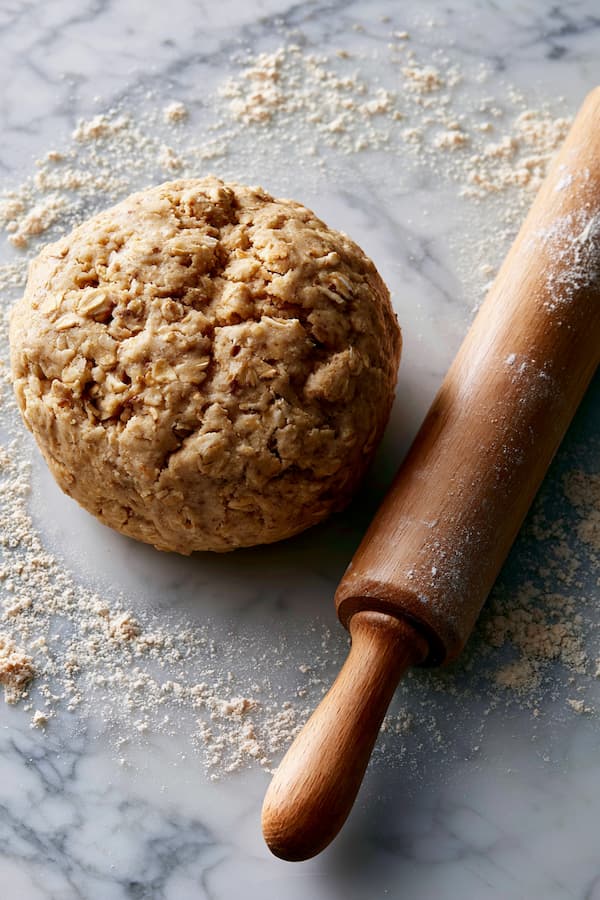
It should feel like soft playdough, firm enough to hold a shape without cracking. If it’s too dry, add broth one tablespoon at a time.
Step 2. Roll and Cut
Turn the dough out onto a lightly floured surface and roll it to about 1/4 inch thick. Any thinner and the biscuits get too hard. Any thicker and the centers stay soft.
Use a bone-shaped cookie cutter if you have one. If not, a small drinking glass works fine (no dog has ever complained about circles).
Re-roll the scraps and keep cutting until the dough is gone.
Step 3. Bake
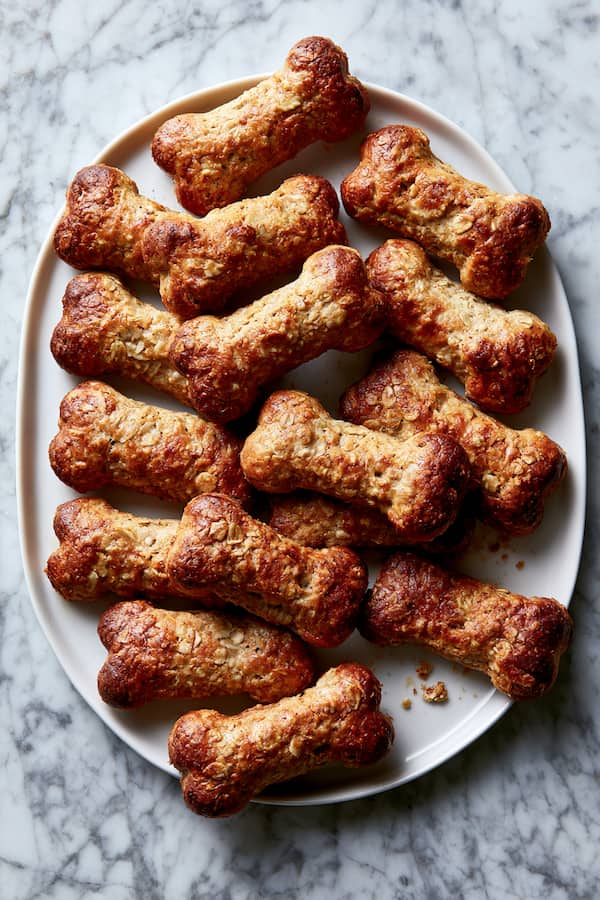
Space the biscuits about a half inch apart on the parchment. They barely spread. Bake for 25 to 30 minutes, or until the tops are golden brown and the biscuits feel firm when you tap them. The color you want is toasted, not just tan. Undercooked biscuits go moldy fast.
Step 4. Cool
Here’s the step almost every homemade dog treat recipe skips. Turn the oven off, crack the door open, and leave the biscuits inside for another 30 to 45 minutes. This is what actually pulls the last of the moisture out and gives you that Milk-Bone-style crunch and shelf life. Skip this and your treats will only last three days before going soft.
Fully cool on a rack after that.
Step 5. Storage
Store in an airtight container at room temperature for up to 2 weeks. If you’re not sure your dog can plow through them that fast, freeze half the batch in a zip-top bag. They’ll keep for 3 months and thaw in 10 minutes on the counter.
Serving Guide by Dog’s Weight
Same 10% rule as before. Here’s how it maps to the homemade version (roughly 25 calories each for the small bone size):
| Dog’s Weight | Homemade Biscuits per Day |
|---|---|
| 10 lb | 1 |
| 20 lb | 2 |
| 30 lb | 3 |
| 50 lb | 4 |
| 70 lb | 5 |
For a similar recipe using different ingredients, my beef bone broth dog biscuits uses a leaner base. And if your dog does better without wheat entirely, the peanut butter and almond flour treats are the version I make when Snickers has been extra itchy.
Back to the Yellow Box
Snickers still gets a Milk-Bone every so often. I’m not going to pretend I threw the box out and never looked back, because that’s not the honest ending. What I did do was cut it from a several-times-a-day habit down to maybe one biscuit a week, mostly when I run out of the homemade batch and he catches me at the pantry door with that little monk-in-prayer routine.
The rest of the week, he’s eating the copycat version. Same shape, same crunch, ingredients I can pronounce without a chemistry degree. And a calorie count I can actually track against his daily food.
The yellow box isn’t the villain some corners of the internet make it out to be. It’s just an old brand that hasn’t updated the label to match what most of us know about dog food today. Once you’ve read what’s really in it, one biscuit a week costs nothing. Six a day is a different story.
Snickers, meanwhile, is now sitting under the kitchen table waiting for me to drop a piece of something. He doesn’t care what brand it is. He never did.
I’m a passionate dog lover and kitchen enthusiast, but I’m not a certified veterinarian or animal nutritionist. Any big change to your dog’s treat routine should be run past your vet, especially if your dog has known allergies or an existing health condition.
Bon appétit to your furry friend!