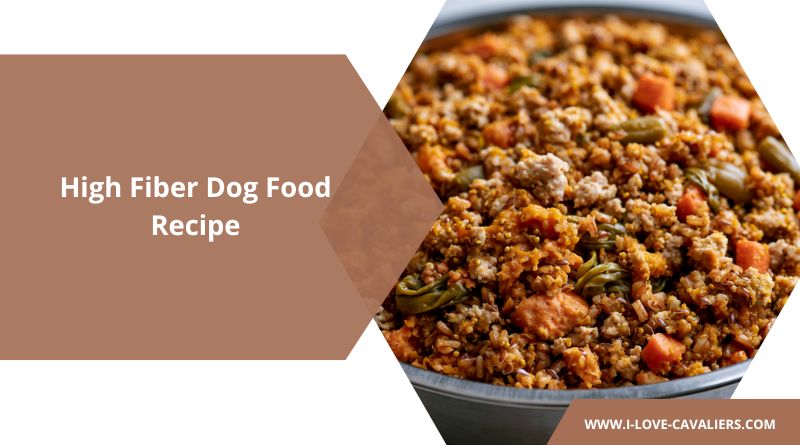
Last Tuesday I looked up from the couch just in time to see Snickers, my Cavalier, planting his back end on the living room rug and pulling himself forward with his front paws. Slow, deliberate, focused. Like a furry Roomba on a mission.
You know the move. Every dog owner does. And you know exactly what it means.
The scooting had been going on for a few days. Not constant, but often enough that I’d started noticing a faint funky smell on his back end and a small greasy mark on the rug.
I already knew what the vet was going to say before I called. Anal glands. Again.
She confirmed it, expressed them, and then said the thing I’d heard before but hadn’t really acted on. His stools were too soft.
Firm, bulky stools press against those little glands during a normal poop and empty them out on their own. Soft stools slide right past. Do that long enough and the glands stay full, they get uncomfortable, and the dog starts scooting to try to fix it himself.
Her advice: add more fiber. Not a supplement. Not another prescription bag of kibble.
Just more fiber from real food. So I went home, opened the fridge, and started building the recipe I’m about to share.
Why Fiber Fixes What’s Going Wrong
Fiber isn’t one thing. There are two main types your dog needs, and they do very different jobs.
Soluble fiber dissolves in water and turns into a gel inside the gut. It slows things down, holds moisture in the stool, and feeds the good bacteria in the colon.
Pumpkin, oats, apples, and flaxseed are all soluble-heavy. This is what firms up loose stools.
Insoluble fiber doesn’t dissolve. It stays intact and adds physical bulk to what your dog is passing.
Sweet potato, green beans, brown rice, and lentils lean insoluble. This is what pushes constipation along and creates the stool pressure that expresses anal glands naturally.
The recipe below uses both. That’s the whole trick.
Most single-ingredient fiber fixes (a spoonful of pumpkin, a handful of green beans) only push one lever. To actually solve a stubborn gland or stool problem, you need soluble AND insoluble in the same bowl.
Here’s the confusing part that trips people up. Pumpkin is famous for fixing both diarrhea AND constipation, which sounds impossible. It works because the soluble fiber absorbs excess water when stools are loose, and adds moisture when stools are too dry.
Same ingredient, opposite outcome, depending on what the gut needs that day. Neat trick.
What You’ll Need in the Bowl
Everything on this list is easy to find at a regular grocery store. Nothing exotic, nothing you have to order online.
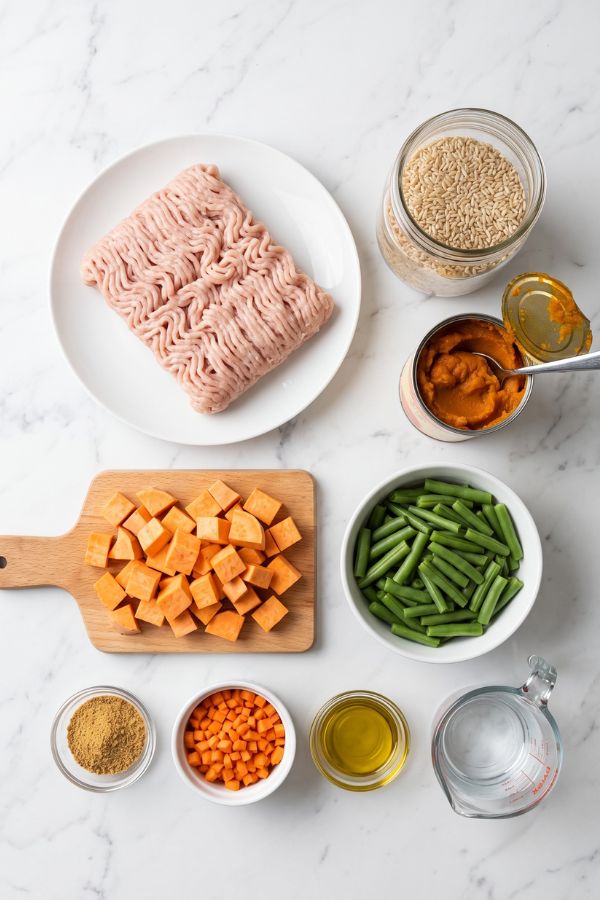
| Ingredient | Amount | Fiber per batch | Why it’s here |
|---|---|---|---|
| Ground turkey (93% lean) | 2 lb | 0 g | Base protein, gentle on stomachs |
| Brown rice, uncooked | 1 cup | 7 g cooked | Insoluble bulk, slow-release carbs |
| Sweet potato, peeled and cubed | 2 medium | 7.6 g | Insoluble plus soluble mix |
| Green beans, fresh or frozen | 2 cups | 8 g | Low-calorie insoluble bulk |
| Canned pumpkin puree (plain) | 1 cup | 7 g | Soluble fiber plus moisture |
| Ground flaxseed | 2 tbsp | 3.8 g | Soluble fiber plus omega-3s |
| Carrots, diced | 1 cup | 3.4 g | Insoluble plus vitamin A |
| Olive oil | 2 tbsp | 0 g | Helps stool pass smoothly |
| Water | 3 cups | 0 g | Critical for fiber to work |
That’s roughly 37 grams of total dietary fiber across the whole batch. Split into six meals for a medium dog, that’s around 6 grams per meal, which lands right in the range vets suggest for anal gland support.
One warning before you shop. Grab the plain 100% pumpkin puree, not the pumpkin pie filling. The pie stuff has nutmeg, cinnamon, sugar, and sometimes cloves in it.
Nutmeg is toxic to dogs. I’ve made this mistake before (in a hurry, at the store, grabbing the wrong can) and Snickers vomited within the hour. Read the label.
High Fiber Dog Food Recipe
The whole thing takes about 45 minutes start to finish. Most of that is passive simmering time, so you can be doing other things.
Step 1. Brown the Turkey
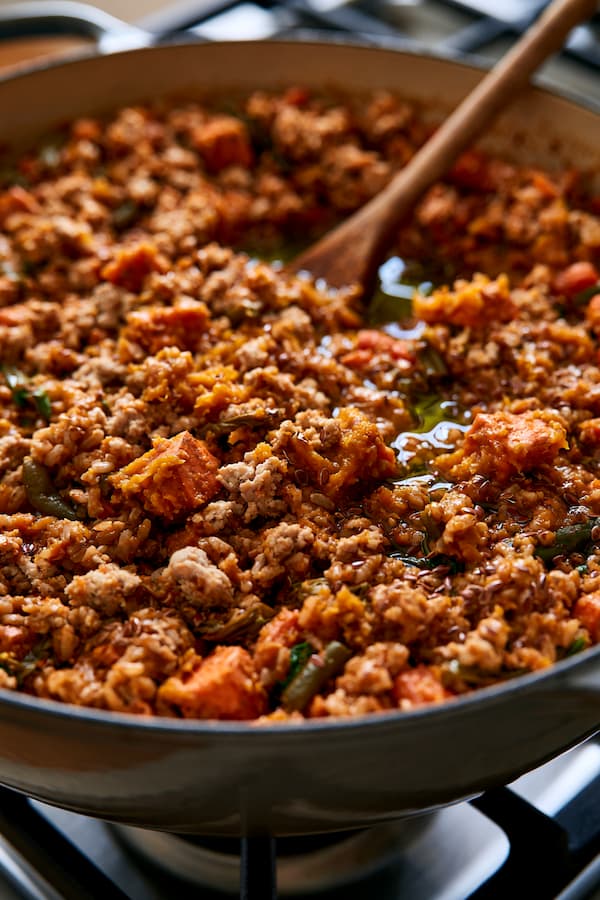
Heat a large pot or Dutch oven over medium heat. Add the ground turkey and break it apart with a wooden spoon.
Cook until no pink is showing, about 8 to 10 minutes. Don’t drain the fat.
Your dog needs those calories, and the fat helps carry fat-soluble vitamins from the vegetables you’re about to add.
Step 2. Simmer the Grains
Pour in the water and stir in the uncooked brown rice. Bring it up to a gentle simmer, cover, and let it go for 20 minutes.
Brown rice takes longer than white, and you want it fully soft. Undercooked rice is harder for dogs to digest and can actually cause loose stool, which is the opposite of what you’re going for.
Step 3. Steam the Vegetables
While the rice is going, peel and cube the sweet potatoes into half-inch pieces. Trim the green beans and cut them into bite-size lengths. Dice the carrots small.
After the rice has simmered for its 20 minutes, drop all three vegetables into the pot, stir, and cover again. Simmer another 12 to 15 minutes until the sweet potato is fork-tender.
Step 4. Fold in the Fiber Boosters
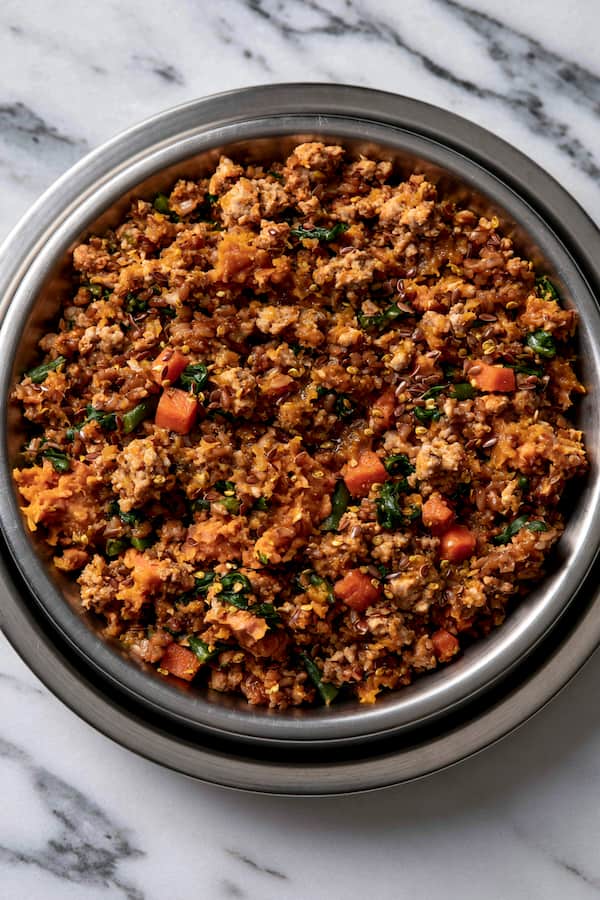
Turn off the heat. Add the canned pumpkin, ground flaxseed, and olive oil. Stir until everything is coated and glossy.
The pumpkin should melt into the mix and turn the whole batch a warm orange-brown. Taste a small spoonful if you want, plain and unseasoned. It’s not exciting, but it’s not bad.
Step 5. Cool and Portion
Let the batch cool to room temperature before dividing it up. Serve it hot and your dog will inhale it too fast and probably throw it back up. Cool is the goal, not warm.
I usually spread it on a large baking sheet to speed up the cooling process, then portion it into containers once it’s no longer steaming.
How Much to Feed
This recipe makes roughly 6 cups of finished food. Portion size depends on your dog’s weight and activity level.
Start with the amount below, watch the stool for 3 days, and adjust up or down.
| Dog weight | Daily amount | Meals per day |
|---|---|---|
| Under 10 lb | ¼ to ½ cup | 2 small |
| 10 to 20 lb | ½ to ¾ cup | 2 |
| 20 to 40 lb | ¾ to 1½ cups | 2 |
| 40 to 60 lb | 1½ to 2 cups | 2 |
| 60 to 80 lb | 2 to 2½ cups | 2 |
| 80+ lb | 2½ to 3+ cups | 2 to 3 |
If your dog gains weight over the first two weeks, cut back a quarter cup per meal. If they lose weight or seem hungry, add a quarter cup.
Simple as that.
Storing the Batch
Fridge: 4 days in an airtight container. After that, the vegetables start to break down and the texture gets mushy.
Freezer: 3 months in single-serving portions. I use silicone muffin tins to freeze individual meal-size pucks, then transfer them to a labeled freezer bag once solid.
Thaw a portion overnight in the fridge, or use the defrost setting on your microwave for 30 seconds.
Don’t refreeze thawed portions. And don’t leave the food sitting out for more than an hour once it’s warmed up. Ground turkey spoils fast.
Transitioning Without a Digestive Disaster
Never switch food cold turkey. Especially not a high-fiber food.
Ramping up too fast is the number one mistake I see owners make. It usually results in exactly what they were trying to fix (soft stool) getting worse for 48 hours.
Here’s the ratio that works. Days 1 and 2: 25% new food, 75% current food. Days 3 and 4: 50/50.
Days 5 and 6: 75% new, 25% old. Day 7 onward: 100% new food.
If your dog has a sensitive stomach or is a picky eater, stretch this across 10 to 14 days instead of 7. There’s no prize for going faster. For a deeper walkthrough on transitions, this guide on changing your pet’s diet breaks it down further.
One rule that matters more than the ratios. Increase your dog’s water intake alongside the fiber.
Fiber needs water to work. Without it, all that lovely bulk turns into a hard brick that makes constipation worse.
Keep the bowl full at all times, and if your dog isn’t a big drinker, add an extra half cup of water to each meal.
What NOT to Add
Every ingredient in the recipe is safe. But if you’re tempted to swap or add something, know what’s off limits.
- Onions, garlic, chives, leeks. Toxic. They damage red blood cells and can cause anemia.
- Grapes and raisins. Even a small amount can cause kidney failure. No exceptions.
- Avocado skin and pit. Contain persin. The flesh isn’t as bad but the fat is too rich.
- Xylitol. Found in some peanut butter brands and any “sugar-free” product. Rapid insulin crash, liver failure risk.
- Macadamia nuts. Cause neurological symptoms even in tiny amounts.
- Corn on the cob. The corn is fine, but the cob is a classic surgical blockage waiting to happen.
- Cooked bones. They splinter. Raw bones are debated, but cooked bones are a firm no.
That’s the short list. When in doubt, don’t add it.
Plenty of dogs live long healthy lives on a bowl of six ingredients. You don’t need to get creative.
Back to the Living Room Rug
Snickers hasn’t scooted in three weeks. I know because I check.
Every time he walks across the rug, some part of my brain is watching for it, waiting for the little pause and the plant-and-drag. Hasn’t happened.
And I’m 90% sure it’s the recipe. The other 10% is that he now gets a full cup of homemade food twice a day instead of a shortcut pumpkin spoonful on top of his kibble, which was my previous “solution” that clearly wasn’t cutting it.
Last night he finished his bowl, licked it clean, then dragged it across the kitchen floor toward me like he wanted seconds. Bowl in mouth, tail wagging, no scoot in sight. That’s the whole point.
Then he curled up next to me on the couch, tucked his nose under his paw, and passed out for the evening. Nothing to solve, nothing to fix. Just a dog with a full belly, and a rug I can finally walk barefoot on again. If you want another gentle meal idea while your dog settles into this one, the dog treats for sensitive stomachs roundup pairs well.
I’m a passionate dog lover and kitchen enthusiast, but I’m not a certified veterinarian or animal nutritionist. Long-term homemade diets should always be discussed with your vet to make sure your pup is getting everything they need.
Bon appétit to your furry friend!