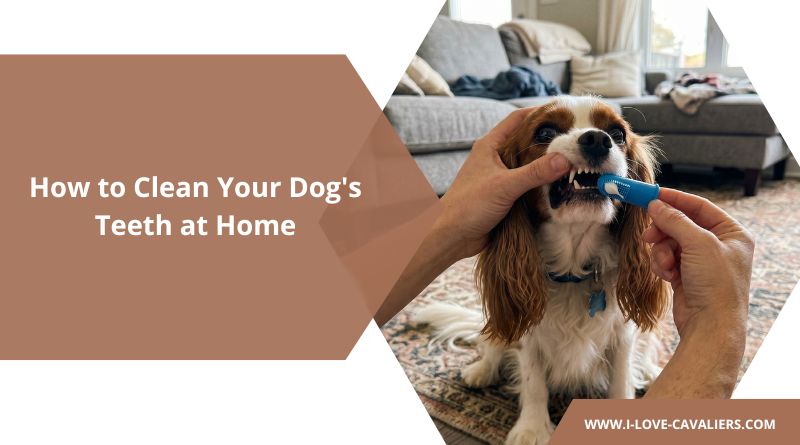
Snickers yawned right in my face last spring. Full, wide, zero-shame yawn. And I saw it. A line of yellowish buildup along his back molars that definitely wasn’t there six months ago.
I mentioned it at his next vet visit, half expecting a “no big deal.” Instead, our vet hit me with a stat that stopped me cold. Around 80% of dogs show signs of dental disease by age three. Snickers was already past that.
She said the buildup wasn’t terrible yet, but if I didn’t start brushing at home, we’d be looking at a professional cleaning under anesthesia within a year. That’s a $500 to $1,500 bill, depending on what they find once they’re in there.
So I started brushing his teeth. Not gonna lie, the first attempt was a disaster. He clamped his mouth shut, backed into the corner, and looked at me like I’d betrayed him.
But I stuck with it. Took about three weeks before he’d actually let me get a brush past his front teeth. Now it’s part of our routine and his mouth looks completely different.
Here’s everything I learned, including the stuff I wish someone had told me before that first terrible attempt.
Quick Guide: Dog Teeth Cleaning at Home
| What You Need | Details |
|---|---|
| Toothbrush | Finger brush (beginners) or angled dog brush |
| Toothpaste | Enzymatic, dog-specific. Never human toothpaste. |
| Time to train | 2-3 weeks of daily desensitization |
| Brushing time | About 60 seconds per session |
| Frequency | Daily is best. Minimum 3x per week. |
| Focus area | Outer surfaces only, especially back molars |
Start with the desensitization phase below. Skipping it is the number one reason dogs refuse brushing for life.
Why Cleaning Your Dog’s Teeth Actually Matters
Most people assume dog dental care is optional. It’s not. Here’s why this one’s worth your time.
- Dental disease is the most diagnosed condition in dogs. It’s not cancer, allergies, or joint problems. It’s teeth. Vets see it more than anything else at routine checkups.
- It can damage their organs. Bacteria from infected gums enters the bloodstream and can settle in the heart, kidneys, and liver. A 2011 study by Glickman confirmed a direct link between periodontal disease and chronic kidney disease in dogs.
- Bad breath isn’t normal. Seriously. A healthy dog’s mouth has almost no odor. If your dog’s breath makes you flinch, that’s not a personality trait. That’s the earliest sign of gum disease.
- Prevention is absurdly cheaper than treatment. A year of home dental care costs maybe $50 to $100. One professional cleaning runs $500 to $1,500. Add extractions and you’re looking at $3,000.
The math alone should convince you. But even beyond cost, you’re adding years to your dog’s life by keeping their mouth healthy.
What You’ll Need
You don’t need much. Four things, and you probably already have two of them.
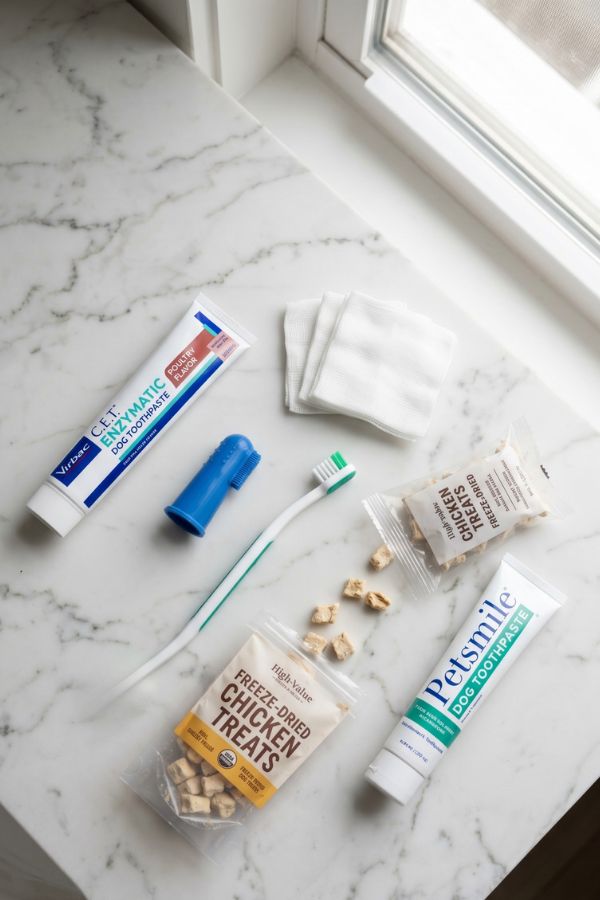
Dog toothpaste. This is non-negotiable. Never use human toothpaste on your dog. It contains fluoride and often xylitol, both of which are toxic to dogs. Dog toothpaste is formulated to be swallowed safely, and it comes in flavors like poultry and beef, which makes the whole process much easier. Enzymatic formulas like Virbac C.E.T. or Petsmile are solid choices. Petsmile is the only toothpaste with a VOHC seal of acceptance for plaque reduction, if that matters to you.
A finger brush or dog toothbrush. Start with a finger brush. It’s a small rubber cap with soft bristles that fits over your index finger. You get way more control, and it’s less intimidating for your dog than a stick being shoved in their mouth. Once they’re comfortable, you can switch to an angled dog toothbrush for better reach on those back molars.
Gauze pads. For dogs who won’t tolerate any brush at all, wrapping gauze around your finger and rubbing the teeth is a legitimate backup plan. Less effective than a brush, but far better than nothing.
High-value treats. You’ll need these for the training phase. Use something your dog goes crazy for, not their everyday kibble.
How to Get Your Dog Used to Teeth Brushing
This is the part most people skip. They buy the supplies, stick a toothbrush in their dog’s mouth on day one, the dog hates it, and they never try again. Tried three different approaches before this one actually worked with Snickers.
The whole process takes about two to three weeks. Don’t rush it.
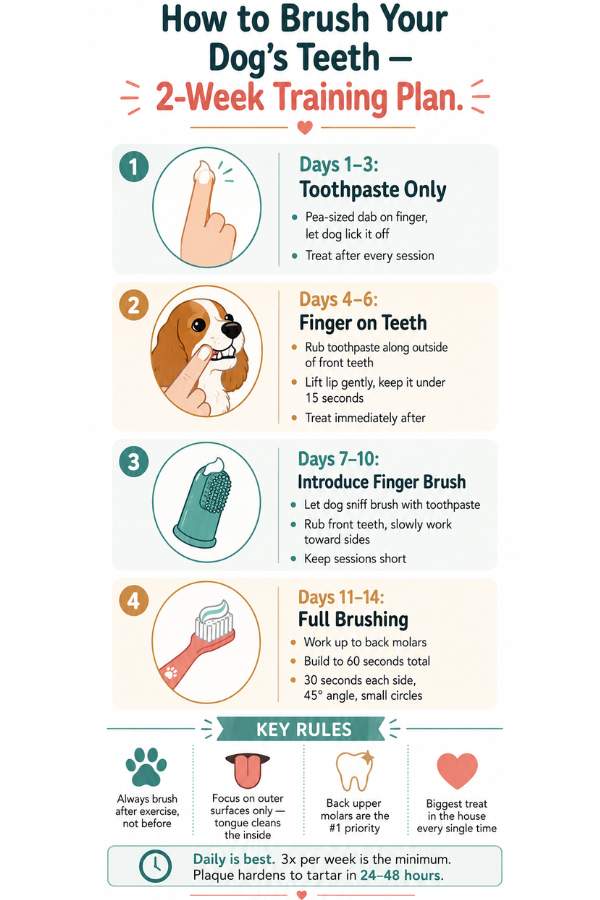
Days 1-3: Toothpaste Only
Put a pea-sized amount of dog toothpaste on your finger. Let your dog lick it off. That’s it. You’re building a positive association with the taste and the act of you putting something near their mouth. Do this once or twice a day, followed by a treat.
Days 4-6: Finger on Teeth
Dab toothpaste on your finger and gently rub it along the outside of your dog’s front teeth. Don’t try to open their mouth. Just lift the lip and rub. Keep it under 15 seconds. Treat immediately after.
Days 7-10: Introduce the Finger Brush
Slide the finger brush on and let your dog sniff it with toothpaste on it. Then do the same rubbing motion on the front teeth. Slowly work your way toward the side teeth over a few sessions. Still keeping it short.
Days 11-14: Full Brushing
By now your dog should tolerate the brush touching most of their teeth. Start working on the back molars, which is where the real buildup happens. You’re building up to a full 60-second brushing session.
Pro tip: Do this after exercise, not before. A tired dog tolerates way more than an energetic one (don’t skip this part).
Step-by-Step: How to Brush Your Dog’s Teeth
Once your dog is trained and comfortable, the actual brushing is quick. About 60 seconds from start to finish.
- Apply toothpaste to the brush. A pea-sized amount is enough. No need to wet the brush first.
- Lift the lip on one side. Gently pull the lip up to expose the outer surface of the teeth. Your dog’s mouth can stay closed for this.
- Brush at a 45-degree angle. Angle the bristles where the tooth meets the gum. This is where plaque builds up, not on the flat tooth surface.
- Use small circular motions. Work from the back molars toward the front. Spend about 30 seconds on each side.
- Focus on the outer surfaces only. Here’s something that surprised me. You don’t need to brush the inner surfaces of your dog’s teeth. Their tongue naturally wipes that side clean throughout the day. This is vet-confirmed and cuts the job in half.
- Give the biggest treat in the house. Every single time. You want your dog to associate teeth brushing with the best thing that happens to them all day.
The back upper molars are the most important teeth to hit. They accumulate the most tartar and they’re the ones most people skip because they’re hard to reach. If you can only brush one area, make it those.
Signs Your Dog Has Dental Problems
Catching dental issues early saves you money and saves your dog pain. Here’s what to watch for, roughly in order of severity.
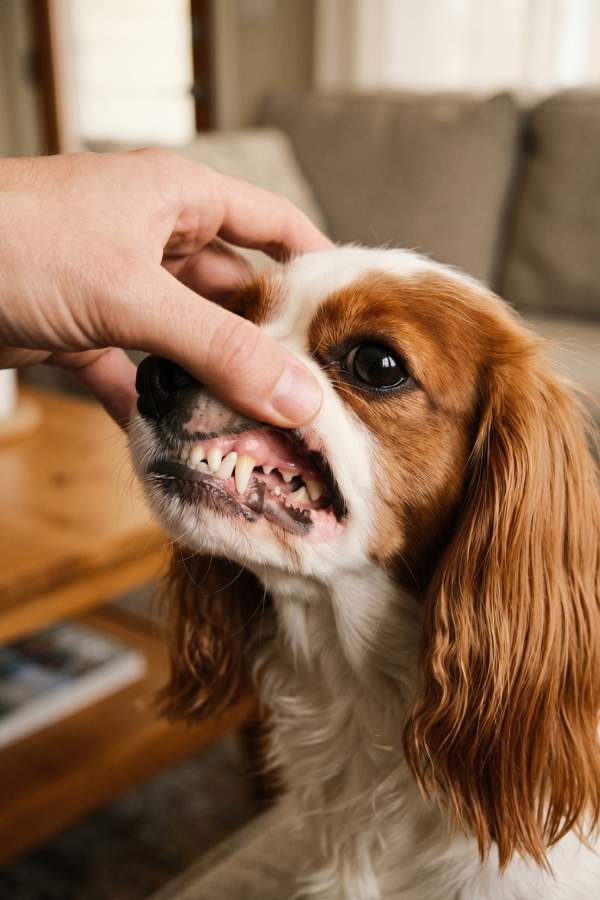
Early warning signs:
- Bad breath that doesn’t go away
- Gums that look red or swollen instead of healthy pink
- Light bleeding when you brush or when they chew hard toys
- A thin line of yellow or brown along the gum line
More serious signs:
- Drooling more than usual, sometimes with blood
- Dropping food while eating or chewing on only one side
- Visible brown or gray tartar buildup
- Pawing at their mouth or rubbing their face on furniture
See your vet immediately if:
- Teeth are loose or wobbly
- Swelling on one side of the face or under the eye
- Refusing to eat altogether
- Adult teeth are missing
One thing I learned the hard way. Dogs hide dental pain incredibly well. Snickers was eating normally even when our vet found significant buildup on his molars. Don’t assume no symptoms means no problem. Most dental disease in dogs is silent until it’s advanced.
How Often Should You Brush?
Plaque hardens into tartar in about 24 to 48 hours. Once it’s tartar, no amount of home brushing removes it. Only a professional cleaning under anesthesia can get rid of it at that point.
That’s why daily brushing is the gold standard. You’re removing the plaque before it gets a chance to harden.
If daily isn’t realistic for you, three times per week is the minimum to make a meaningful difference. Less than that and you’re mostly just going through the motions.
Small dogs need extra attention here. They have the same 42 teeth as a large breed, crammed into a much smaller jaw. That crowding creates more plaque traps, which is why small breeds develop dental disease at nearly three times the rate of larger dogs.
Puppies, Adults, and Seniors: Age-Specific Tips
Puppies (8 weeks to 6 months): Start the desensitization process as early as possible. This is the golden window. You’re not really cleaning their teeth at this age. You’re training them to accept it for the rest of their life. Use a finger brush and keep sessions under a minute. Their baby teeth will fall out between 3 and 6 months and be replaced by 42 permanent teeth by 7 months.
Adult dogs (1-7 years): This is when daily brushing matters most. Most dogs should have their first professional cleaning around age 2 to 3. Small breeds should go no later than age 2. Annual professional cleanings after that, even if you’re brushing at home.
Senior dogs (7+ years): Their teeth are more fragile, enamel is thinner, and roots are weaker. Be gentle. They need oral exams twice a year instead of once. And if your vet recommends a professional cleaning, don’t skip it because of anesthesia worries. Untreated dental disease causes heart, kidney, and liver damage through bloodstream bacteria. The anesthesia risk is managed case by case, and your vet won’t recommend it if it isn’t safe.
That First Yawn Changed Everything
I think about that yawn a lot. The one where I saw the yellow line on Snickers’ back teeth and realized I’d been ignoring something that mattered. It took me three weeks of messy, frustrating practice to get him comfortable with a toothbrush. Now it takes 60 seconds a night and he actually trots over when he sees me grab the finger brush because he knows the poultry toothpaste is coming.
Start the desensitization this week. Even if it goes badly. Especially if it goes badly. It gets easier fast, and your dog’s mouth will thank you for years.
I’m a passionate dog lover, but I’m not a certified veterinarian or veterinary dentist. If you notice signs of dental disease in your dog, consult your vet for a proper exam and treatment plan.
Here’s to fresher breath and healthier smiles!