
Simple. That’s the beauty of these banana chips. One ingredient (okay, technically two if you count the lemon juice), minimal effort, and a treat that lasts for weeks.
I started making these on a whim when I had bananas turning brown on my counter—too ripe for me but perfect for my dog. Now they’re a staple in our treat rotation. My pup goes absolutely wild for them, and I love that they’re just pure fruit with nothing artificial.
No baking skills required, no complicated ingredient lists, just bananas and a little patience while they dehydrate. Sometimes the best treats really are the simplest ones.
Why These Banana Chips Are a Must-Try
- Single-Ingredient
No preservatives, no additives, no mystery ingredients.
- Long Shelf Life
Properly dehydrated banana chips last for months when stored correctly.
- Portable and Mess-Free
Unlike fresh fruit or soft treats, these crispy chips travel well.
- Great for Training
The small, lightweight chips are perfect training rewards.
Dehydrated Banana Dog Treats Recipe
Makes approximately 1½-2 quarts (varies by banana size and slice thickness)

Ingredients
| Ingredient | Amount |
|---|---|
| Ripe bananas | 7-8 medium to large |
| Lemon juice (for pre-treating) | 3 tablespoons |
| Water (for pre-treating) | 3 tablespoons |
Alternative Pre-Treatment: Fruit Fresh powder mixed with water according to package directions
Step-by-Step Instructions

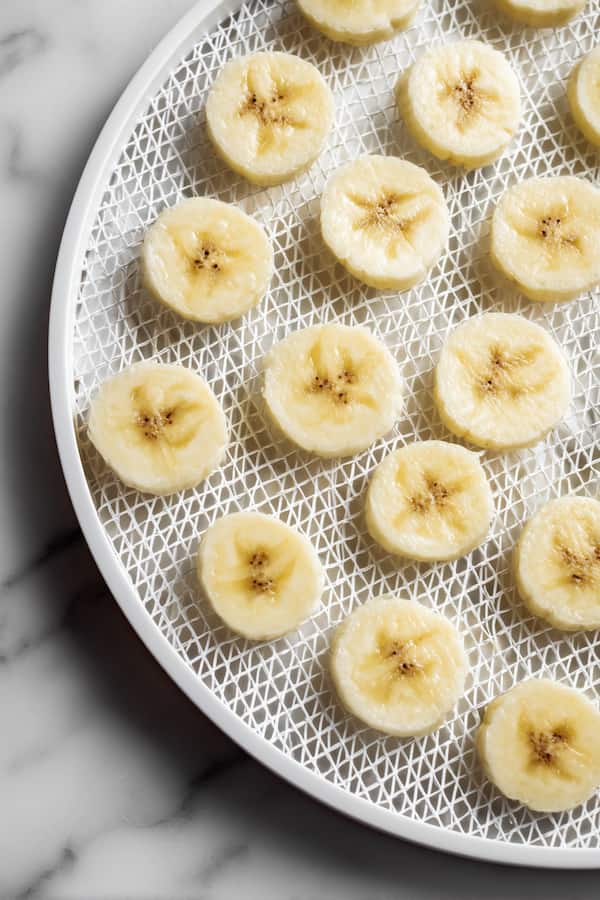
Step 1: Prepare Your Pre-Treatment Solution
In a medium mixing bowl, combine 3 tablespoons of lemon juice with 3 tablespoons of water. Stir together until mixed. If you’re dehydrating a large batch, you’ll need to refresh this mixture as you work—it gets diluted and less effective after pre-treating about 3 bananas.
Step 2: Prep Your Dehydrator Trays
Line each dehydrator tray with a mesh liner or parchment paper. The mesh liners work best as they allow maximum airflow, but parchment paper works in a pinch. If using parchment, poke several holes in it with a fork to improve air circulation.
Step 3: Slice Your First Banana
Peel one banana, working with one at a time prevents oxidation. Using a sharp paring knife or mandoline slicer, cut the banana into uniform ¼-inch thick rounds. Thinner slices will crisp up faster but are more fragile; thicker slices take longer but have more chew.
Step 4: Pre-Treat Immediately
As soon as you finish slicing a banana, drop all the rounds into your pre-treatment bowl. Swish them around gently with your hands or a spoon, ensuring every slice is coated on all sides with the lemon water. Let them soak for about 15-20 seconds (just long enough to coat them, not so long they become waterlogged).
Step 5: Arrange on Dehydrator Trays
Using your fingers or a slotted spoon, lift the pre-treated banana slices from the bowl and arrange them in a single layer on your prepared dehydrator tray. This is important: do not let the slices touch or overlap. Leave about ¼ inch of space between each slice.
Step 6: Repeat the Process
Continue the slice-dip-arrange cycle with the remaining bananas, one at a time. Refresh your pre-treatment solution when it becomes too diluted (it’ll start looking cloudy and brown).
Step 7: Start Dehydrating
Once all trays are filled, stack them in your dehydrator and secure the lid. Set the temperature to 135°F if your dehydrator has adjustable settings. This temperature preserves the most nutrients while still dehydrating efficiently.
Step 8: Rotate and Monitor
Every 3-4 hours, rotate your dehydrator trays. Move the bottom trays to the top and the top trays to the bottom. This ensures even dehydration since most dehydrators have hot spots. Check the chips’ progress each time you rotate. They should be gradually shrinking and firming up.
Step 9: Test for Doneness
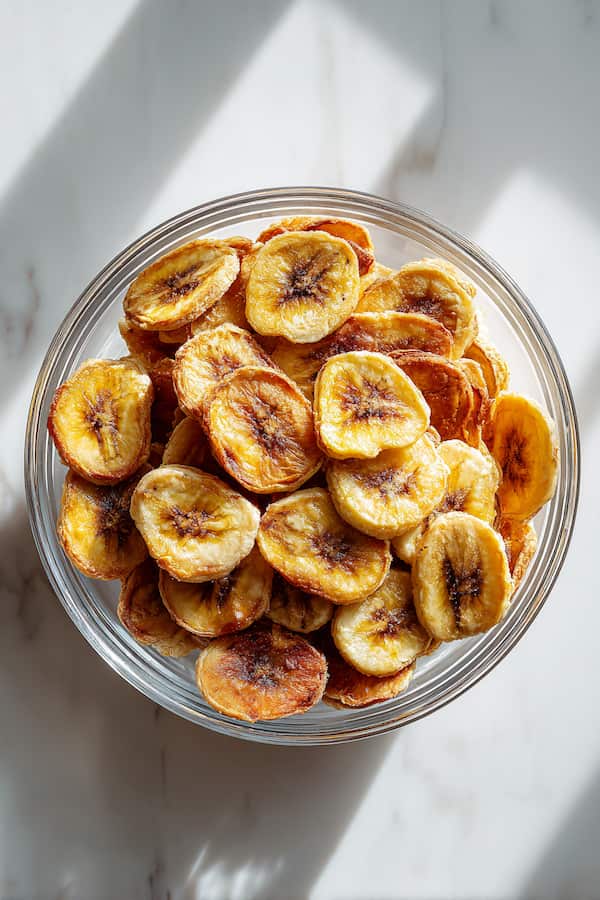
After 6 hours, start checking the chips more frequently. They’re done when they feel leathery to firm and have no moisture when squeezed. Total time ranges from 6-12 hours depending on your dehydrator model, humidity levels, and how thick you sliced the bananas. For crispy chips, aim for 10-12 hours. For chewier treats, stop at 6-8 hours.
Step 10: Cool Completely
Once done, turn off the dehydrator and let the chips cool completely while still on the trays (about 30 minutes). They’ll crisp up even more as they cool. Test a few by bending them; they should snap rather than bend if you want crunchy chips.
Alternative Dehydrating Methods
Oven Method
Temperature: 200°F (or your oven’s lowest setting)
Time: 2-3 hours
Instructions:
- Line baking sheets with parchment paper
- Arrange pre-treated banana slices in a single layer without touching
- Place in preheated oven with the door slightly ajar (prop it open 2-3 inches with a wooden spoon)
- Flip chips every 45 minutes for even drying
- Check frequently after 2 hours, Oven methods are faster but require more monitoring
Air Fryer Method
Temperature: 135-150°F (if available) or lowest setting
Time: 3-4 hours
Instructions:
- Arrange pre-treated banana slices in air fryer basket in single layer
- You’ll need to work in multiple batches as air fryers have limited space
- Dehydrate at lowest temperature setting
- Check every 30 minutes and shake basket gently
- Rotate pieces for even drying
Storage Tips for Maximum Freshness
Conditioning Period: Before storing, let your completely cooled chips sit in an open container for 24 hours. This “conditioning” period allows any remaining moisture to distribute evenly among the chips, preventing mold growth during storage.
Short-Term (Up to 1 Month): Store in an airtight container at room temperature in a cool, dark place like a pantry. Glass jars with tight-fitting lids work perfectly. Keep away from direct sunlight and heat sources.
Long-Term (Up to 6 Months): For extended storage, vacuum-seal the chips or use airtight containers with oxygen absorbers. Store in the freezer for maximum freshness. The chips won’t freeze solid due to low moisture content and can be fed directly from the freezer.
Serving Guidelines and Tips
| Dog Weight | Serving Size | Daily Limit |
|---|---|---|
| 5-15 lbs | 1-2 small chips | 3-4 chips max |
| 16-30 lbs | 2-3 medium chips | 5-6 chips max |
| 31-50 lbs | 3-4 medium chips | 7-8 chips max |
| 51-70 lbs | 4-5 large chips | 8-10 chips max |
| 71+ lbs | 5-6 large chips | 10-12 chips max |
Sugar Content Awareness: While natural, bananas do contain sugar. These chips should be given as occasional treats, not unlimited snacks. The dehydration process concentrates the sugars, making them more potent than fresh bananas.
Diabetic Dogs: Consult your veterinarian before feeding banana chips to diabetic dogs. The concentrated natural sugars may affect blood glucose levels.
Weight Management: Factor these treats into your dog’s daily caloric intake. Despite being healthy, they’re calorie-dense. Reduce meal portions slightly on days when you give multiple chips.
FAQs
Why do I need to pre-treat the bananas? Can I skip this step?
You can skip it, but your chips will turn dark brown during dehydration. They’re still safe to eat and dogs don’t care about color, but most people prefer the appealing light tan color that pre-treatment provides.
Can I add cinnamon or other spices for flavor?
While a tiny sprinkle of cinnamon is generally safe for dogs, keep these chips plain. The natural banana flavor is plenty appealing, and some dogs have sensitivities to spices. Simple is better.
Can I dehydrate other fruits for my dog?
Absolutely! Apples (remove seeds), strawberries, blueberries, and sweet potato all dehydrate beautifully using the same method. Avoid grapes/raisins and any fruit with pits.
Final Thoughts
Pure. That’s what these chips are—pure banana goodness with nothing to hide. No ingredient label to scrutinize, no worrying about what’s really in the treat, just fruit you can see and recognize.
Yes, dehydrating takes time. But it’s passive time—the machine does the work while you go about your day. And when you see your dog’s excitement over a simple banana chip, you’ll realize that sometimes the most basic treats are the most special.
Make a big batch, store them properly, and enjoy having healthy, homemade treats on hand for months. Your dog (and those overripe bananas on your counter) will thank you.