The morning after Halloween, I found Snickers on the couch with his nose buried between two cushions. Tail going, total focus.
He’d found a Reese’s wrapper. Empty, thankfully, because I’d eaten that cup myself the night before and lost the wrapper somewhere in a blanket fort of laziness.
The little orange paper still smelled like peanut butter and chocolate, and he was licking it like it owed him money. I pulled it away, he gave me the most betrayed look a Cavalier can give, and I spent the next ten minutes reading the FDA’s chocolate page just to calm myself down.
That’s where the idea came from. If he loves the smell that much, he could have his own version, with carob instead of chocolate and a peanut butter center I actually trust.
These are those cups. Three ingredients, no oven, and a few label traps you’ll want to know about before you buy anything.
Peanut Butter Cups for Dogs at a Glance
| Detail | What to Know |
|---|---|
| Time | About 25 minutes hands-on, 30 minutes in the freezer |
| Yield | 12 regular cupcake-size cups |
| Ingredients | Carob chips, coconut oil, natural peanut butter |
| Calories | About 225 per cup (my estimate from USDA numbers) |
| Serving | A wedge, not a whole cup. Quarters or eighths for most dogs. |
| Storage | Freezer, airtight. They go soft fast at room temperature. |
If you remember one thing, make it this: cut each cup into wedges and serve one wedge at a time. A whole cup is more than a small dog’s treat allowance for the entire day.
Ingredients for Dog-Safe Peanut Butter Cups
| Ingredient | Amount | Notes |
|---|---|---|
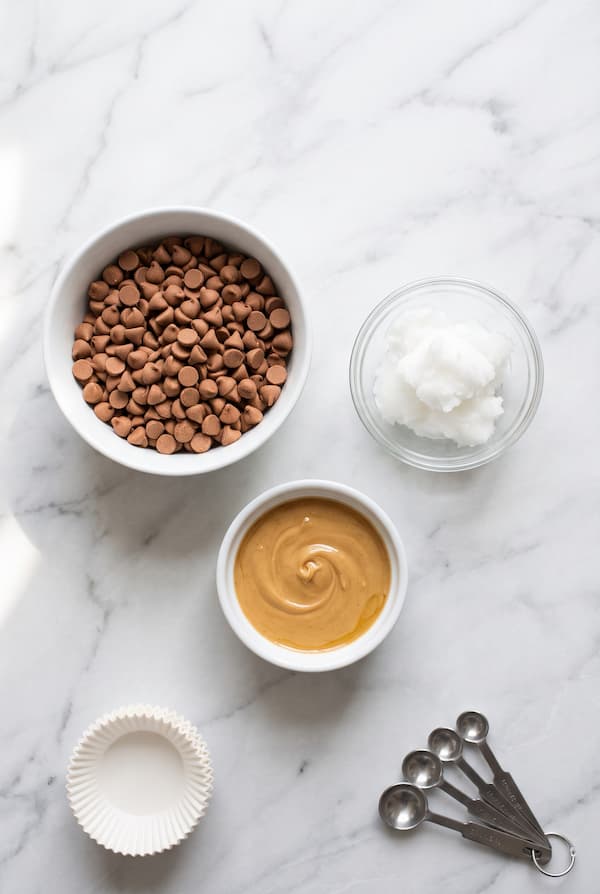
| Unsweetened carob chips | 2 cups, divided | Dairy-free, no added sugar. Read the label. |
| Coconut oil | 4 tbsp, divided | Helps the carob melt smooth and set glossy. |
| Natural peanut butter | 4 tbsp | Peanuts (and maybe salt) only. No xylitol. |
You’ll also need a 12-cup muffin tin, 12 cupcake liners, a heatproof glass bowl that sits on top of a saucepan, a small whisk or silicone spatula, and measuring spoons.
Paper or foil liners both work. Silicone liners pop the cups out more easily.
How to Make Peanut Butter Cups for Dogs
The whole process is three thin layers with short freezer breaks in between. Not hard, just patient.
Step 1: Line the Muffin Tin
Set a liner in each of the 12 cups and clear a flat spot in your freezer before you start. The tin has to sit level, or every base layer will slide to one side.
I learned that one with a bag of frozen peas under one corner of the tin (and yes, the cups came out lopsided).
Step 2: Melt Half the Carob With Half the Oil
Put 1 cup of the carob chips and 2 tablespoons of coconut oil in your heatproof bowl. Bring an inch or two of water to a gentle simmer in the saucepan, then set the bowl on top so it doesn’t touch the water.
Whisk slowly until the mixture is completely smooth and glossy. Keep the heat low and keep every drop of water out of the bowl, because water and steam make carob seize up.
No double boiler? Microwave on half power in 20 to 30 second bursts, stirring between each one.
One home cook on Food.com had their carob start to burn on the second 30-second round, so go slower than you think.
Step 3: Pour a Thin Base Layer and Freeze 10 Minutes
Spoon 1 tablespoon of melted carob into each liner. Give the tin a gentle shake or a few taps on the counter so the carob spreads into a flat, even layer and any bubbles pop.
Slide the tin into the freezer for about 10 minutes. The base is ready when the surface looks matte and firm instead of shiny and wet.
Step 4: Add a Teaspoon of Peanut Butter to Each Cup
Drop 1 teaspoon of peanut butter into the center of each base. Press it into a flat disc with the back of a spoon or a damp fingertip, leaving a little bare carob rim all the way around.
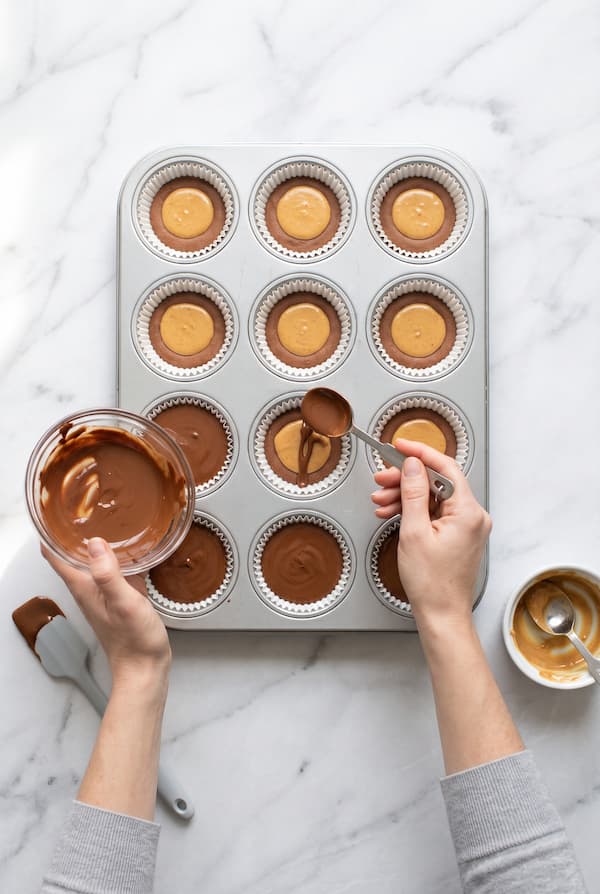
That rim matters. It’s where the top layer bonds to the bottom one and seals the peanut butter inside.
Freeze for another 10 minutes so the peanut butter firms up. Don’t cut this one short, or the peanut butter will swirl into the top layer.
Step 5: Melt the Rest and Seal the Tops
Melt the remaining 1 cup of carob chips and 2 tablespoons of coconut oil the same way as before. Spoon about 1 tablespoon over each cup, starting at the center and letting it run out to the edges.
Make sure the peanut butter disappears completely. Shake or tap the tin again to level the tops.
Step 6: Freeze Until Firm, Then Peel
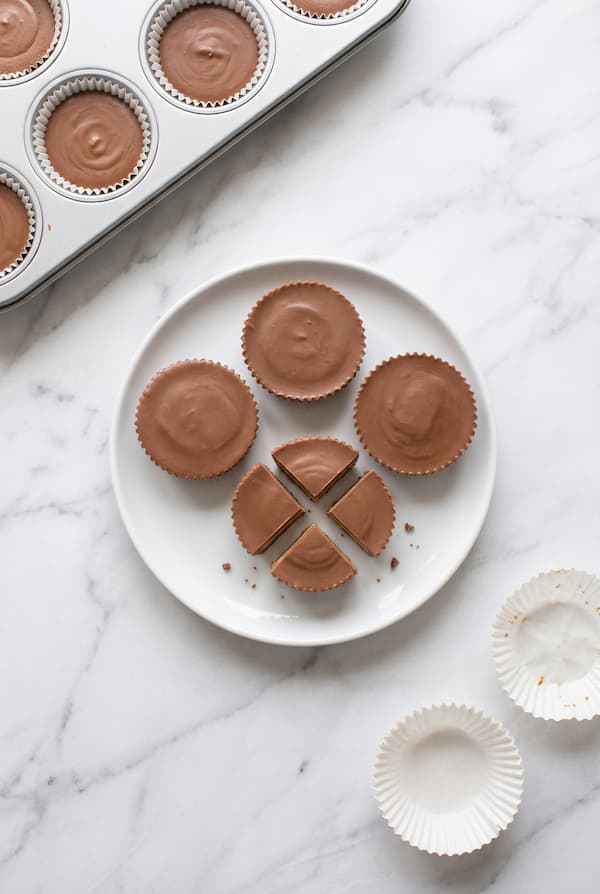
Freeze for at least 10 more minutes, until the tops are hard to the touch. Peel off the liners and they’re done.
To serve, let a cup sit on the counter for about 5 minutes, then cut it into quarters or eighths with a sharp knife. Run the knife under hot water first and dry it, and it’ll slice cleanly instead of cracking the shell.
The Two Labels You Have to Read
This is the part every recipe I found skipped. The recipe is easy, the shopping is where it goes wrong.
The Carob Chip Bag
“Carob chips” on the front tells you almost nothing. Flip the bag over.
USDA lists even unsweetened carob candy at about 34% sugar and 31% fat by weight. So “unsweetened” means no sugar added on top, not sugar-free.
That’s fine for a treat, but it’s why portion size matters so much here.
Here’s what I look for, in order:
- Carob powder near the top. That’s the actual carob.
- “Unsweetened” or “no added sugar.” If sugar, cane sugar or molasses shows up in the ingredients, put it back.
- Dairy-free. Some chips contain milk solids or whey. Not toxic, just one more thing that can upset a sensitive stomach.
- No cocoa or cacao anywhere. If either word shows up, that bag isn’t for your dog.
Many carob chips also list palm kernel oil. It’s not dangerous, but it’s more fat, so count it in the serving size and move on.
One more thing: a reader on another recipe site asked how to melt cacao powder for these. Cacao powder is chocolate, so it doesn’t belong anywhere near this recipe.
The Peanut Butter Jar
You want peanuts, maybe salt. That’s it.
The ingredient to hunt for is xylitol, and the FDA says it may also be listed as “birch sugar” or “wood sugar.” The FDA specifically lists “some peanut and nut butters” among the products that can contain it.
Xylitol can drop a dog’s blood sugar dangerously within 10 to 60 minutes of eating it. The FDA also warns that serious effects may not appear for up to 12 to 24 hours, so a dog who looks fine isn’t in the clear.
Be extra careful with jars labeled sugar-free, low sugar or “keto.” Those are exactly the spreads where a sweetener tends to hide.
Natural peanut butter separates, with a layer of oil on top. Stir it really well before you start, because that runny oil is what turns a neat peanut butter center into a muddy swirl.
The Calorie Math (and Why You’ll Cut These Into Wedges)
I ran the numbers with USDA calorie data, and I’ll be honest, they made me rethink how I serve these. Two cups of carob chips alone come to about 1,800 calories.
Add the coconut oil (about 485) and the peanut butter (about 385), and the batch lands around 2,700 calories, or about 225 per cup. Your chips may run a little higher or lower, so check the label if you want an exact number.
Now compare that to your dog’s day. The AKC says treats should make up no more than 10% of daily calories, and that 10% covers every extra, table scraps included.
For the table below, I estimated daily calories the way vets do: resting energy (70 × body weight in kg to the 0.75 power) times 1.6, the Merck Veterinary Manual factor for a healthy neutered adult dog.
| Dog Weight | Daily Treat Budget (10%) | How Much to Give |
|---|---|---|
| 5 lb | About 20 calories | A sliver, smaller than an eighth-wedge |
| 10 lb | About 35 calories | One eighth-wedge (about 28 calories) |
| 15 lb | About 45 calories | One eighth-wedge |
| 20 lb | About 60 calories | One quarter-wedge (about 56 calories) |
| 30 lb | About 80 calories | One quarter-wedge |
| 50 lb | About 115 calories | Half a peanut butter cup (about 113 calories) |
| 70 lb | About 150 calories | Half a peanut butter cup |
| 90 lb | About 180 calories | Three quarter-wedges (about 169 calories) |
That’s the whole treat budget for the day. If your dog gets other treats, give less, and the same goes for dogs who are overweight or not very active.
Toy breeds barely get a crumb here. For tiny dogs, our low-calorie dog treats are a better everyday fit.
These are also fatty. Vets quoted by the AKC warn that coconut oil can cause greasy stools or diarrhea and, over time, can trigger pancreatitis, so if your dog has a pancreatitis history or eats a low-fat diet, skip these entirely and ask your vet which treats fit.
Honestly, I treat these as a once-or-twice-a-week thing. Snickers gets an eighth on Saturdays, and he acts like it’s a holiday every time.
Keeping Them Firm: Fridge, Freezer and Serving
The freezer is home base. Store the cups in an airtight container or a zip-top freezer bag with the air pressed out.
Recipe testers disagree a little on how long they keep. Taste of Home says up to a month in the fridge or freezer, and Spoiled Hounds says up to three months in the freezer.
I’d aim to use them within a month and call anything past that a bonus.
- Freezer: up to about a month for best texture. Label the bag with the date.
- Fridge: about a week. They stay firm enough to cut but softer than frozen.
- Counter: only for the few minutes it takes to cut a wedge.
Want to cut the whole batch at once? After Step 6, let the cups sit for 5 minutes, cut them all with the warm knife, and freeze the wedges on a plate for 20 minutes so they don’t stick together before you bag them.
The Wrapper Stays in the Trash Now
The Halloween bowl is long gone, and the candy wrappers go straight into the kitchen bin with the lid on. Snickers still checks the couch cushions out of habit, just in case.
These days he doesn’t need to. On Saturday mornings he sits by the freezer, stares at the door until I open it, and takes his little wedge of carob and peanut butter like it’s the best thing that’s ever happened to him.
Pretty sure it is.
I’m a passionate dog lover and kitchen enthusiast, but I’m not a certified veterinarian or animal nutritionist. Treats like these are rich, so talk to your vet before adding them to your dog’s routine, especially if your dog has a history of pancreatitis or a sensitive stomach.
Bon appétit to your furry friend!
Affiliate Disclosure: This page contains affiliate links. We earn a small commission when you purchase through these links at no extra cost to you. Thank you for supporting our work!